
Another season is winding down — boats are being turned over, packed away, winterized and hauled south. At the marina, two old hands wrestle an aging vessel onto a trailer. The helper returns to the slip, kneels to remove the dock lines, turns, and smiles. I study his face: an old Yankee fisherman-farmer who already feels the iron cold coming on with the turn of the calendar.

I leave the marina and run down a channel just east of a long, low strand of sand and dune grass. Southbound ahead of me is a handsome motoryacht bearing a Palm Beach hailing port on the transom. One of these years it would be tempting to join that migration, but not this season, and certainly not in this little boat.
Today I’m looking for a lee — a sheltered pocket away from frontal winds, from the buffeting of weather and a listing economy. I find it behind a sandy island that seems more like a large, mobile sandbar than anything permanent. It will likely outlast me, but it isn’t fixed. The island shifts, retreats, bends, and is sometimes breached by winter storms. None of that fazes its quarrelsome crew of gulls, terns, cormorants and other shorebirds.
The island brings to mind Orrin Pilkey, the late professor emeritus of geology at Duke University and an outspoken advocate for coastal sands and barrier beaches. It’s the sort of place he praised — dynamic, changing, alive. Years ago I interviewed Pilkey about the futility of trying to pin shorelines in place with jetties, groins and seawalls. His view was simple and forceful: let nature take its course on barrier beaches and islands. At the time he lived in a farmhouse with an old anchor tied to the chimney — a fitting metaphor for life on shifting sand: hold tight, but expect movement.
I drop anchor in roughly six feet of water, no more than thirty yards off the southern tip of the island. That tip had been overwashed and flattened in places by storm surge from Hurricane Irene. Outside, the sea is lumpy; a steady swell has made it over the flats and is breaking on the island’s lee shore. The tide is flooding, and with little elevation to stop it, the waves pick up and climb the beach face.
I light a cigar, fiddle with a Pandora channel on my phone, and thumb through a book. When I look up, the wash has crested the berm and two narrow rivulets have carved channels across the beach, draining into the calm water behind the island. It’s a slow sawing process. Given time and more storms, that southern tip may well be severed from the rest of the spit or submerged by spring.
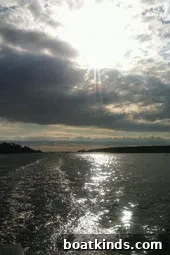
Within a mile there are only two other boats anchored. I am effectively alone, surrounded by wind, clouds and left-breaking waves. As my fishing companion, the Codfish, often says: “You know you’re in the right place when the gulls outnumber the people.”
An electronics manufacturer once told me that a typical customer spends about 100 hours a year actually on the water and perhaps another 2,000 hours dreaming about being out there. That sounds about right. The doing is winding down for the season; the dreaming is just warming up.
“The sea drives the truth into a man like salt.”
— Hilaire Belloc
This article originally appeared in the December 2011 issue.