
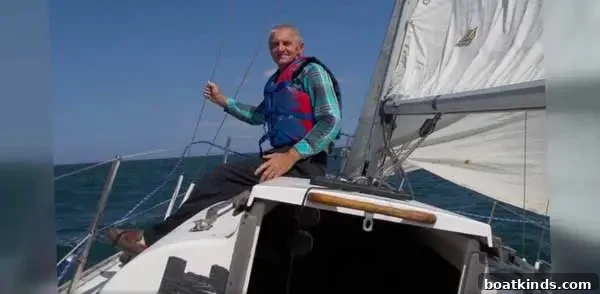
Sailor Rescued After 137 Days Adrift in the Pacific
After spending 137 days adrift in the central Pacific Ocean, sailor Rimas Meleshyus was rescued off the coast of Saipan, a U.S. territory north of Guam. The U.S. Coast Guard located and towed his 30-foot sailboat Mimsy into Smiley Cove Marina on Saipan, bringing an end to an extended and hazardous ordeal at sea.
Voyage and Intent
Meleshyus, who emigrated from the former USSR in 1988 and later became a naturalized U.S. citizen, set out from Hilo, Hawaii, in June aboard Mimsy. He planned a long, intentional drift “Kon-Tiki” style toward “Fuji.” The route he attempted spans roughly 3,300 nautical miles—normally a journey of about one month for small-boat sailors under typical conditions. What began as an adventurous drift turned into a prolonged survival situation after equipment failures and damage left him disabled at sea.
Failure of Critical Equipment
According to reports from National Public Radio, Meleshyus experienced multiple crucial failures during the voyage. His satellite communicator stopped working, leaving him unable to send position updates or long-range distress signals. In addition, his mainsail broke, severely limiting his ability to maneuver or make way under sail. With those primary systems compromised, Meleshyus was forced to rely on more basic marine communications and seamanship to seek help.
Contact and Rescue
Despite the loss of satellite communications, Meleshyus was able to contact the U.S. Coast Guard using VHF radio. Responding to his call, Coast Guard personnel located Mimsy and conducted a tow to Smiley Cove Marina on Saipan. The rescue concluded a period of more than four months afloat without the kind of support and navigation aids sailors normally depend on for open-ocean passages.
Not the First Emergency
This incident represents Meleshyus’ fourth known request for assistance in the past five years. Coverage in the December 2017 issue of Soundings documented earlier episodes when he required rescue or help at sea. That pattern has again raised questions about risk tolerance, vessel preparedness, and the responsibilities of solo sailors who undertake long offshore passages with limited or experimental equipment strategies.
Context and Considerations for Sailors
Long-distance small-boat voyaging, especially when undertaken with the intention to drift over thousands of miles, carries unique risks. Satellite communicators and reliable rigging are critical to both safety and navigation. While Meleshyus’ drift plan echoed historic expeditions such as the Kon-Tiki, contemporary sailors typically combine adventurous goals with modern redundancy in communications, navigation, and emergency signaling systems.
Common safety measures include maintaining multiple ways to communicate (satellite, VHF, emergency position-indicating radio beacons), regular checks and reinforcement of standing and running rigging, and carrying sufficient supplies and first aid resources. In the event of equipment failure, having proven contingency plans and the ability to make a safe distress call can be decisive for a timely rescue.
Aftermath
Following the tow into Smiley Cove Marina, authorities took standard steps to ensure Meleshyus’ health and to assess the condition of his vessel. The Coast Guard’s intervention brought him to safety and ended one of the more prolonged cases of a lone sailor drifting at sea in recent years.
While this rescue highlights the effectiveness of maritime search-and-rescue response, it also serves as a reminder for sailors to prepare thoroughly for offshore voyages, to maintain redundant communication systems, and to respect the ocean’s capacity to complicate even well-intentioned expeditions.