
When your boat is connected to shore power or running a generator, onboard battery chargers keep the battery bank topped off. When you’re underway and don’t need the genset, the engine-driven alternator is the primary source of charging. Knowing whether your alternator is doing the job and spotting early signs of trouble helps you avoid being stranded with dead batteries. Here’s how to inspect, test and maintain marine alternators and regulators so your battery bank stays healthy.
Looking for Trouble
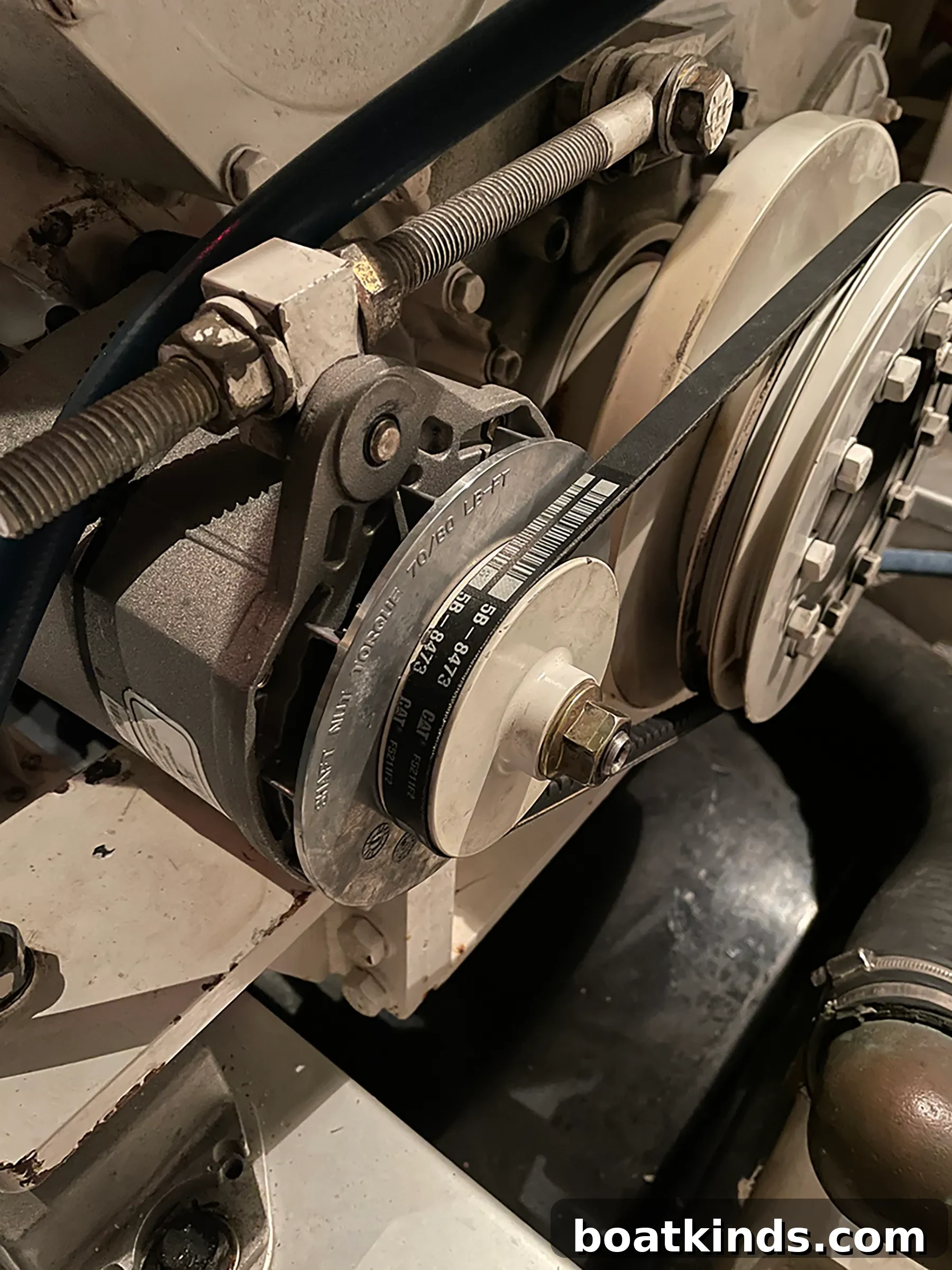
Start with the alternator drive belt(s). A loose or slipping belt prevents the alternator from reaching the required rpm and reduces charging output. For conventional V-belts, aim for about 1/8 inch of deflection per inch of span. For serpentine or grooved belts, use a tension gauge and confirm the engine’s tensioner moves freely and isn’t seized.
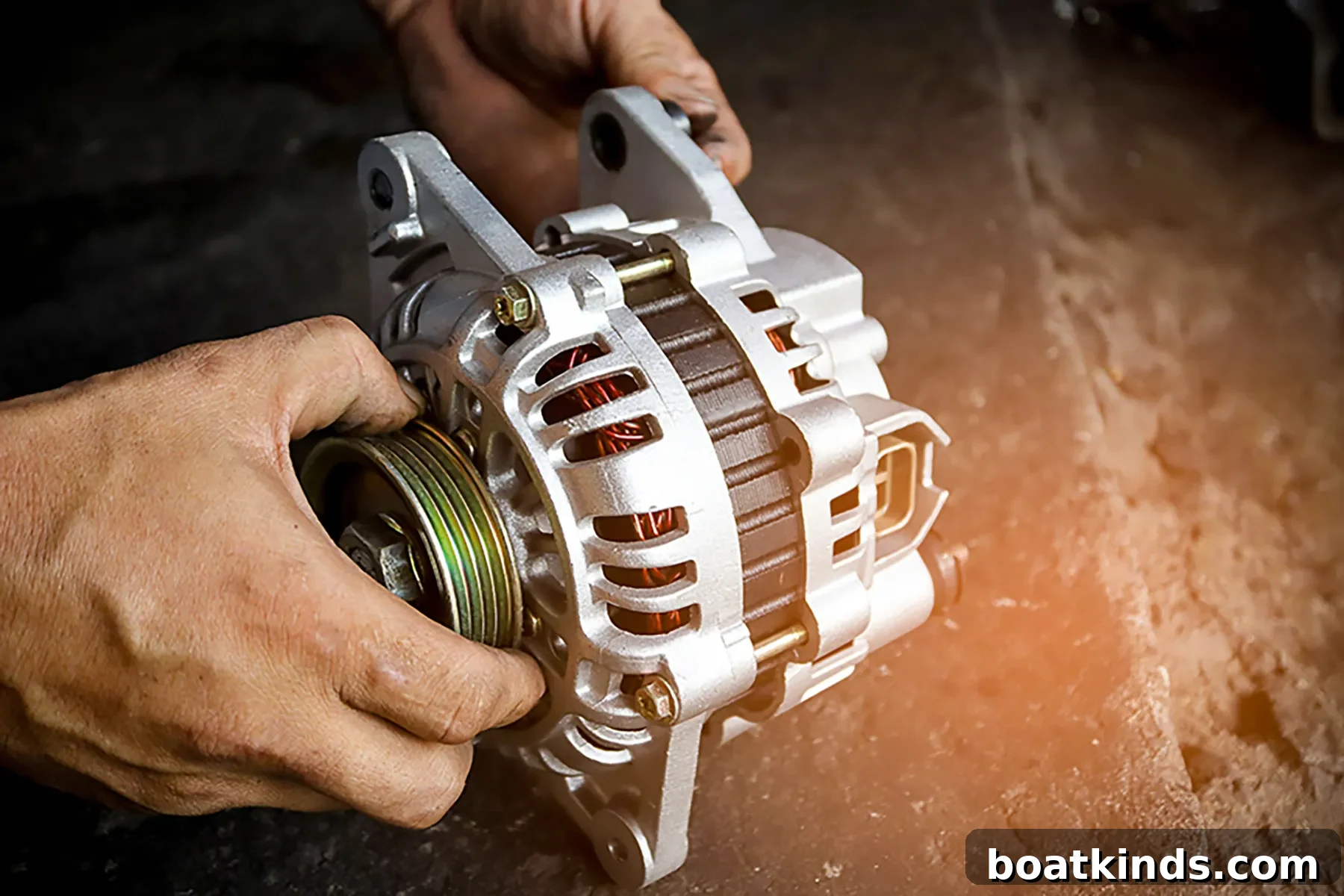
Inspect the area around the pulley for wear or misalignment: a fine black or gray dust indicates belt abrasion. Alternators use fans behind the pulley to draw cooling air. If the belt has been slipping, belt dust can pack the alternator and trap heat, accelerating internal component failure. Excessive heat is a warning sign; a handheld temperature gun helps establish a baseline temperature for future comparisons since acceptable operating temperatures vary by alternator model.
Boaters who rely solely on engine charging—without generators, shore power or solar—should consider carrying a spare alternator, especially if the alternator belt also drives critical components such as engine water pumps. A seized alternator pulley can damage more than just the alternator and leave you with engine problems as well as dead batteries.
Turn to the Back
Assuming belts look good, check for leaks. Water and coolant intrusion will short internal windings or corrode terminals. Look for signs of antifreeze, water streaks, rust, or corrosion on and around the alternator housing.
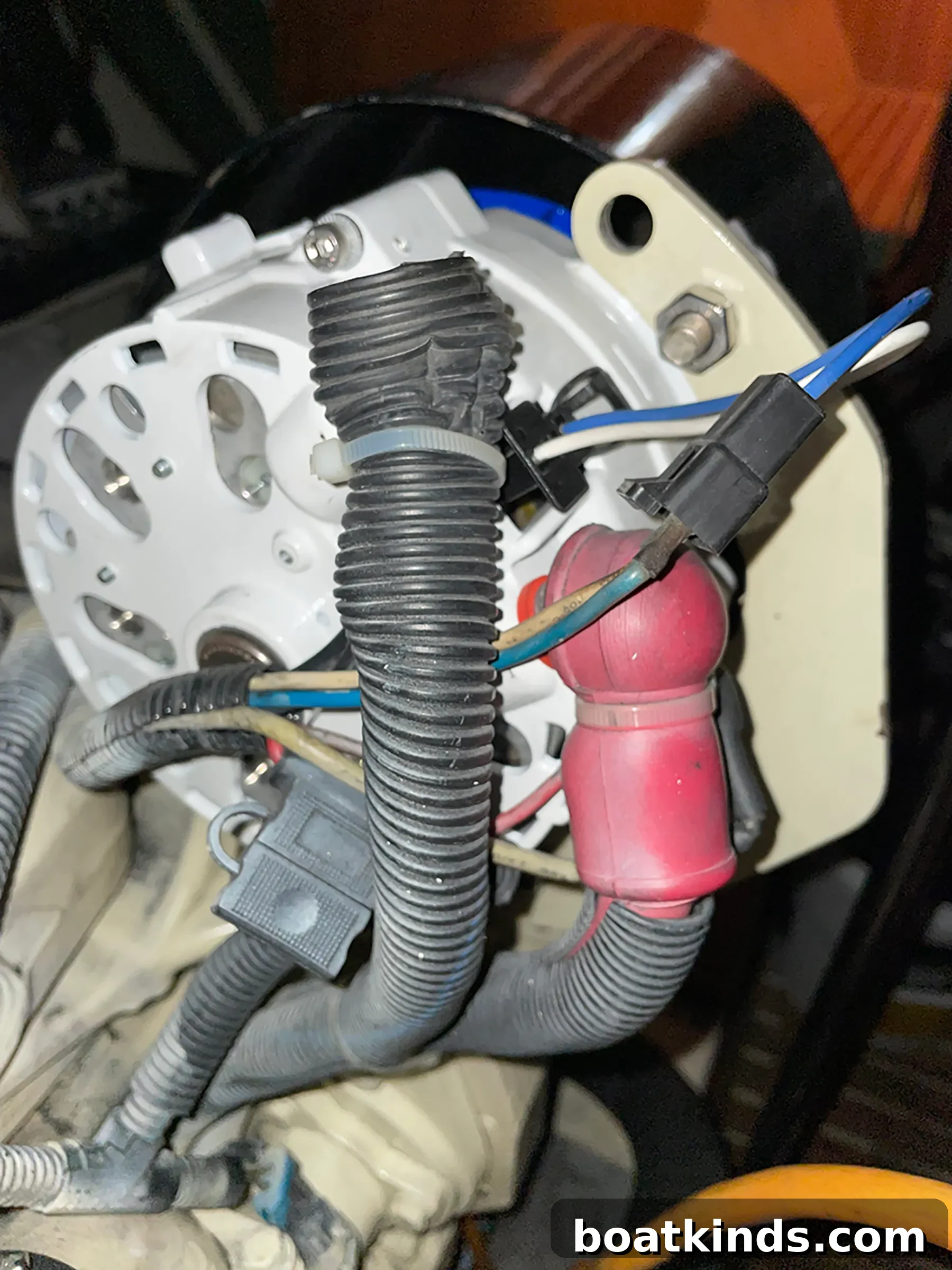
At the alternator’s rear, identify the largest stud—usually with a red wire attached—that is the output positive. Ensure the connection is tight and free from corrosion. Some units also have an equal-size negative post (often black or yellow); check that too. If there’s no dedicated ground stud, the alternator grounds through its mounting, so verify a clean metal-to-metal connection to the engine block.
With battery switches turned on, use a multimeter to measure voltage between the alternator output and ground. It should match your battery voltage within about 0.1 volt. If there’s no voltage, trace the positive output wiring—on many engines the alternator output goes to the starter and then to the battery switch. Check any inline fuses or circuit breakers that protect the alternator output; reset or replace them if tripped or blown.
Also confirm that all small signal wires and connector plugs are secure and corrosion-free. These wires typically energize the alternator field with the ignition and provide tachometer or regulator signals.
How Does it Work?
Understanding alternator internals helps with troubleshooting. The rotor spins inside the stator; both are coils around iron cores. Rotor motion produces a magnetic field that induces current in the stator windings. The alternator contains a voltage regulator that controls charging voltage (and thus current), and a diode pack (rectifier) that converts the alternator’s AC output to DC the batteries accept. The regulator senses battery voltage—often through the ignition switch wiring—and adjusts the rotor field to increase or decrease output as the battery charges.
Perform the next checks with the engine running, and keep clear of moving belts and pulleys. Measure voltage at the alternator output and compare it to the battery voltage with the engine off. If your battery is partially discharged—say around 11.9 volts—you should see at least 12.5 volts (and typically higher) at the alternator output with the engine running. If voltage does not rise, there is a charging problem that requires further diagnosis.
Diode rectifiers allow current flow in only one direction. Excess heat or abrupt output changes can damage them; never switch off a battery switch or alternator breaker while the engine is running, as the sudden interruption can destroy diodes. Devices such as alternator protection modules help prevent this type of failure.
You can test rectifier health by measuring AC voltage on the alternator’s DC output with the engine running. Set a multimeter to AC volts and measure between the positive output and ground. More than about 0.5 VAC indicates diode leakage or rectifier failure. Be sure shore power and inverters are disconnected when performing this test, since they can introduce AC onto the DC system. Many alternators use three stator windings and three diode packs; if only one pack fails, output can drop by roughly one-third.
External Regulators
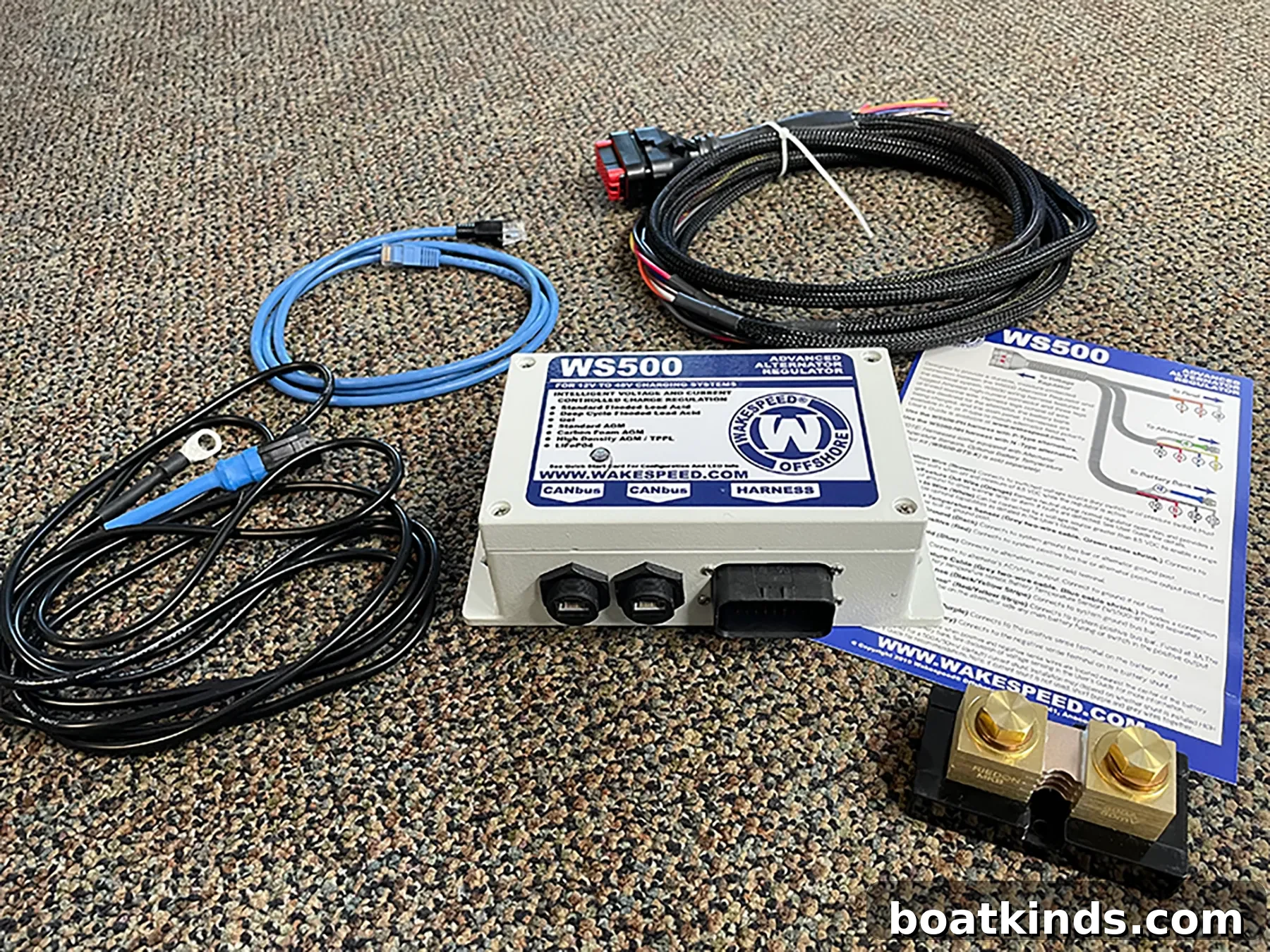
Upgraded alternators or large battery banks often use external regulators. An internal regulator fixes the finishing voltage and may not account for battery type or ambient temperature, potentially over- or under-charging certain battery chemistries. An external regulator, mounted away from engine heat and vibration, allows more sophisticated charging profiles and features.
Trace the smaller gauge wiring from the alternator: if it disappears into the engine harness, the unit likely uses an internal regulator. External regulators are typically mounted on a bulkhead near the engine. Relocating sensitive electronics away from engine heat improves longevity and enables more advanced charging algorithms.
Treating Batteries Kindly
For weekend boats with two or three small lead-acid batteries, a stock alternator with an internal regulator is usually adequate if you maintain proper electrolyte levels. The cost of installing an external regulator may not be justified for lightly used systems where batteries last several years.
However, large battery banks, frequent deep cycling, or advanced chemistries (carbon foam, lithium) benefit from precise charging. External regulators can manage multi-stage charging—bulk, absorption, float—and adapt voltages to specific battery chemistries and temperatures. Brands such as Balmar, Victron and Sterling Power, among others, make regulators with varying capabilities for marine applications.
Battery and alternator temperatures affect charging. Cold batteries need higher voltages; hot batteries need lower voltages to avoid gassing or damage. Temperature sensors (thermistors) mounted to battery terminals feed the regulator so it can adjust charging voltages. Alternator-mounted thermistors allow the regulator to reduce output when alternator temperature approaches unsafe levels—useful when charging large lithium banks that accept high current until nearly full.
More Testing
For externally regulated systems, verify the regulator receives power and turns on with the ignition; blown fuses or poor grounds are common causes of no output. Faulty temperature sensors can also falsely limit charging; a common diagnostic step is temporarily isolating sensor inputs to observe behavior. Many modern regulators offer Bluetooth or NMEA 2000 monitoring and proprietary diagnostic interfaces.
One diagnostics procedure for external-regulated alternators is the “full-field” test. With caution and following the alternator manufacturer’s instructions, disconnect the alternator’s field lead, tape the wire end, and momentarily jumper the alternator output (battery voltage) to the field terminal while the engine is running. If battery voltage climbs rapidly, the external regulator is likely faulty (the jumper bypasses the regulator and forces maximum alternator output). If voltage does not rise, the problem is inside the alternator. Do not leave an alternator full-fielded—doing so will overcharge and damage batteries.
Complex charging environments—solar input, large inverter loads, rapid engine rpm changes—can confuse simple regulators that only sense battery voltage. These regulators may limit alternator output unnecessarily or fail to deliver adequate charge when the battery can accept more current.
Power on Tap
If your boat runs large DC loads (air conditioning on DC, gyrostabilizers, long anchorages without a generator) you’ll want a robust, monitored charging system and an alternator/regulator that can replenish large battery banks efficiently. Higher-output alternators and smart regulators reduce charge time and increase flexibility at anchor.
Understanding alternator components, routine inspections, and basic electrical tests helps keep your charging system reliable and your battery bank healthy. A properly functioning alternator and regulator are central to enjoying extended time aboard with the power you need.
This article originally appeared in the March 2023 issue of Passagemaker magazine and the June 2023 issue of Soundings.