How Onne van der Wal Keeps His Propeller Clean and Upgrades His Boats
Preventing Marine Growth: Why Propspeed Works for Propellers
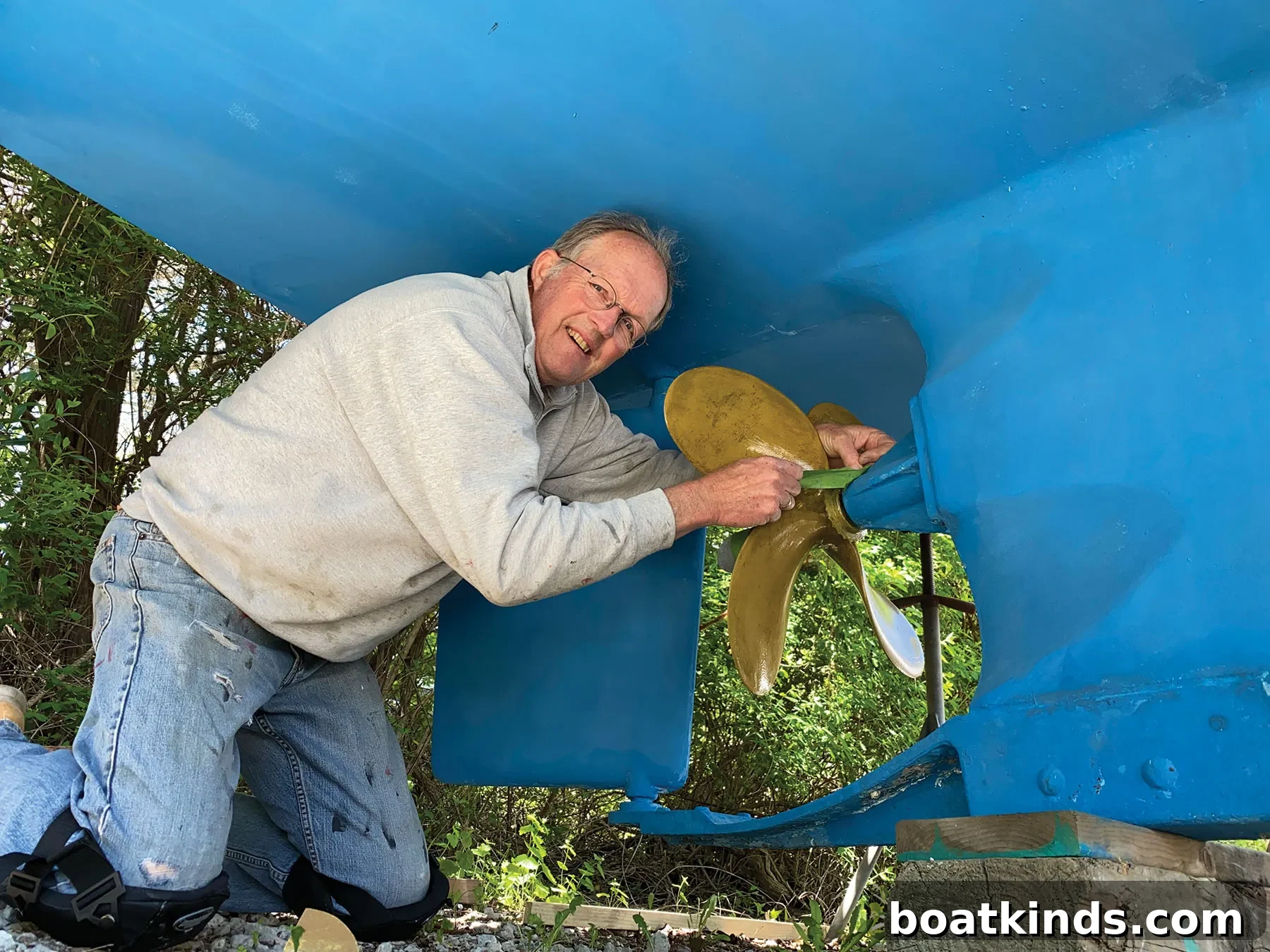
Keeping a propeller free from marine growth is critical for performance and fuel efficiency. For photographer and boat owner Onne van der Wal, the solution has been Propspeed. He applied the foul-release coating to the propeller on his 1972 Pearson 36, Snoek, and the results were striking: the propeller stayed clean for about three seasons, remaining bright and shiny every time he dove on the hull.
Onne had tried several other products with limited success; barnacles and marine film would return quickly after haul-out. When performance mattered — especially for Snow Goose, his slower 1986 Grand Banks 32 — he consulted Propspeed’s technical representative, Keith Mayes, for guidance and a demonstration.
The Proper Application Process
Mayes emphasizes that applying Propspeed is straightforward but requires careful preparation and timing. The process begins with thorough sanding: Onne’s propeller was sanded with 80-grit paper using an orbital sander for broad areas and hand-sanding for tight spots. Clean surfaces and the removal of contaminants such as finger grease are essential. Propspeed kits include Propclean wipes for degreasing and Propprep wipes for chemical preparation before the Etching Primer.
When mixing the Etching Primer Base and Hardener, timing and ambient temperature affect how quickly the primer cures. A second coat must be applied while the first coat remains tacky to ensure optimal adhesion. Propspeed recommends working in temperatures between 60 and 90°F and provides timing guidance for recoat windows. A simple tip is to wear a glove and check tackiness with a finger to know when to apply the next coat.
After the two primer coats — which produce the distinctive yellow-golden primer color — the Clear Coat foul-release layer must be applied within the same timing window. If you can’t cover the entire running gear in one pass, Propspeed suggests breaking the propeller into sections and finishing in stages. In addition to props, it’s common to coat transducers, rudders, and struts for better long-term fouling protection.
“You can do it yourself,” Onne says. He watched Keith apply the coating and plans to do future applications himself, expecting two to three seasons of protection from a proper job. For boatowners who want reduced drag and fewer dives to scrape growth, Propspeed has been a reliable choice for Onne.
Replacing a Tired Forward Hatch
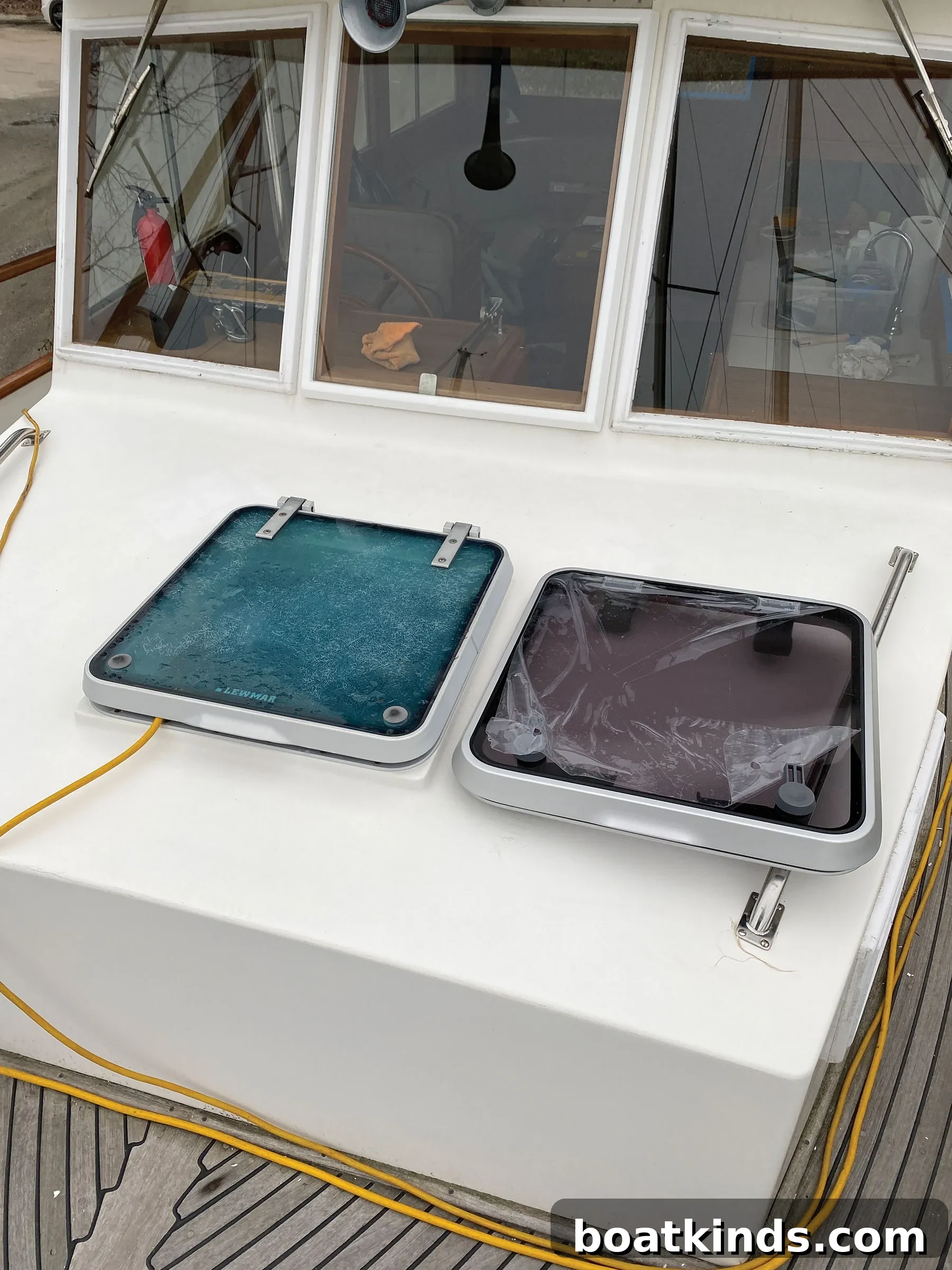
Onne also tackled a worn forward hatch with a cracked lens and failing stays. A previous owner had replaced the original Grand Banks fiberglass hatch with a slightly larger Lewmar hatch decades earlier, requiring modifications to the original opening. Fortunately, Lewmar still produces the same hatch size, which made sourcing a replacement possible.
The installation was straightforward but required careful trimming and finishing. Onne removed the old hatch fasteners and pried out the old assembly. The main challenge was creating small cutouts in the fiberglass to fit the slightly larger hinge blocks of the new hatch. He used Fein and Milwaukee multitools to carve the recesses, then scraped, sealed, and painted the modified areas to restore a clean surface.
After a dry fit to confirm alignment and operation, he applied marine-grade TotalBoat Seal sealant and secured the hatch with the original stainless-steel screws that were still in good condition. To allow the new rubber seal to form to the frame properly, Onne avoided fully latching the dogs until warmer weather lets the gasket relax and conform to the hatch flange.
Electronics Upgrade: Raymarine and a Custom Seaview Pod
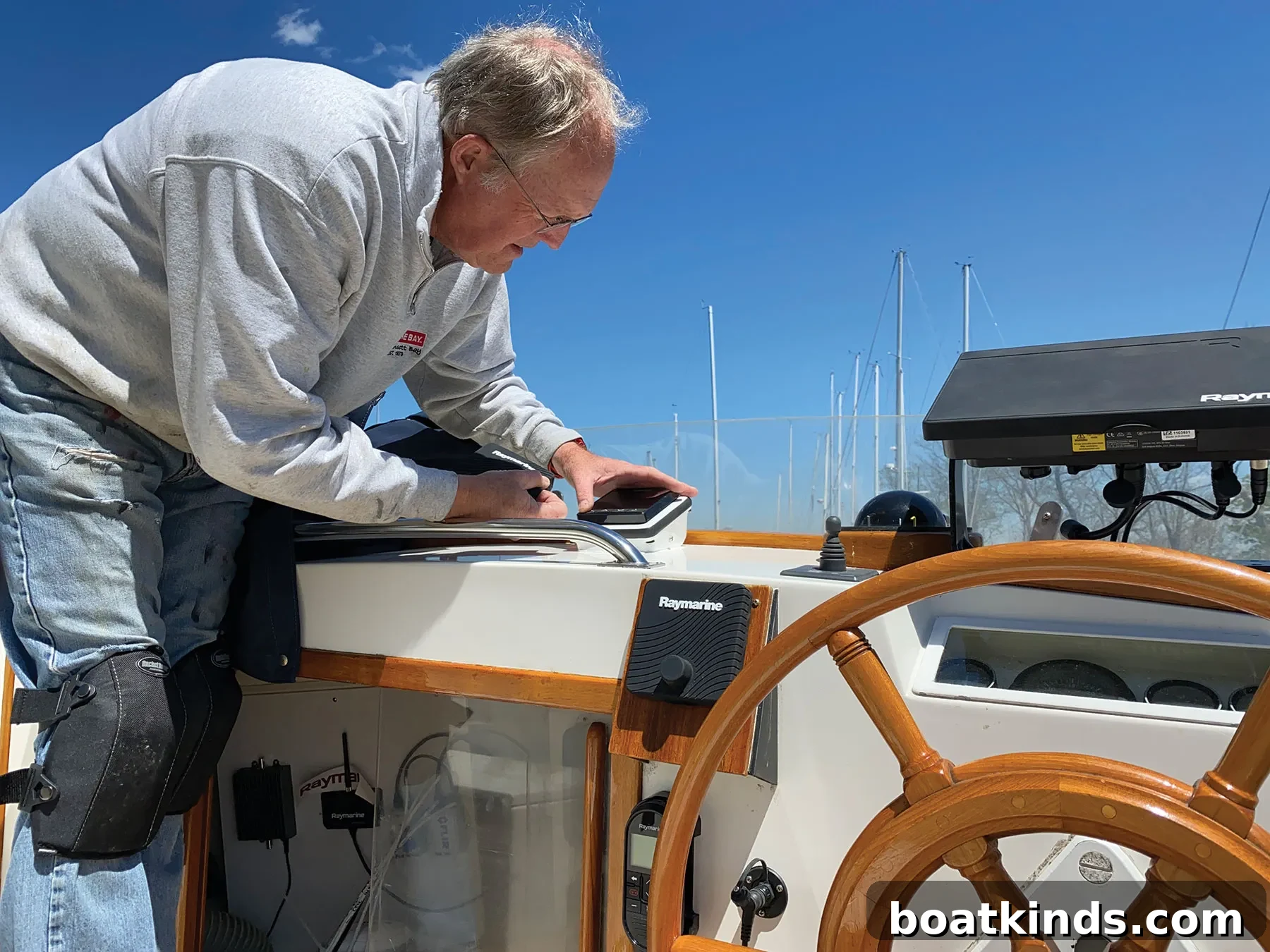
On the flybridge, Onne installed a 12-inch Raymarine Axiom Pro chartplotter and a p70s autopilot controller. He also wanted a multifunction display to monitor wind, depth, and other marine data. While the Raymarine i70s would have been ideal, finding a mounting location required some creativity.
Browsing Seaview’s catalog, Onne found accessory pods designed for their Sail Pod, Deck Pod, and Rail Pod systems. The pods are made from marine-grade, UV-resistant ABS plastic, and one model could be modified to house the i70s. He trimmed the back of the pod on a bandsaw, smoothed it on a disc sander, and fitted a teak backing plate to mount the instrument securely to the flybridge console. A bead of marine sealant around the cut created a watertight seal.
Onne stresses planning the assembly sequence before closing up the installation so the mounting screws and connections remain accessible. He jokes that he works out solutions while swimming laps in the pool — visualizing the steps, the order of assembly, and how to secure components makes the hands-on work quicker and more satisfying.
This article was originally published in the July 2021 issue.