
Uffa Fox: Pioneer of Modern Dinghy Design and Sailing Innovation
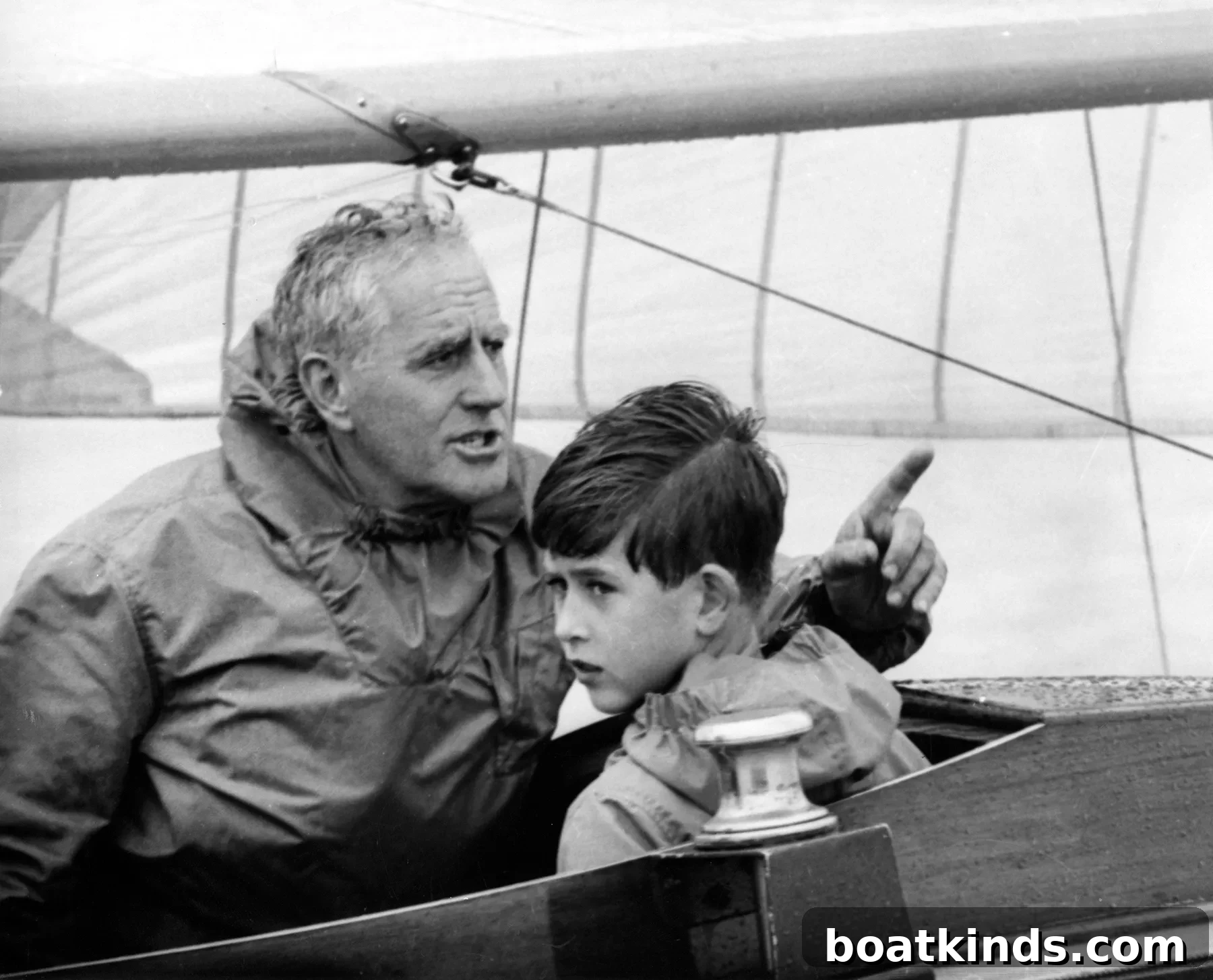
In 1919, at just 21 years old, Uffa Fox launched his boatbuilding business, Uffa Fox Ltd., on the Isle of Wight, beginning the career of one of England’s most influential boat designers. Born in East Cowes on the Solent, Fox grew up surrounded by boats and water, and his lifelong passion for sailing would shape both his personality and his professional legacy.
Fox’s unconventional character made him a memorable figure in British yachting circles. He developed a close relationship with the royal family—most notably teaching the then Prince of Wales, now King Charles III, how to sail. Fox also served as principal skipper for Prince Philip, and anecdotal stories about his irreverent sense of humor followed him through life. In the foreword to Fox’s biography, Prince Philip wrote, “His life was one long campaign for the freedom of the human spirit and against the foolish, the stupid and the self-important, the whole conducted with a cheerful breeziness that disarmed all but the hardest of cases.”
Fox’s taste for adventure and flair was evident early on. At 23, while serving as scoutmaster to a group of nine Sea Scouts, he took his teenage crew aboard a 27-foot open whaler—propelled by oars and sail—on an unplanned voyage across the English Channel and up the Seine toward Paris. The trip, undertaken without full parental consent, ended with a Coast Guard reception when the party returned; they had been presumed castaways. The escapade cost Fox his role as scoutmaster, but it also underscored his daring, resourcefulness, and willingness to push conventional boundaries.
Despite his sometimes impulsive behavior, Fox was a methodical and inventive designer who reshaped dinghy sailing. He introduced and popularized features that would become central to performance small-boat design, including planing hulls that allowed dinghies to surf over waves and achieve higher speeds, and the use of trapezing to enhance crew leverage and performance. His practical experimentation and bold thinking produced boats that were both fast and accessible, helping to widen participation in sailing.
Among Fox’s enduring designs are the Firefly, Albacore, Flying Fifteen, and National 18—classes that remain active in racing fleets today. He also influenced popular cruiser-racer designs that reached broader markets; his work led to widely built models such as the Day Sailer and the Javelin. More than 15,000 Javelins and Day Sailers were produced, introducing countless Americans to the joys and challenges of sailing and helping to grow the sport across generations.
Beyond recreational sailing, Fox applied his ingenuity to life-saving and military needs. In 1943 he designed the airborne lifeboat, known as the A-1 lifeboat, a compact lifeboat intended to be dropped by aircraft for survivors at sea. That invention was credited with saving many lives during wartime and demonstrated Fox’s capacity to adapt small-boat technology to urgent, real-world problems.
Fox’s influence extended through the sailors and designers he inspired. His boats combined practical seafaring experience with bold experimentation, producing designs that were at once competitive on the racecourse and approachable for club sailors. The combination of speed, stability, and simplicity made his boats attractive for training, racing, and family sailing alike.
Uffa Fox died in 1972, but his legacy remains visible in dinghy classes still sailed around the world, in the techniques and hull forms that inform modern small-boat design, and in the stories of a designer who married creative daring with hands-on craftsmanship. His life and work stand as a reminder that innovation often comes from those willing to challenge orthodoxy while keeping an eye on practical performance and enjoyment on the water.
This article was originally published in the April 2024 issue.