Range anxiety is often the first objection to electric outboards, but Newport, an electric outboard manufacturer based in Stockton, California, aims to change that perception with lightweight lithium iron phosphate (LiFePO4) batteries designed specifically for marine use. Their NT300 3-hp electric outboard and matching battery systems prioritize low weight, modularity and real-world endurance, making them an appealing option for small-boat owners, tender users and cruisers looking for a quiet, low-maintenance propulsion alternative.
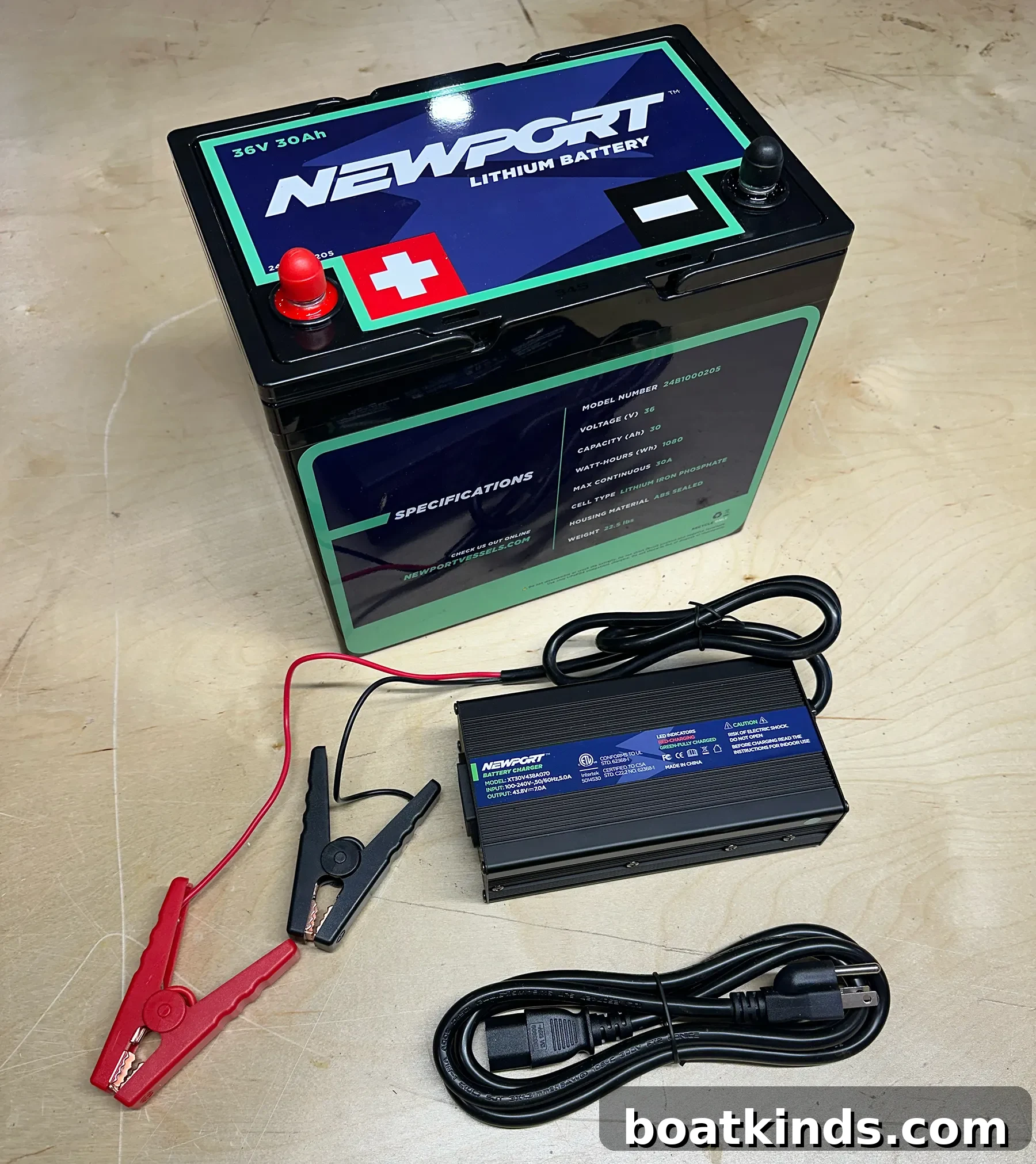
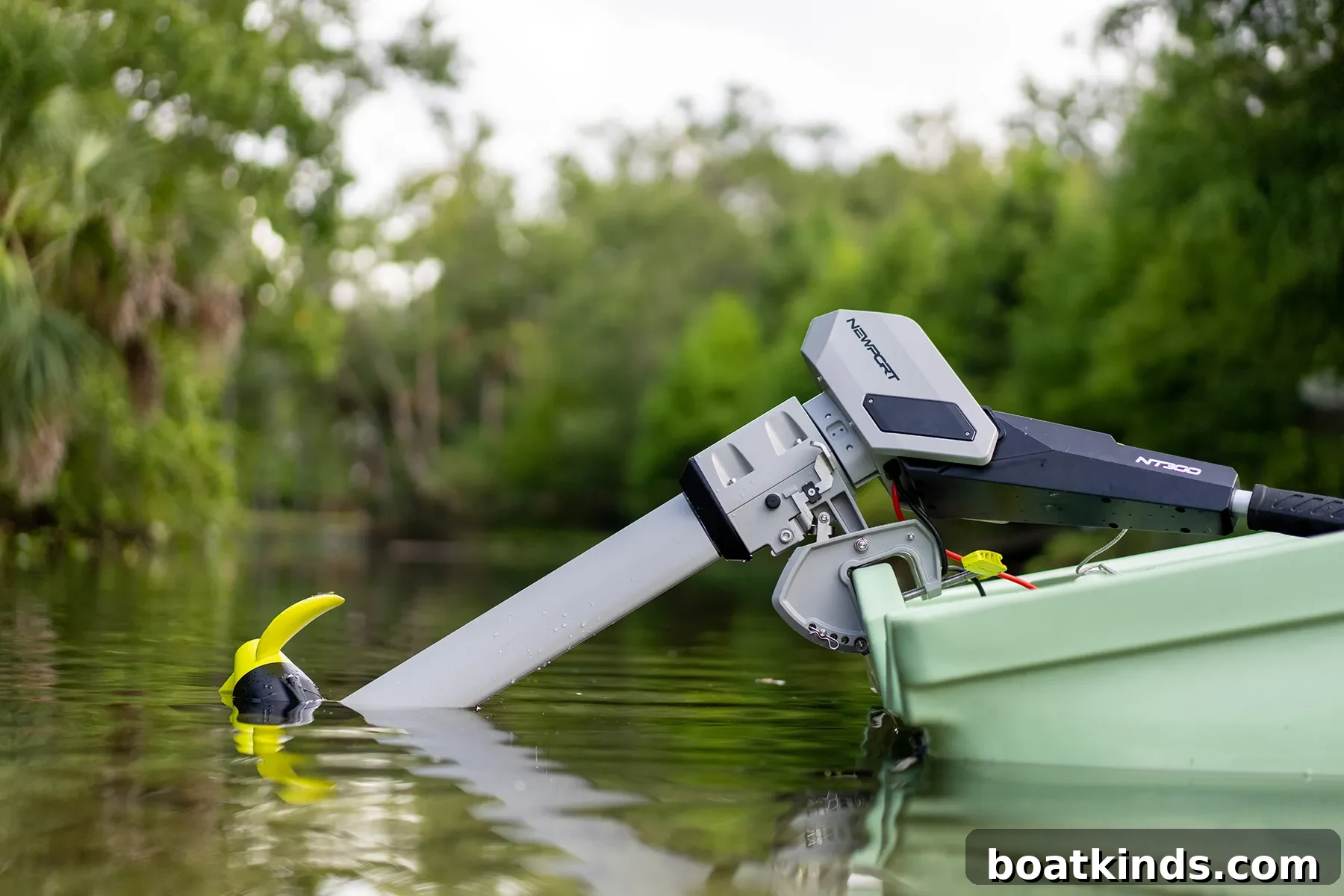
To test the system, we mounted a Newport NT300 with a standard-length shaft on the transom of an 11-foot, 7-inch fiberglass rowboat, added one of Newport’s 36V/30Ah LiFePO4 batteries, and loaded the boat with more than 400 pounds of passengers. Rather than placing the battery on top of the motor—as some manufacturers do—Newport supplies batteries in multiple voltages and capacities (24V/50Ah, 36V/30Ah and 36V/40Ah) that connect to the motor via a cable. This layout reduces stern weight and lets owners choose greater capacity batteries to extend range without overburdening the motor mount.
During a mix of slow cruising and full-throttle runs around the harbor, the NT300 impressed with silent low-rpm operation and smooth, responsive power when demanded. With two adults and a small child aboard, the motor easily maintained a quiet low-speed cruise and then pushed the hull to just over 5 knots at wide-open throttle, according to a handheld GPS. That top-end speed exceeded Newport’s advertised maximum of 4.5 knots for the unit on this boat and matched what we judged to be the hull’s practical maximum speed based on wake formation. Noise rose with rpm, as expected, but most of the sound came from the propeller and water movement rather than the motor itself.
After running numerous wide-open passes for an hour, we returned to the dock expecting to have drained a substantial portion of the battery. The tiller display, however, still showed five of five bars and a measured 39.9 volts on the battery. Newport’s manual equates a 39.9-volt reading to roughly 90–99 percent state of charge, indicating our test had only lightly impacted the battery’s capacity. Newport states that, depending on load and conditions, their marine batteries can power the NT300 for up to four hours at full speed. In our use case—mixed cruising and bursts—the 36V/30Ah battery clearly delivered many hours of operation, and the 36V/40Ah extended-range battery should provide still greater endurance.
The NT300 accepts one 36-volt LiFePO4 battery like the 30Ah tested, three 12-volt LiFePO4 batteries wired in series, or three 12-volt deep-cycle lead-acid AGM or GEL batteries wired in series. Newport also reports the motor can be used with compatible 24-volt trolling-motor batteries when configured for that system. That flexibility lets buyers balance cost, weight and range: lower-cost smaller batteries can save money, while higher-capacity 36-volt packs preserve the unit’s advantages in runtime and power delivery.
Price-wise, the NT300 and its batteries are competitive in the small electric outboard market. At the time of testing the standard-length motor was listed at $1,099 and the 36V/30Ah battery at $949, giving buyers a clear baseline for system cost. Newport even claims the NT300 paired with one of its 36-volt packs can enable a trip as long as 66 miles on a single charge—an optimistic figure that will vary widely depending on vessel, speed, load and conditions, but one that illustrates the manufacturer’s confidence in battery capacity and efficiency when cruising at low speeds.
Installation and handling of the relatively light components were straightforward. The motor weighs about 22 pounds and our test battery 24.3 pounds, making them manageable for most users when fitting or removing gear. We would welcome a built-in handle on future motor iterations to make carrying even easier. Each Newport battery includes Bluetooth-enabled monitoring so operators can view real-time status on a smartphone using Newport’s app for iOS and Android, a useful supplement to the small digital readout on the tiller that can be hard to read underway.
Newport offers practical accessories, including tiller extensions for those who prefer to sit farther forward and a $48 cable extension that allows placing the battery farther into the cockpit to improve weight distribution. Suggested improvements for future versions include a more robust anode cover or dedicated battery box and a tiller handle with clear forward and reverse indicators, but overall the product package left a positive impression.
With multiple charging options—standard household outlet, solar charge systems or an inverter aboard a mother ship—the NT300 is well suited as a dinghy outboard or tender motor, especially for cruisers who want the option of lengthy excursions once ashore. Its combination of quiet operation, modular battery choices and surprising endurance make it a compelling choice for small-boat operators seeking an electric propulsion solution.
This article was originally published in the May 2024 issue.