
The moment I scrambled across the seaweed-covered rocks onto Eastern Egg Rock and spotted Theresa Rizza’s hat, I realized I was in for an ordeal.
Rizza, a 28-year-old bird researcher from California and the seasonal supervisor on this seven-acre seabird sanctuary off the coast of Maine, wore a wide-brimmed hat completely plastered with bird droppings. Kat Lane, a 22-year-old researcher from Ottawa, had a similar hat, equally decorated in guano.
Eastern Egg Rock sits exposed to the Atlantic at the mouth of Muscongus Bay and hosts hundreds of puffins during the breeding season, along with thousands of terns and hundreds of laughing gulls. Rizza and Lane warned me: the birds do not welcome intruders near their nests. Splatting unwary visitors with feces is one blunt method they use to push people away. I was wearing a mesh baseball cap, and the terns made it clear I would not leave unmarked.
The morning had started pleasantly. I met Don Lyons, director of conservation science at the Audubon Society’s Seabird Institute, at the institute’s waterfront facility in Bremen, Maine. Lyons was making a supply run to the island and taking seasonal staff Ke Coco Deng and volunteer Harper Brown for weeks-long field rotations on Eastern Egg Rock.
Deng, 19, grew up birdwatching along a flyway in Shenzhen, China, and recently graduated from Bard College at Simon’s Rock with a degree in environmental studies and visual studies. She had previously worked on Stratton Island, another Audubon seabird colony, where a close encounter with a black guillemot chick sparked her fascination with alcids—the short-winged, short-legged, web-footed divers that include puffins. On Eastern Egg Rock she planned a 10-week research stint focused on close observation—hoping to see “the color of their irises and to count the scales on their feet.”
Brown, 20, an animal science student at Penn State, volunteered as a Project Puffin research assistant. She had already spent time on Pond Island and was preparing for two weeks on “Egg,” as the researchers call Eastern Egg Rock.
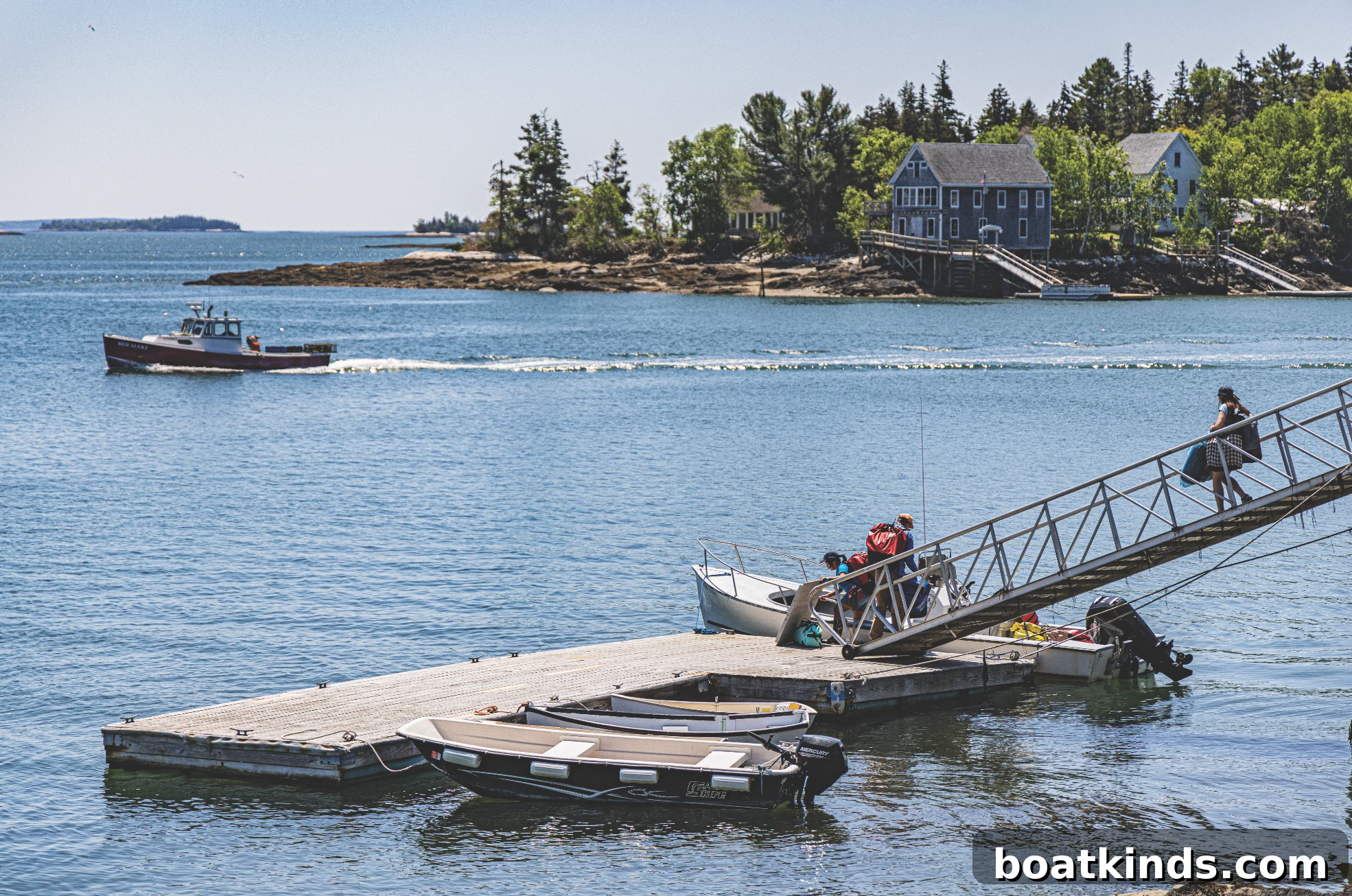
We loaded Luna III, the institute’s 23-foot Seaway, with food, personal gear and six 20-liter jerry cans of fresh water. Everyone put on Mustang life jackets as Lyons started the 115-hp Mercury outboard. The Downeast-style hull looked rugged enough for Muscongus Bay—which can become treacherous—but this day offered calm seas and a gentle breeze.
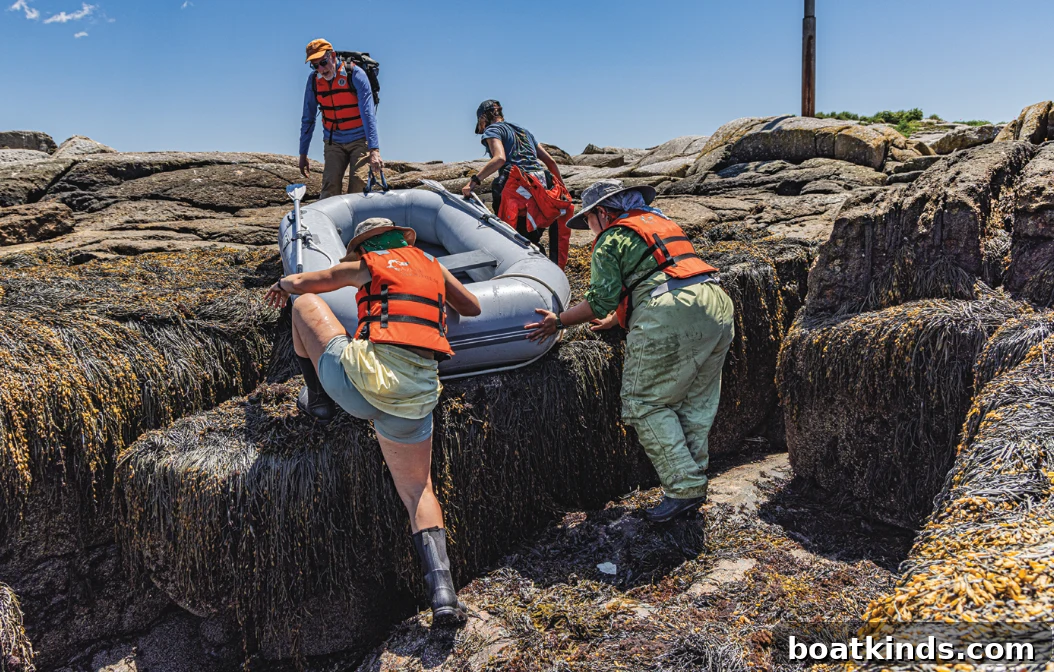
We covered the eight miles to the island in about 30 minutes. Lyons explained that supply runs must be scheduled for good weather: Eastern Egg Rock has no dock, and surges can make landings difficult. Everything and everyone is shuttled to shore in an inflatable stored on the island.
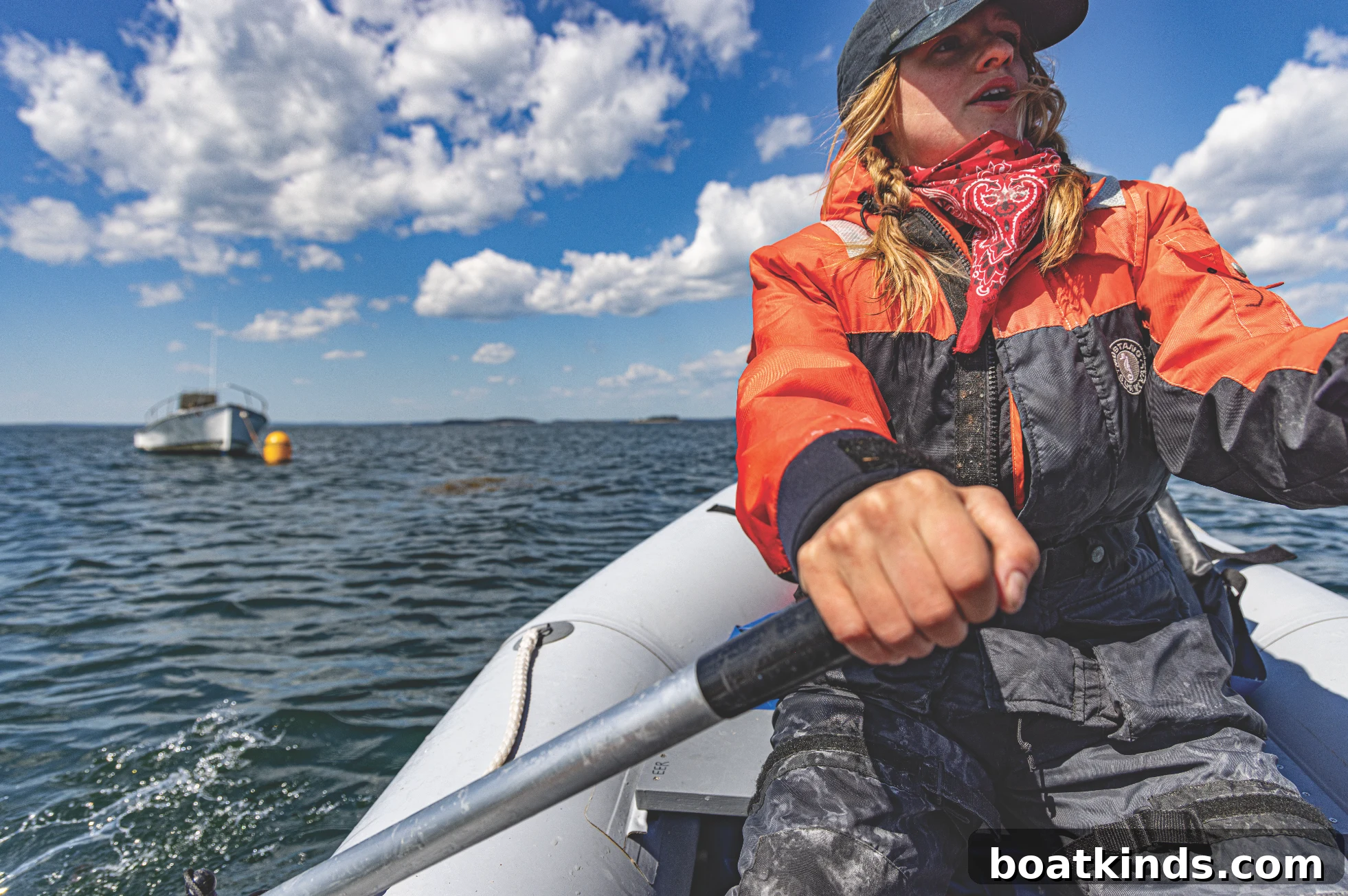
As we pulled up, Arden Kelly—already aboard the 8-foot Achilles and wearing a one-piece Mustang anti-exposure suit—rowed toward us. Rowing a hard-bottom inflatable in wind and current is hard work, but Kelly, 24, handled the oars like a pro. A former rafting guide from Boston who discovered Project Puffin while studying environmental sciences and wildlife biology in Montreal, she had spent previous seasons on the island and was back for a three-month position.
Once ashore, Rizza carefully explained how to navigate the island without crushing any nests. Eastern Egg Rock is dotted with burrows and ground nests—even along narrow foot trails—so walking requires constant attention. Make a wrong step and you won’t die, but you might unintentionally destroy a nest.
Eastern Egg Rock is renowned in seabird conservation as the site of the world’s first restored seabird colony. For millennia, this treeless granite ledge hosted puffins, terns, eiders and other species. But in the late 19th and early 20th centuries, egg harvesting and hunting for meat and feathers decimated those populations. In 1973, Dr. Steve Kress launched Project Puffin, reintroducing puffins and developing techniques to reestablish seabird colonies on islands like Eastern Egg Rock.
Early efforts involved raising chicks on nearby Hog Island and moving them to Eastern Egg Rock to imprint the site as home. Over decades nearly a thousand puffins were released; by 1981 five pairs were nesting on the island, and by 2017 there were more than 172 pairs. Terns returned as well, and today the island supports around 1,000 tern pairs, including endangered roseate terns that had been driven low by the plume trade.
Granite boulders around the island provide burrow space for puffins and black guillemots, while the interior’s dense grasses, raspberry and elderberry thickets shelter ground-nesting species such as laughing gulls and eiders. There are no terrestrial mammals on the island, and its distance from the mainland keeps out many predators—though winged predators like herring and black-backed gulls remain a major threat.
In the program’s early years lethal removal of intrusive gulls was necessary; today researchers rely on non-lethal hazing—pointing, clapping, and occasional fireworks—to discourage aerial predators. Rizza recounted a memorable encounter with a bald eagle: after they fired a screamer the eagle stalled midair, then—she said—“we watched a hundred teeny tiny terns chasing off this big eagle. It was really impressive.”
Watching chicks hatch and fledge is the job’s great reward, Rizza said, but the work also involves hard seasons. Warmer ocean temperatures can push fish into cooler waters, making it difficult for parents to find food for chicks. Severe storms at key moments can also cause mass chick mortality. “There isn’t really anything you can do to prevent baby birds from dying,” she said. “While death is part of life on a seabird colony, it’s brutal in seasons when most chicks fail.”
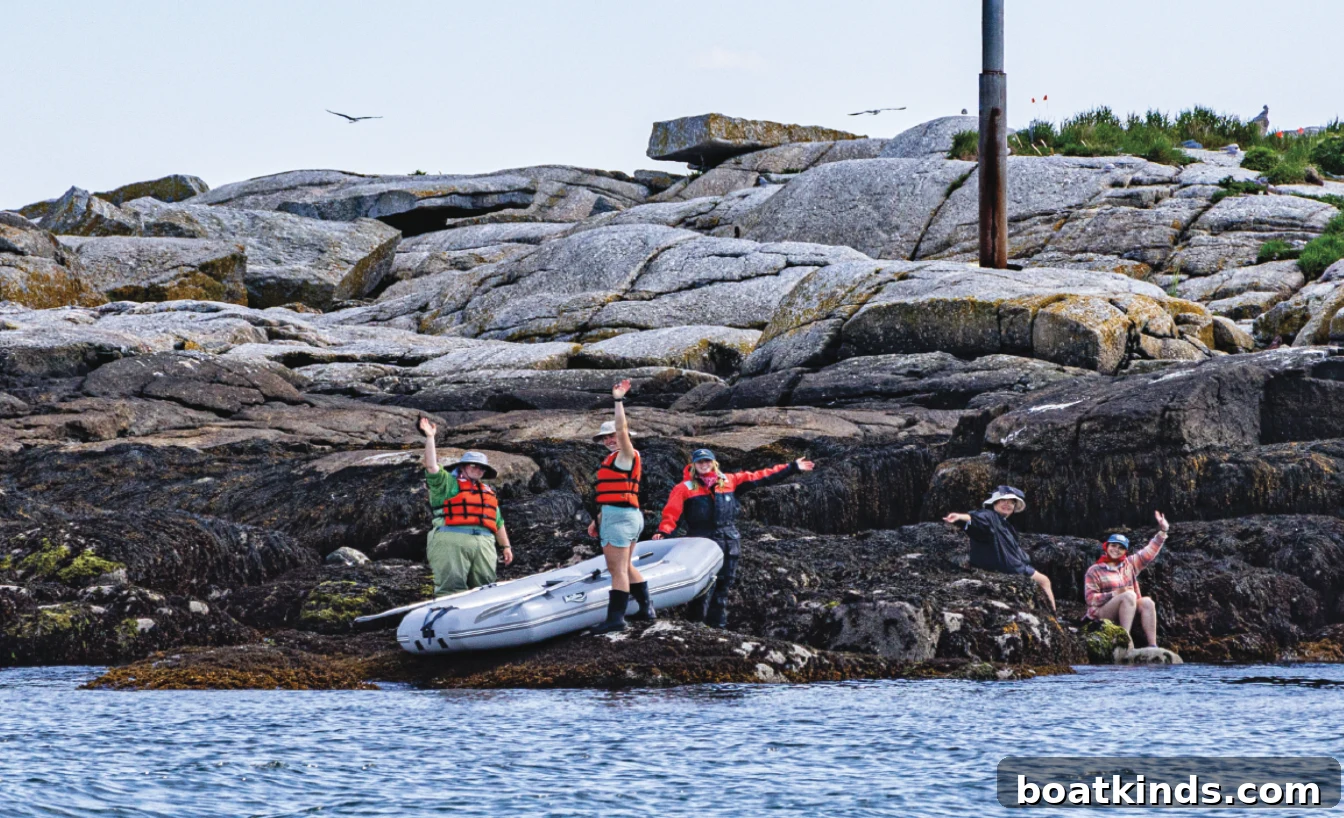
Life on the island can be isolating, but visitors and small joys break the routine. As Lane and Kelly secured the inflatable, a Hardy Boat Cruises vessel arrived for its twice-daily puffin tour. The tour boat included an Audubon employee who spoke to passengers about the birds. Kelly noticed the boat first, urged everyone to wave, and even launched into a YMCA-style dance that got many tourists to join in.
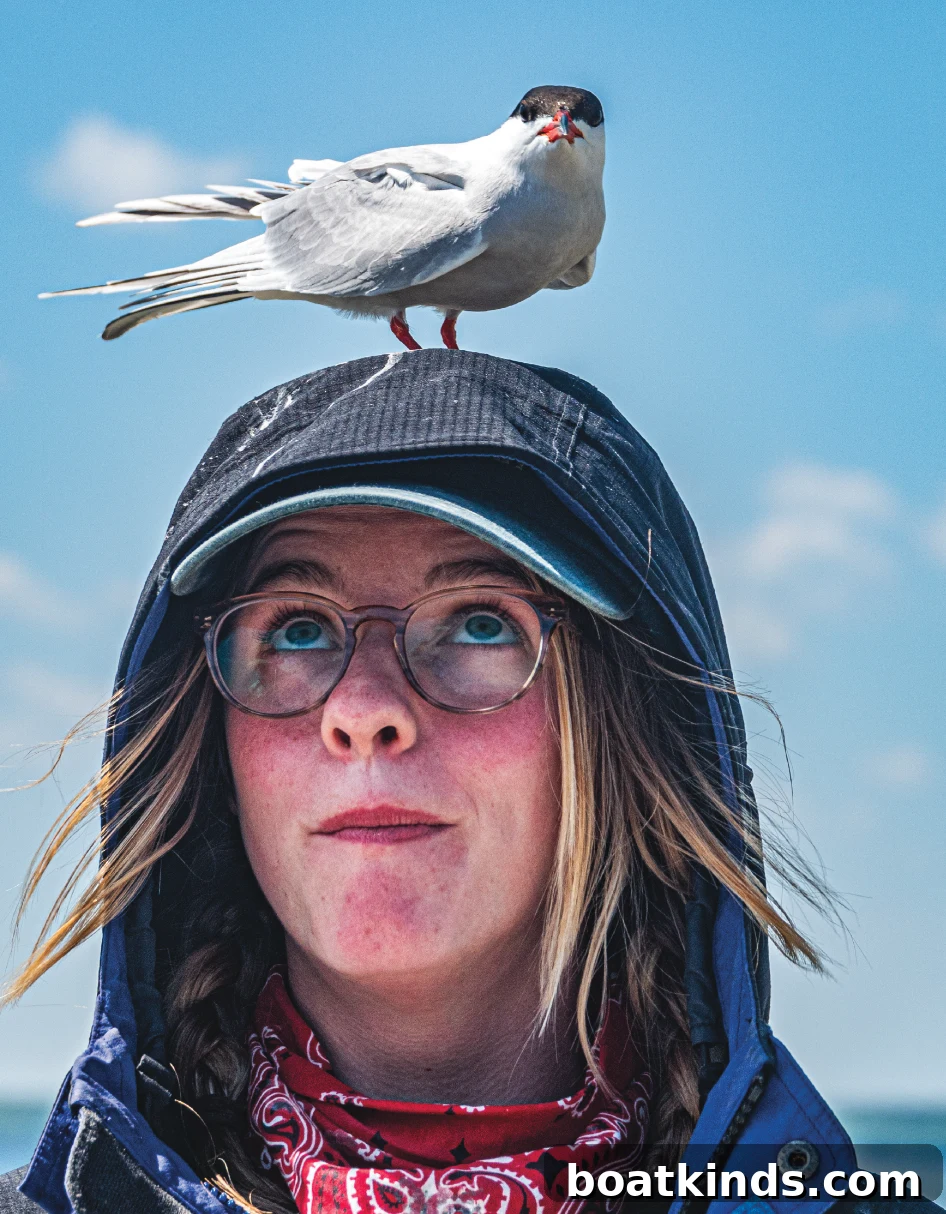
Approaching the researchers’ camp and the tern nesting areas, the birds erupted in protest. Common terns, though small, have up to a 31-inch wingspan, are agile aerial hunters, and can hover like tiny helicopters. Protective of their nests, they can attack human heads with sharp bills. My cap did little to stop the terns’ pecks; they managed to strike my scalp through the mesh.
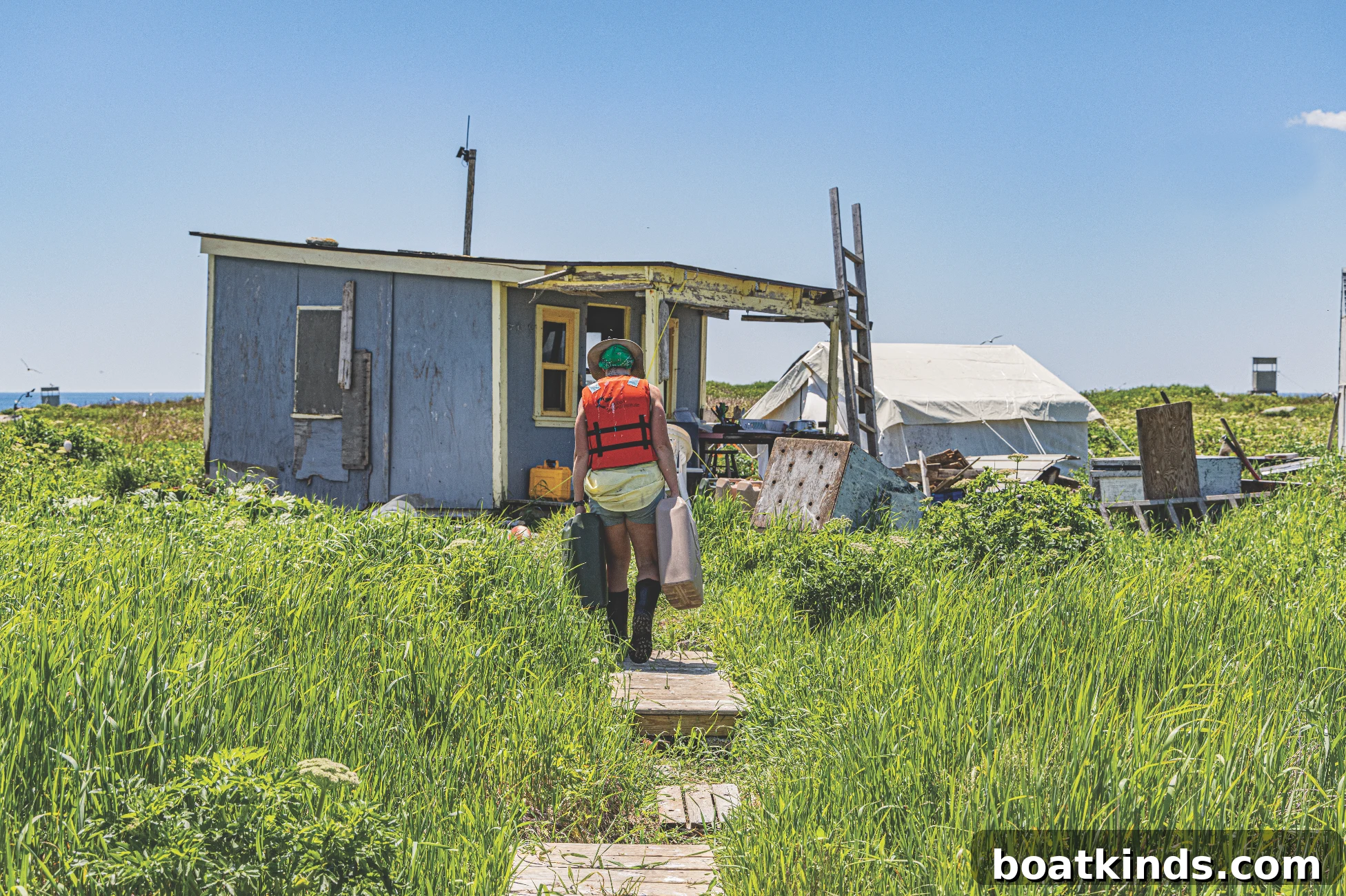
The researchers’ camp is stark and functional. There’s no running water—drinking water is ferried in; showers are rare and come from solar-heated rainwater bags; the “head” is a small outhouse with a composting toilet. Sleeping quarters are 8-by-8 platforms where tents are set up and covered with tarps to protect against UV and bird droppings. For many years a 12-by-12 cabin nicknamed the “Egg Rock Hilton” served as the communal hub, but two powerful January storms in 2024 displaced the cabin and left it unusable.
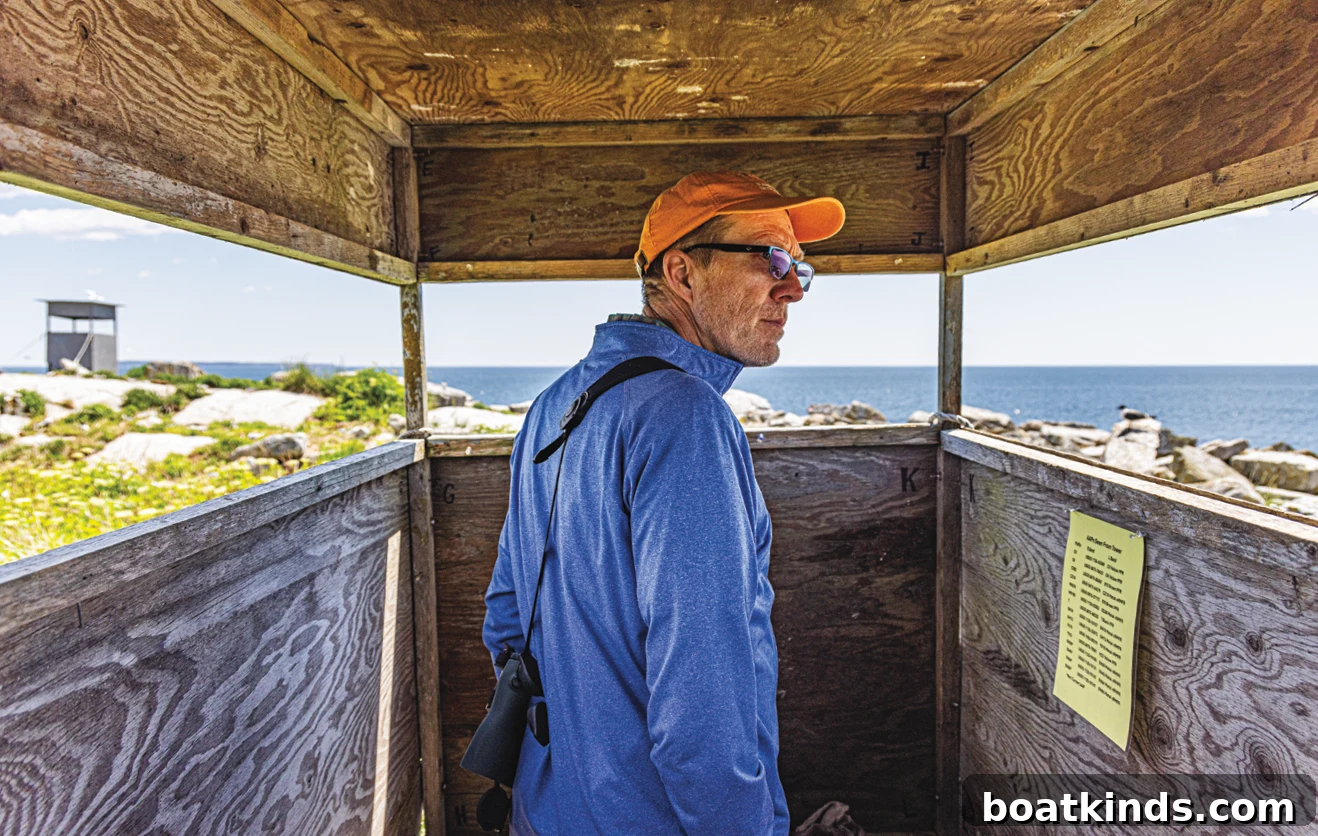
After the supplies were stowed and Deng and Brown settled in, Lyons led us to a large blind on the island’s eastern end so we could watch puffins up close.
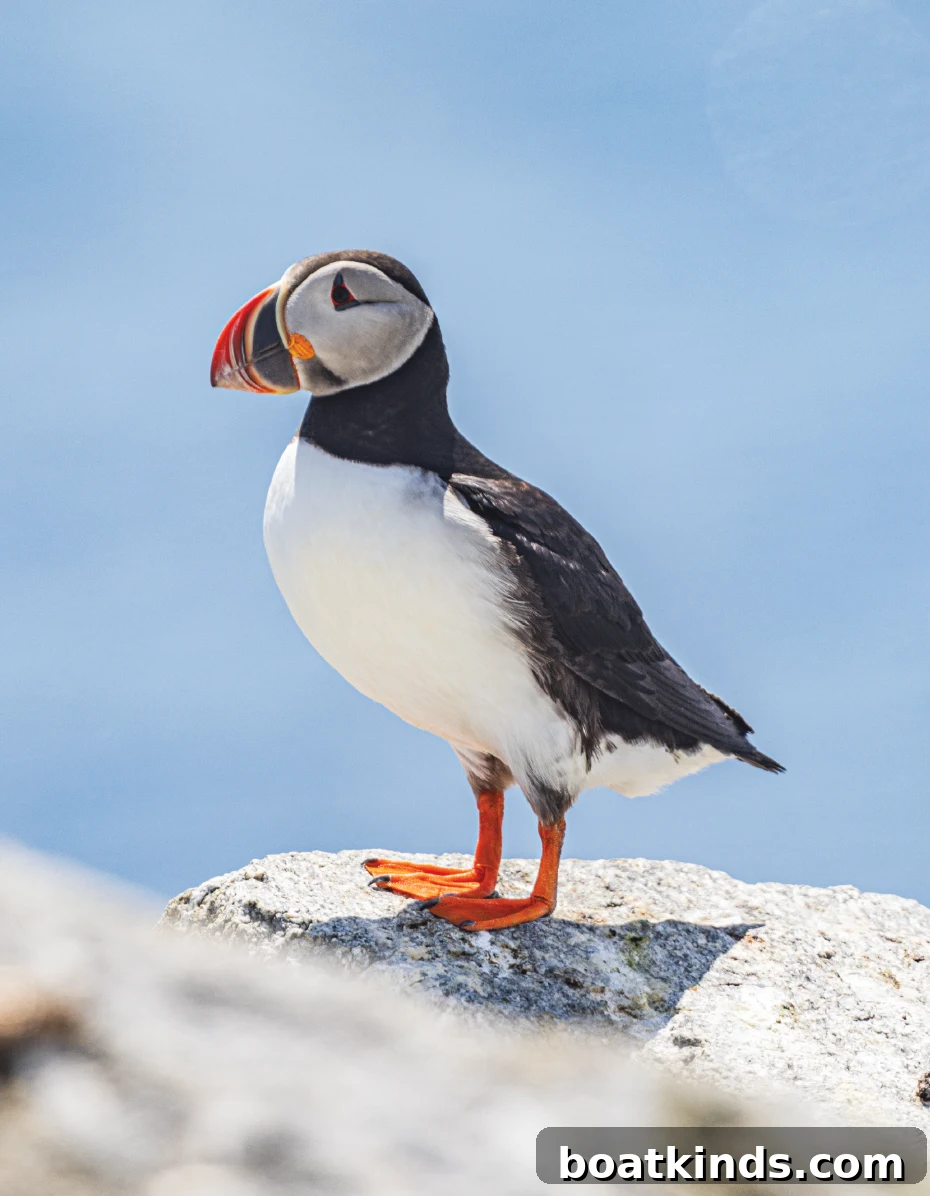
Lyons showed me how waving a hand over my head discourages tern attacks. Inside the blind, a puffin emerged from its burrow. Up close, their triangular, multicolored bills explain the nickname “sea parrots.” Over the next hour alcids shuffled from crevices, waddled to vantage rocks, flapped hesitantly and launched into flight. Their takeoffs looked comical—short-winged birds building speed then propelling themselves into the air—and their landings were abrupt, like a carrier landing. Their behavior earned them another apt name: clowns of the sea.
Lyons explained that puffins are adapted for underwater hunting: short wings make them faster swimmers, though less efficient fliers. Their rapid wingbeats—sometimes up to 400 beats per minute—generate impressive speed in flight, though Lyons suggested 35 miles per hour is a more realistic top speed than the oft-quoted 50 mph.
We returned to the team for an egg count, a task that intensifies tern aggression. Rizza handed me a leather garden glove to tuck under my cap; Lane gave me a small surveying flag to wave. The field team dresses creatively for protection—Deng repurposed part of her graduation robe and used cut fabric to shield her hair. Inside the fenced nesting area, the terns’ attacks were loud and fierce; Lane and Kelly had to shout the counts over the buzzing birds, standing unfazed among the nesting terns.
As we moved between nesting areas, a bird bomb exploded on the sleeve of my jacket. Lane turned and grinned. “There’s your badge of honor,” she said.
This article was originally published in the August 2024 issue.