
How to Buy a Boat: Practical Advice from 50+ Years of Experience
I’ve been buying boats for more than 50 years — everything from sinking derelicts and kayaks to sailing dinghies, small power cruisers, center consoles and large motorsailers. Some were new, most were not. Over the decades I’ve learned a lot about buying, maintaining and enjoying boats. Below I’ve distilled the most useful lessons into clear, practical guidance for anyone considering a boat purchase.

The project-boat trap: know your limits
If you want a boat, go for it — but be sensible. Many buyers call a distressed hull a “project boat” and expect to fix it. Too often that becomes a years-long frustration, particularly for people who underestimated the time, cost and physical demands. Fixing a house often has a robust supply chain and a competitive market of contractors and suppliers. Boat work is different: the market is smaller, special skills are required, regulations can be restrictive, and waterfront space and qualified labor are expensive.
If you can’t reasonably do the maintenance within your budget and energy, don’t buy that boat. Instead, choose a newer, smaller or simpler boat that fits your skills, money and plans. Every boat requires upkeep and occasional professional help — know your abilities and honestly evaluate whether you can learn what’s required or afford to hire experts.
Practical steps before you buy
Boat buying demands due diligence. Here are effective tactics to protect your purchase and your wallet:
- Inspect thoroughly yourself. Crawl on your hands and knees if necessary before spending on a surveyor. You’ll spot obvious issues and get a sense of whether the boat is right for your needs.
- Think about use. Check spaces, load-carrying ability, seaworthiness in waves and whether the layout matches the way you plan to use the boat.
- Choose an independent surveyor with a solid reputation. Preferably pick someone who does not work primarily for the broker to avoid perceived conflicts of interest.
- Attend the survey and ask questions. A surveyor should explain findings and guide you through what needs attention.
- Insist on a meaningful sea trial in conditions and with a loading profile that reflect how you’ll actually use the boat. An empty, flat-water run rarely reveals real-world behavior.
If things feel beyond your capacity or the boat isn’t right, walk away. Boats don’t evaporate — there are many used and new options. Investigate thoroughly to get what you want now and years down the road.
Get it right the first time
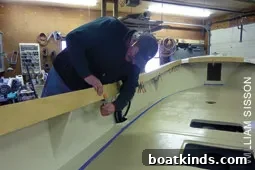
Because boats are expensive to upgrade and you rarely recoup your outlays at resale, aim for the best boat you can reasonably afford and manage. Think long term: if you plan to have children or aging crew aboard, factor in extra sleeping areas, easier access, wider decks and equipment that reduces physical strain like bow and stern thrusters or joystick control. Trading up frequently, as you might with a car, is usually impractical in boating.
It’s an investment in pleasure, not a financial asset
Unlike a house or car, a boat rarely appreciates in monetary value. Engines, electronics and other systems often don’t add equal resale value to what you spend replacing them. If you view a boat as a monetary investment, you’ll likely be disappointed. Instead, consider the intangible returns: time with family, independence, connection to nature and the satisfaction of boat ownership. Those benefits are the true payoff.
Pig’s ear boats: value in older, simple designs
Some boats can be improved economically and hold or gain value: generally smaller, well-built, simple boats with a proven design and a following. Older fiberglass boats often had thicker hulls and generous cockpit glass, and some models have become quasi-classics. These can be found in rough condition at low prices and made attractive again with cleaning, repainting, gelcoat repair and varnish work — tasks many owners can do themselves.
Classic examples include older Boston Whalers and certain Makos. As Bill Sisson has advised, buy models with a design pedigree and an active owner community — that makes maintenance and resale easier.
Don’t fear every defect — evaluate it

Some commonly feared issues can be manageable depending on severity and context:
- Blisters. They range from superficial to deep delamination. Repairing blisters is labor-intensive but feasible; large-scale jobs are best left to professionals.
- Moisture in hulls. Moisture-meter readings vary and don’t always indicate catastrophic structural damage. If you like a boat with elevated moisture readings, have the surveyor investigate for actual damage rather than relying on a single meter reading.
- Soft spots in cored decks. Balsa-cored decks can rot if water intrusion occurs. In some boats this is localized and repairable; in others — especially under stanchions or in cored transoms — it can be a deal-killer.
Always consult a qualified surveyor to understand the specific issue and repair costs. Surveyors may present worst-case scenarios; use that input to make an informed decision rather than an automatic rejection.
Avoid boats with major disaster histories
Be cautious with hurricane-damaged or submerged boats. Flooding and prolonged submersion can hide structural damage and corroded wiring that’s not obvious externally. Sand or mud in hidden areas, separation of bulkheads or extensive wiring corrosion can lead to costly, hard-to-see repairs. Cosmetic problems and canvas or minor rigging replacement are usually fixable if the price is right. Get yard quotes for significant repairs before you buy.
Repowering isn’t always “just” a repower
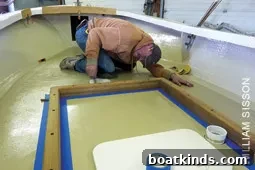
When brokers casually suggest “just repower,” be skeptical. Removing an old engine and installing a new one can be as costly as the engine itself. Mounting configurations, transmission availability and other integration issues can greatly increase cost. Factor repower expense into your purchase decision.
Take your time and be flexible
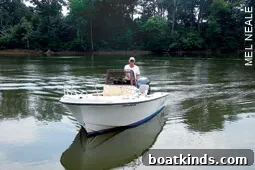
Buying a boat should not be an impulse decision. It can take months or years from the first idea to closing a sensible purchase. Use that time to research types and models, talk with owners, take educational rides and refine your priorities. Often initial desires change as you learn more about ongoing costs for dockage, maintenance and equipment. Being flexible—sometimes choosing smaller or simpler vessels—often leads to more satisfaction over the long haul.
If you’re seriously considering your first or next boat, keep the idea alive but grounded in reality. Do your homework, know your limits and enjoy the process of finding the right boat for the way you’ll use it.
June 2013 issue