
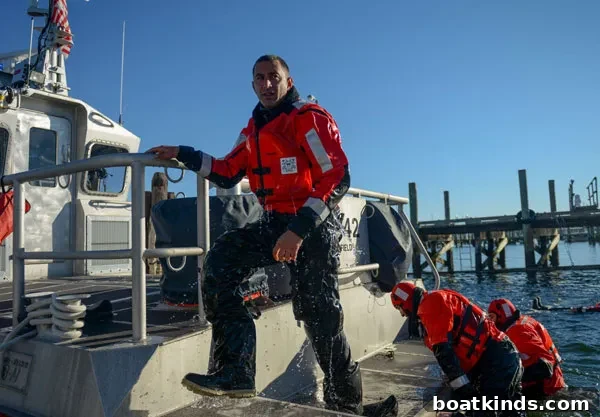
Winter boating isn’t for everyone, and I understand why some people haul their boats out and wrap them up. But many of us keep sailing through the cold months — chasing wind, targeting winter cod and pollock, or just enjoying the clear, brisk days offshore. Whatever your reason for being on cold water, remember one critical point: cold water and water aren’t the same thing. Cold water presents unique, immediate risks that demand different gear and a different mindset.
Always wear a life jacket when you’re on deck in cold weather, but if the water is at or below about 55°F (13°C), a dry suit is an essential piece of survival equipment. Dry suits range from reasonably priced to very expensive, but the cost is small compared with the protection they provide if you fall overboard in winter. Below are practical considerations to help you decide what to wear and how much to invest in this lifesaving gear.
Benefits
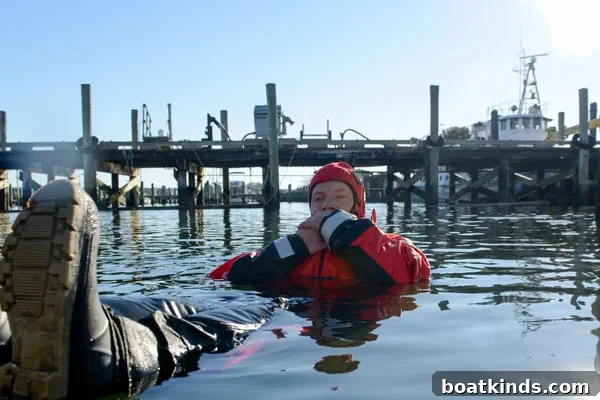
The most immediate danger in cold-water immersion is the Cold Shock Response — that involuntary gasp, hyperventilation, and cardiovascular stress that can occur in the first minute or two. Because that reaction is triggered by cold on the skin, a properly fitted dry suit eliminates the initial cold shock risk by keeping you dry. That alone can buy critical seconds and prevent drowning.
Dry suits also contribute buoyancy when paired with a PFD. They are not a replacement for a life jacket, but they work together: the dry suit keeps you insulated and often provides additional floatation, and a PFD helps keep your airway clear. The next major risk, cold incapacitation — the rapid loss of muscle strength and coordination caused by conductive heat loss in cold water — is also reduced. Unlike wetsuits, which trap water against the skin, a dry suit prevents most conductive cooling. With the right insulating underlayers, a dry suit can preserve function for hours, allowing you to swim, operate a radio, signal for help, or wait for rescue.
Some people find dry suits uncomfortable, but that’s usually due to choosing the wrong suit or not adjusting it properly. With the right fit and layering strategy, dry suits can be worn for long shifts — even overnight — without the discomfort many expect.
Insulation Matters
“Dry suit” refers to the suit’s ability to keep water out, not to keep you warm. The insulation comes from what you wear underneath. There’s no magic fabric that provides warmth without thickness: more insulating layers trap more heat. I prefer non-insulated dry suits because they let me change underlayers to match conditions. That flexibility matters since you’ll be wearing whatever insulation you choose while you’re on deck and potentially while awaiting rescue.
Don’t just put your normal boating clothes under a dry suit. Use synthetic or wool baselayers designed to wick moisture and retain warmth when damp. How much insulation is enough? A practical rule: wear as much insulation as you can comfortably work in on deck for several hours. Too little leaves you vulnerable if you end up in the water; too much can cause overheating and fatigue while working. I own multiple layers in varying thicknesses and adjust them based on temperature, wind, and activity level.
The Deal With Seals
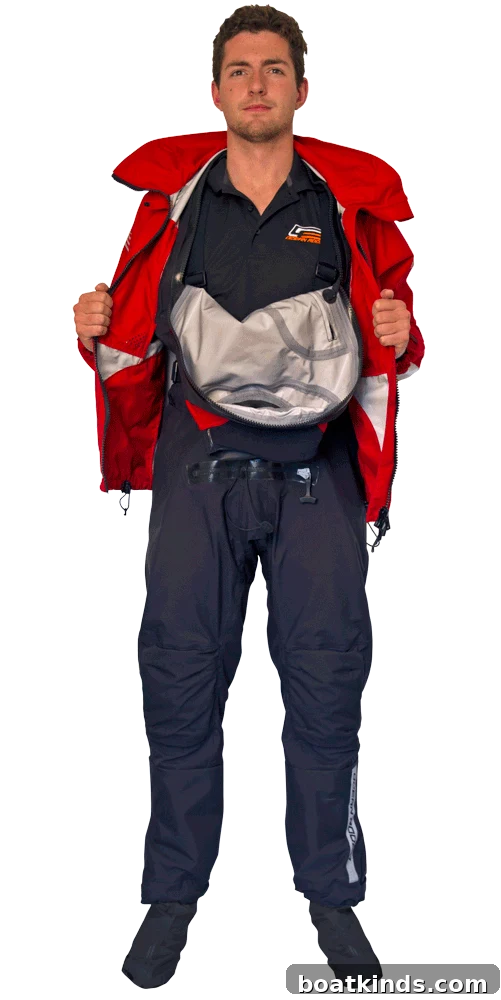
The interface between the suit and your skin — the neck and wrist seals — is a critical choice. Seals come in different materials (latex, silicone, neoprene) and designs (adjustable or custom/permanent). Each option has pros and cons. After years of use, my preferred setup is an adjustable neoprene neck seal paired with custom-sized or permanent neoprene wrist seals. That combo balances comfort and protection for long wear on deck.
By contrast, rescue swimmers or divers who expect prolonged submersion often prefer tight, custom-cut latex neck seals for the best possible waterproofing. Those custom seals create a superior watertight barrier but can be uncomfortable for constant wear. Comfort matters: if the suit is unpleasant to wear, you’ll be less likely to keep it on when you need it most.
Zip It
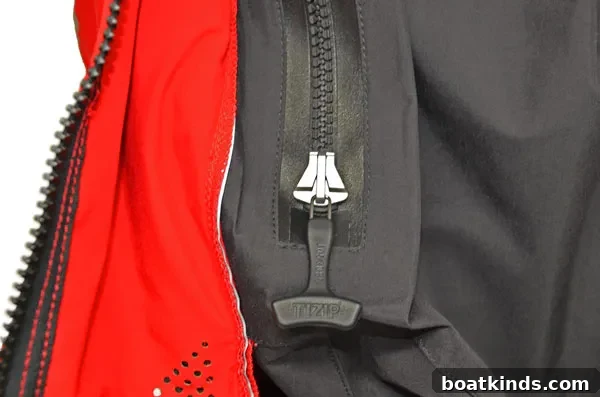
Zippers are another important feature. Modern dry suit zippers are much easier to operate than older models, but the rule is simple: the zipper must be fully closed to keep water out. Even a small amount of water inside a dry suit significantly reduces insulation; Transport Canada reports that half a liter of water in a dry suit can cut insulating performance by about 30%. Maintain your zippers and seals: keep them clean and use the recommended lubricants (often a specific wax) to preserve function.
Seals and zippers can be repaired or replaced, but repairs can be expensive, so follow the manufacturer’s care instructions carefully. Regular inspection and proper maintenance extend the life of your suit and reduce the chance of failure when you need it most.
There’s more to dry suits than this overview can cover. If you don’t own one and are considering buying, you’ll likely have additional questions about fit, brands, repair, and layering strategies. I’m happy to help — contact me at [email protected] — or, if you prefer, you can put your boat on blocks and stay ashore like everyone else. But if you plan to be on cold water, a dry suit is one of the smartest safety investments you can make.