
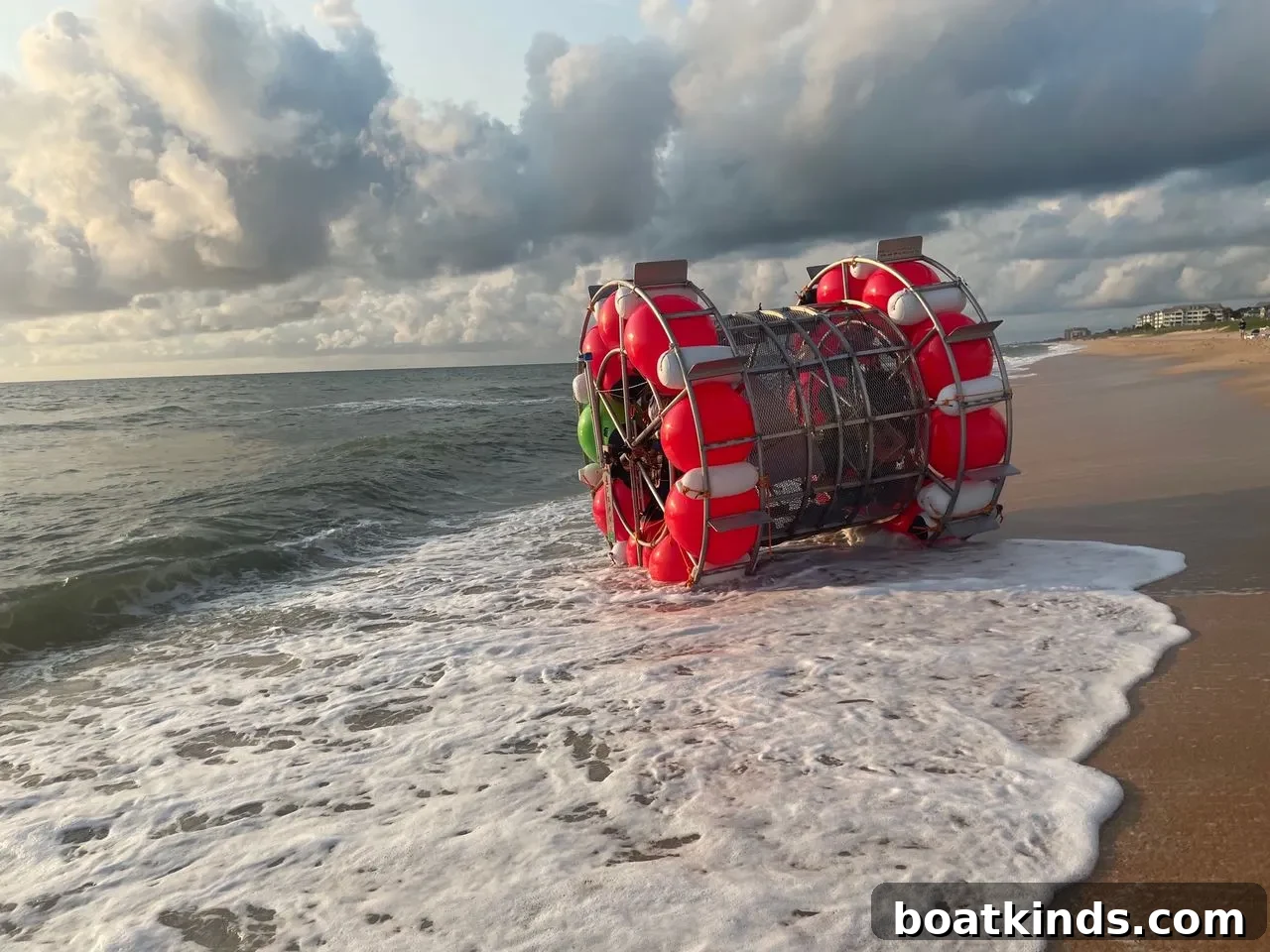
Man Rescued After Attempting Ocean “Run” in Human-Size Hamster Wheel
Last Saturday, the U.S. Coast Guard responded to a beach near St. Augustine, Florida, after a man attempting to cross the ocean inside a large, human-size wheel-like vessel washed ashore. The device, described by onlookers as a “hydro pod” or a floating hamster wheel, drew attention not only for its unusual appearance but because this was not the first time the operator, 49-year-old Reza Baluchi, had attempted such a voyage.
Years of Preparation, A Short Voyage
Baluchi has spent nearly a decade designing and building the hydro pod with the ambition of propelling himself long distances using only his own leg power and the Gulf Stream. His publicly stated plan was to travel roughly 1,000 miles from Florida to New York. On this latest attempt he managed to travel about 25 miles before abandoning the mission, later claiming that his backup GPS and charging cables had been taken.
Whether due to equipment issues, environmental conditions, or other factors, the trip ended much sooner than he had planned. The Coast Guard and other responders treated the incident seriously, in part because solo expeditions of this kind can pose significant risks both to the participant and to those who may be called to rescue them.
Past Attempts and Coast Guard Concerns
This was not Baluchi’s first ocean attempt. In 2014 the Coast Guard rescued him off the coast of St. Augustine when he set out for Bermuda, and in 2016 they came to his aid again after another Bermuda-bound attempt from Pompano Beach. Those prior rescues are part of what has shaped the Coast Guard’s response and the regulatory requirements that officials say must be followed for any future voyages.
The Coast Guard determined that Baluchi’s most recent voyage did not comply with applicable marine safety regulations. Under Captain of the Port Orders, authorities said Baluchi could not continue without a properly equipped support vessel, additional safety and navigation equipment, and a formal voyage plan. The Coast Guard also noted that failure to meet these requirements can result in civil penalties—up to $95,881 in some cases.
Why Regulators Intervene
Officials emphasize that their directives are intended to protect lives at sea and to reduce the danger to sailors and rescuers. Solo, unconventional crossings aboard custom-built craft can quickly turn into rescue operations that place Coast Guard personnel and other mariners at risk. Requiring a support vessel and adequate navigation and safety gear is a way to mitigate those risks while allowing legitimate, well-planned expeditions to proceed safely.
Motivation and Public Reaction
Baluchi, known to be an accomplished marathon runner, has framed his attempts as part endurance challenge and part fundraising effort for charity. Despite repeated setbacks and official interventions, he has repeatedly expressed his determination to continue trying. “I’ll never give up my dream,” he said, adding, “They stop me four or five times, but I never give up.”
Public reaction has been mixed. Some admire his persistence and creativity, while others question the wisdom of undertaking such risky solo voyages without full compliance with maritime safety rules. Observers note the tension between individual ambition and public safety obligations when unconventional projects take to the open ocean.
What Comes Next
For now, the Coast Guard’s position is clear: similar voyages should not proceed without a support vessel, adequate safety equipment, and an approved voyage plan. Whether Baluchi will reconfigure his approach to meet those requirements and attempt another crossing remains to be seen. His history of persistence suggests he may try again—but any future attempt will likely draw close scrutiny from regulators and the public.
As this story develops, it reinforces broader questions about innovation at sea: how to balance individual enterprise and unusual engineering ideas with established safety standards that protect everyone who shares the ocean.