
Artisan Boatworks Builds 40-Foot Daysailer “Wisp” in Record Time
Alec Brainerd’s Artisan Boatworks, a compact yard in Rockport, Maine, is known for restoring and maintaining wooden yachts by some of the world’s most celebrated designers. With a staff of about 16, the yard routinely cares for roughly 80 wooden boats and, since its founding in 2002, has rebuilt nearly 20 classic yachts and completed 19 new builds up to 29 feet. Inside Artisan’s sheds sit designs by Nathanael Herreshoff, William Fife, Starling Burgess, John Alden and others—evidence of the yard’s reputation for high-quality timber work.
In April 2023 Artisan was approached by an experienced sailor in his 80s who wanted something larger than anything Brainerd had built: a well-appointed, easy-to-sail daysailer of about 40 feet. The owner had commissioned multiple yachts over his long career, including two roughly 100-foot builds from Royal Huisman and a 50-footer from Rockport Marine. He needed the new boat quickly and, because other yards were booked, designer Bob Stephens of Stephens Waring Yacht Design in Belfast, Maine, suggested Artisan as the only yard that might deliver on time and to the owner’s expectations.
Stephens had previous experience with Brainerd—Artisan had built a skiff for a Stephens Waring client in 2010 and refitted a 36-foot powerboat—so he trusted the yard’s craftsmanship. “Alec is building at a world-class level with a very small yard and a small crew,” Stephens says. “He achieves that without the large infrastructure and specialty shops that bigger yards have.”
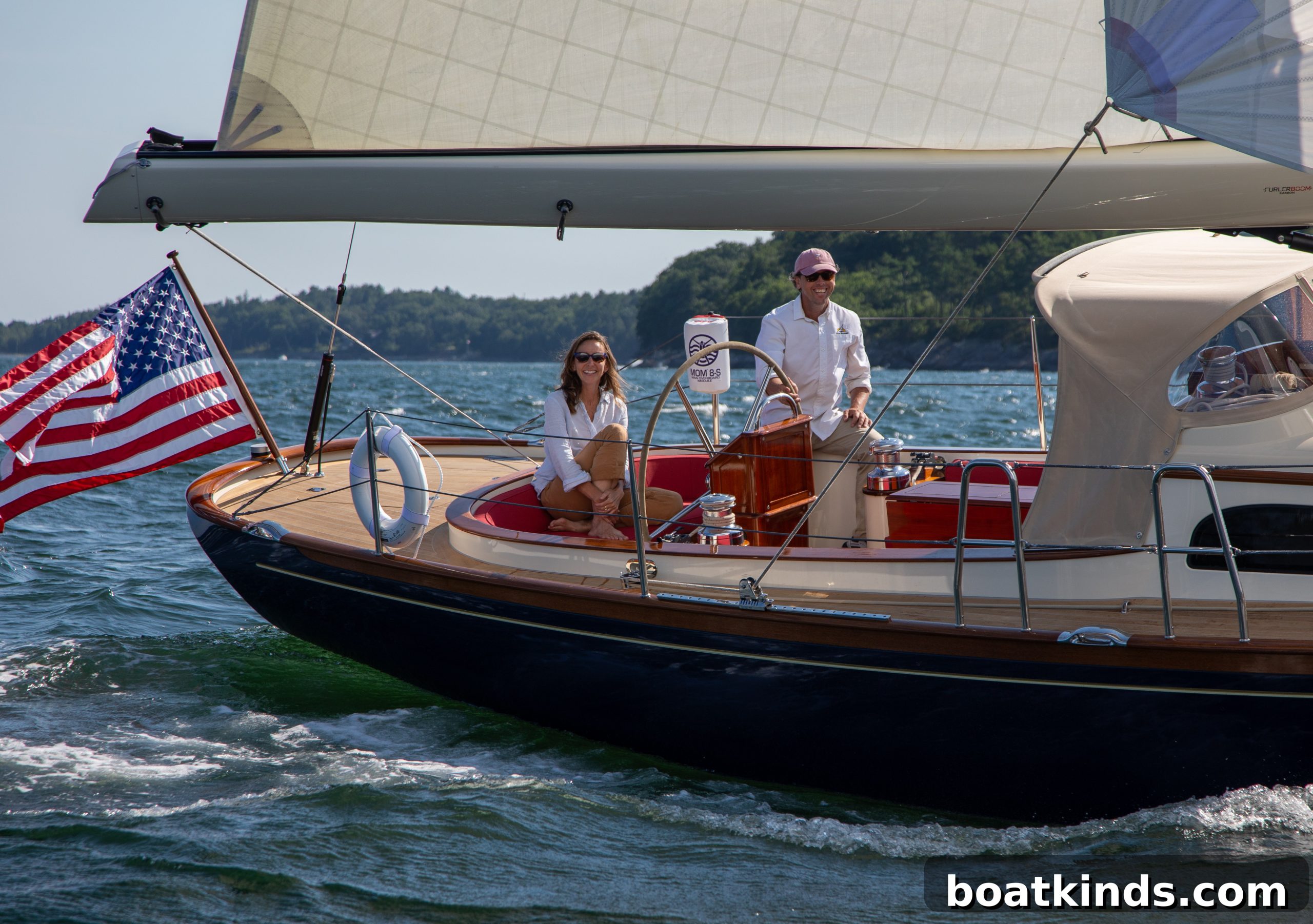
The brief from the owner was clear but demanding: a daysailer that could be handled shorthanded by an octogenarian and his wife, delivered by summer 2024. The boat—named Wisp—needed standing headroom, the ability to sleep aboard, a functional galley and a comfortable head, plus a highly finished cockpit that mirrored the owners’ prior 50-foot boat. It would also require many systems to simplify sail handling: push-button and foot-switch controls for hoisting, trimming and stowing sails; furlers for headsails and boom; electric winches; and hydraulic control for mainsheet, boom vang and backstay.
Stephens and his partner Paul Waring, who both trained as builders at Brooklin Boat Yard, designed Wisp in the tradition of Spirit of Tradition yachts—classic lines married with modern materials and systems. Stephens produced a hull with graceful overhangs reminiscent of mid-20th-century cruiser-racers, a tall Solent rig with carbon spars, a working jib plus a large reacher on fixed furlers, and an under-deck mainsail furling system paired with a reverse-purchase hydraulic cylinder for mainsheet trim.
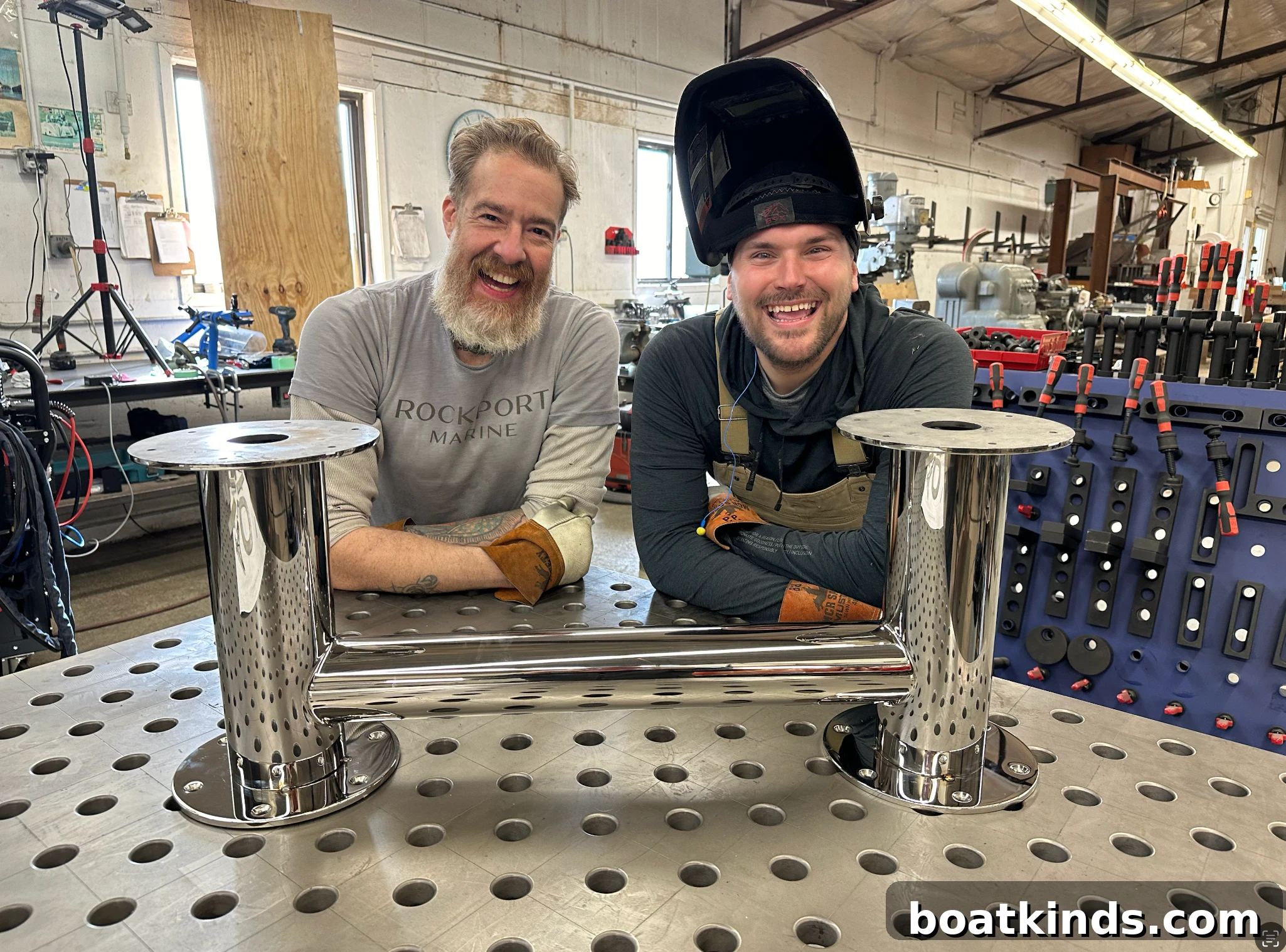
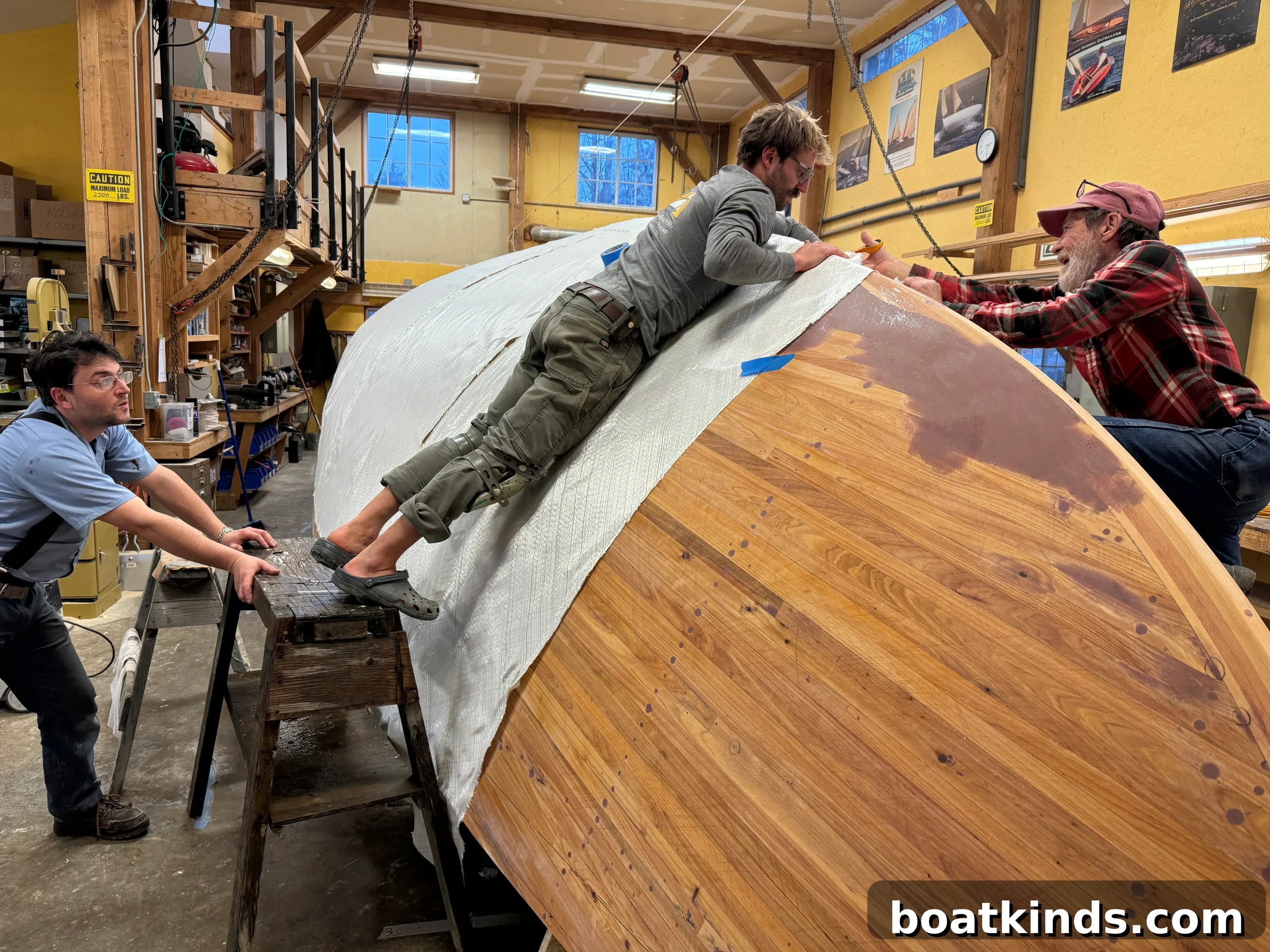
To meet the tight schedule, Stephens specified construction methods that balanced speed and durability: a foam-cored plywood deck for structural integrity and screwed-and-epoxied strip-composite hull planking encapsulated in triaxial sheathing. Artisan relied on a broad network of specialists and suppliers—more than 40 specialists across roughly 30 vendors—to source advanced components, including a Danish roller-furling boom and stanchions from Italy.
After the June 2023 contract, Stephens Waring supplied extensive design documentation—far more than a typical package. Where builders might expect a dozen drawings, Artisan received some 60 plans plus 3D renderings and detailed systems diagrams. That level of detail allowed Brainerd’s compact crew to sequence work efficiently and rely on subcontractors for systems that Artisan does not build in-house.
By late August the CNC-cut deck molds, supplied by Gardner Pickering at Hews & Company in Blue Hill, Maine, were set up in the loft and deck construction began. Hull molds, bulkheads, stem and transom were assembled in October, and a pre-constructed fiberglass cockpit delivered by Lyman-Morse was installed into the deck. The hull planking was complete by mid-December, interior fabrication began immediately afterward, and teak deck patterns were made over the holidays.
In January the keel fin and ballast arrived—the fin cut and assembled at Lyman-Morse and the ballast poured by Mars Metal in Ontario. The hull received fiberglass sheathing and infusion, was flipped upright, and in February was joined to its keel. Over the following months the house and cockpit coaming were completed, interior sheathing and paint finished, tanks installed and Awlgrip applied to the house and cockpit. By late April the teak deck and major interior elements were in place.
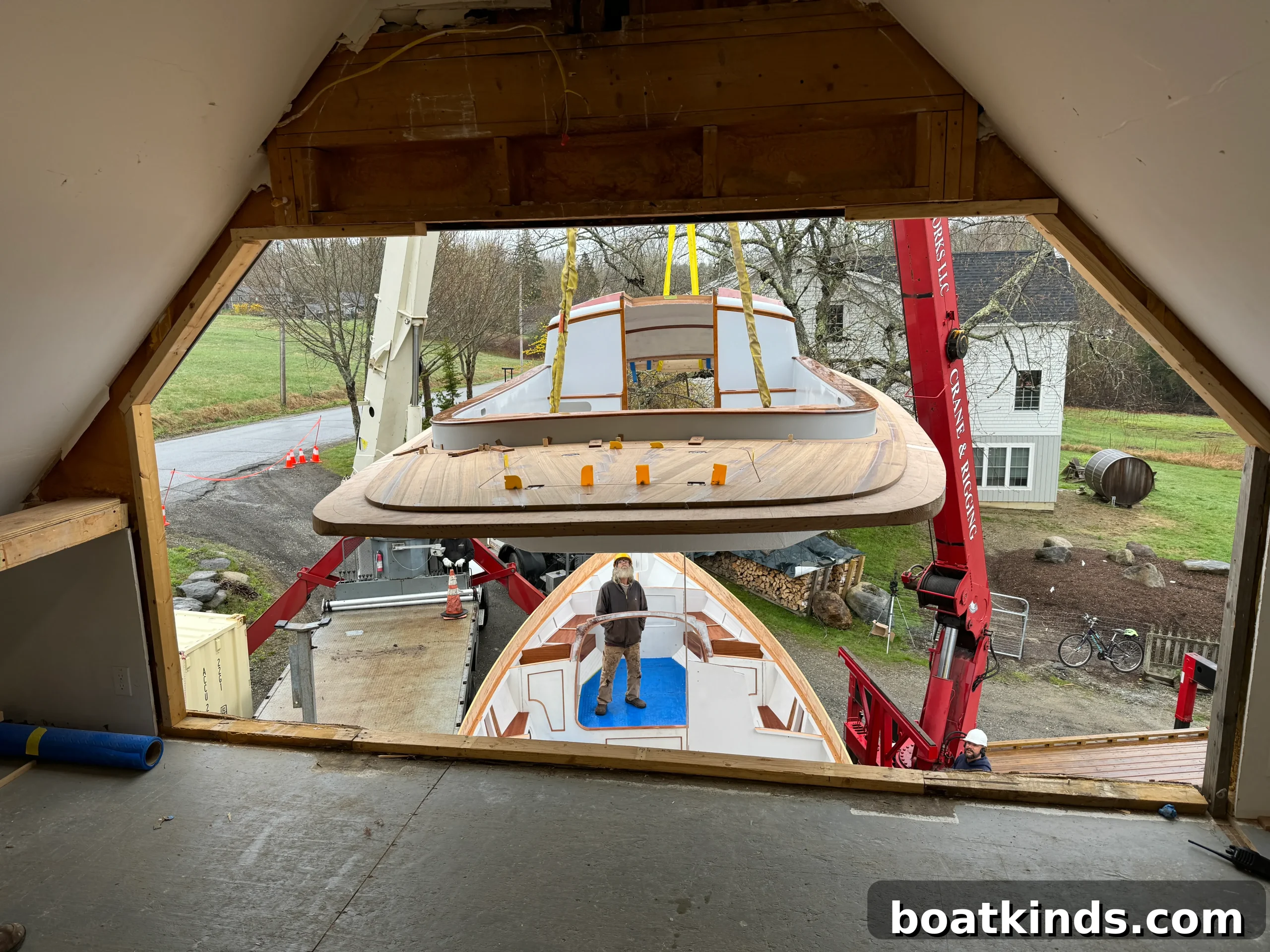
Early May brought a pivotal moment: the loft gable was removed and the deck and cabin were lowered onto the hull. With roughly three months remaining, Artisan coordinated a dense schedule of installations—hydraulics, electronics, plumbing and mechanical systems—and numerous subcontractors worked simultaneously in tight quarters. Brainerd staggered shifts and some crew worked nights and weekends so all trades could complete their work on time.
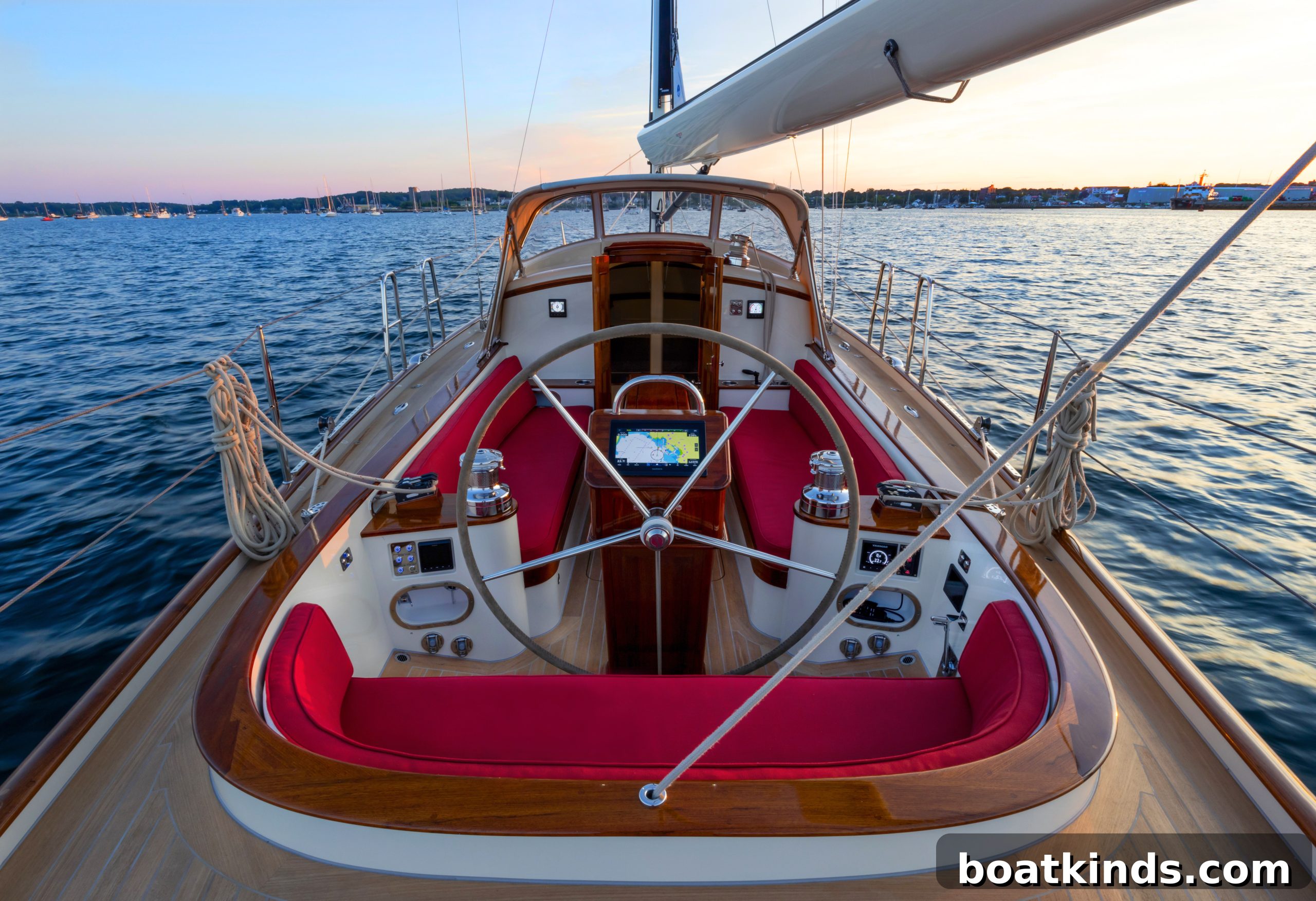
Hydraulics posed particular challenges. Brainerd hired Ransom Morse from Dartmouth, Massachusetts, to design a custom hydraulic powerpack and control system. Because Wisp is on the small side for a mainsheet hydraulic, Morse engineered a compact powerpack with analog controls, dual motors and two pumps for redundancy—technology more commonly found on much larger yachts.
By mid-July the carbon fiber mast and boom from Moore Brothers Company in Bristol, Rhode Island, arrived. Final paint was applied in June and topsides received Awlgrip in July. On August 5, with Walter Gray of Rockport Marine hauling the trailer, Wisp was transported to Lyman-Morse’s Camden facility and launched into Camden Harbor. Brainerd’s wife Erin tied flowers from their garden to the bow as the owner’s friend smashed a bottle on the keel, and the crew celebrated the successful, on-time delivery.
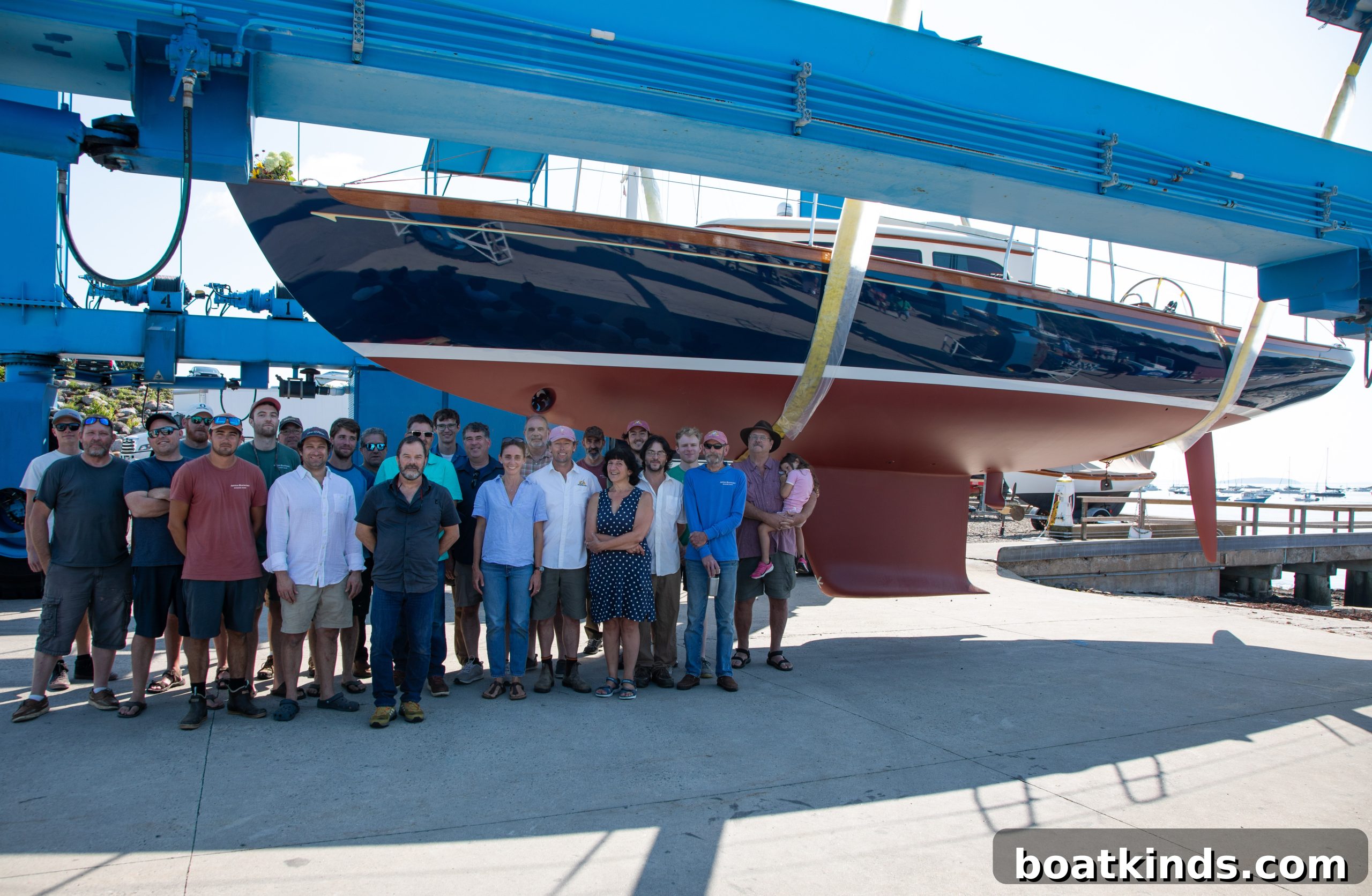
Brainerd credits the project’s success to meticulous planning, a collaborative network of Maine builders and specialists, and the detailed support from Stephens Waring. “I’ve always wanted to know whether I could build a bigger boat like the ones that Brooklin, Rockport and Lyman-Morse build,” he said. “We leaned heavily on subcontractors for systems we didn’t have in-house capacity for, and it worked because we had a great client and a great designer.” He also praised his crew—some of whom worked only the early stages but all of whom contributed and deserve equal credit.
Specifications
LOA: 39’ 6”
LWL: 30’ 3”
Beam: 11’ 0”
Draft: 6’ 0”
Displ.: 16,500 lbs.
Power: 40-hp Yanmar 3JH40
Fuel: 31 gals.
Water: 100 gals.
This article was originally published in the November 2024 issue.