
Équihen-Plage Boathouses: Inverted Fishing Hull Homes and Coastal Heritage
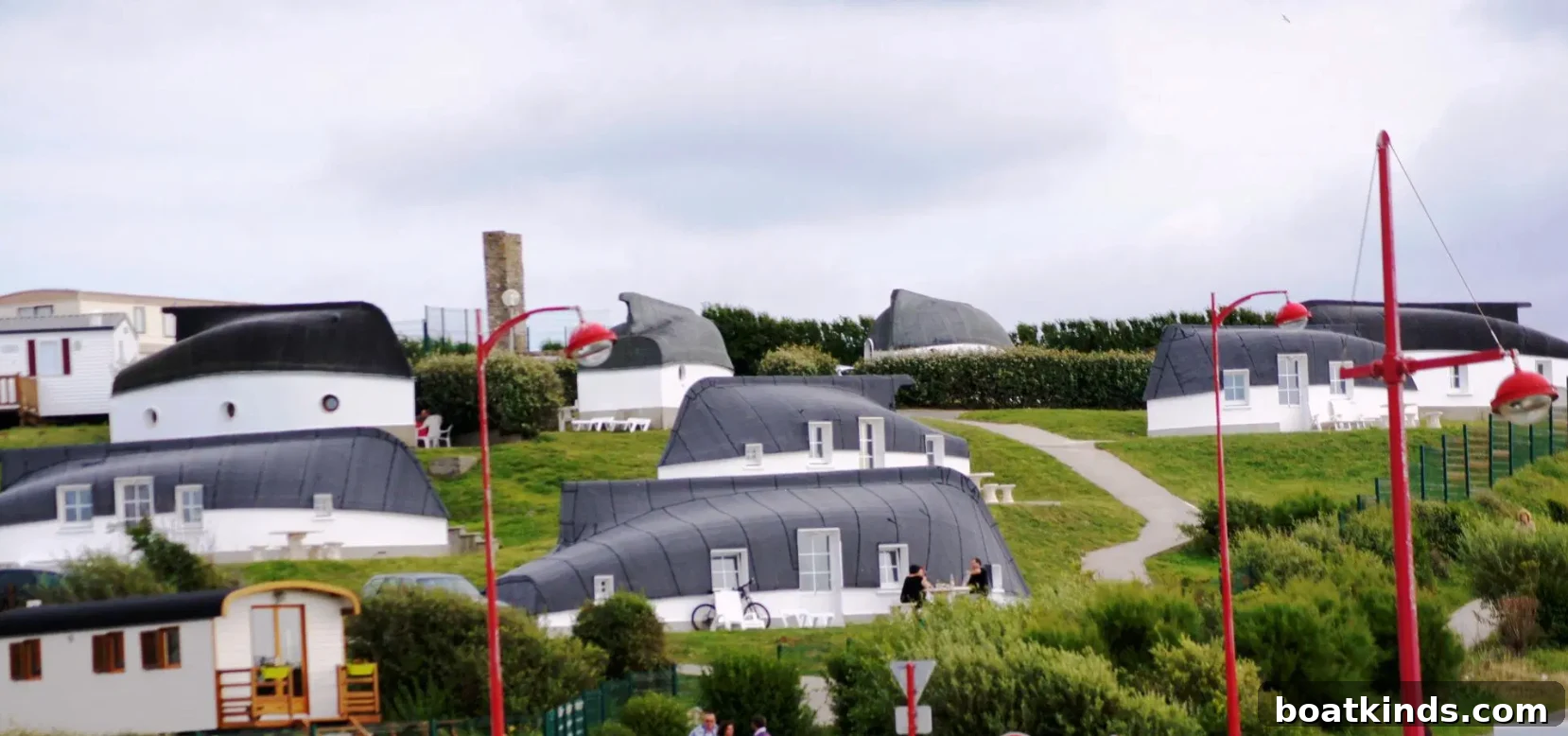
In the early 1900s, the small fishing village of Équihen-Plage on the northern coast of France developed a distinct vernacular architecture: makeshift shelters built under the inverted hulls of worn-out fishing boats. When wooden boats reached the end of their service lives, local fishermen—and sometimes their widows—turned the discarded hulls upside down and used them as roofs for simple, hand-built dwellings. These inverted boats created compact, weather-resistant shelters that were affordable and practical for working families on the shoreline.
History and Survival
Many of these unique boathouses were lost during World War II, when the village and its surroundings suffered heavy damage. Despite that destruction, the tradition did not disappear entirely. Interest in the boathouses revived in the 1990s, and community efforts and local pride have helped preserve and restore many of the surviving examples. Today the boathouses remain a visible part of the village landscape and continue to reflect Équihen-Plage’s maritime past.
How the Inverted Hull Homes Are Built
The construction method is straightforward and resourceful. Derelict boat hulls are cleaned and coated with tar to improve waterproofing and durability. Once treated, they are carefully raised and set on short masonry or timber walls to form the protective roof of the shelter. Openings are cut into the hull where necessary—small doors and windows give access and light—while the hull’s curvature defines the interior shape.
Interior space is typically compact: most of the inverted-hull homes contain a single room with limited headroom because the hull’s curved structure sits low over the living area. These small quarters provided affordable, functional shelter for people who relied on the sea for their livelihood and who needed solutions that matched limited resources.
Function, Form and Community Value
Beyond their immediate practicality, the boathouses embody a form of local ingenuity. Using materials at hand—retired fishing boats—residents transformed refuse into shelter, conserving resources while maintaining a direct link to their maritime way of life. The inverted hulls visually and materially connect the village to its fishing traditions; their presence on the shore tells a story of work, loss, adaptation, and continuity.
Although interiors are modest, the boathouses serve as a tangible reminder of the village’s social history. They also function today as homes for permanent residents, seasonal use by families, and in some cases as spaces adapted for workshops or storage. Their compact size and distinctive shape make them easily recognizable and contribute to the character of Équihen-Plage.
Preservation and Tourism
Local residents and visitors alike have shown increasing interest in conserving these structures. Since the revival of attention in the 1990s, efforts by individuals and the community have ensured the boathouses remain a living element of the village rather than a lost relic. While not a large-scale tourist industry, the boathouses draw photographers, architecture enthusiasts, and travelers curious about traditional coastal life. Their unique appearance and historical resonance provide a niche attraction that complements Équihen-Plage’s broader seaside appeal.
Living with Limited Space
Life inside an inverted hull dwelling requires adaptation to the constraints of form. The curved ceiling limits standing room, and the footprint is usually small, so residents arrange furnishings and daily activities to make efficient use of available space. Despite these limitations, the boathouses remain valued for their economy and their role in preserving a direct link to the village’s fishing heritage.
Continuing Legacy
Today, the boathouses of Équihen-Plage stand as a distinctive example of vernacular coastal architecture born from necessity. Coated with tar, raised on simple walls, and fitted with doors and windows, these inverted hull shelters continue to shelter nearly 3,000 people in the area and to remind visitors of a community shaped by the sea. Their survival reflects local commitment to heritage and the practical creativity of generations who lived and worked along this stretch of the French coast.