
Reed Hayden: Keeping Traditional Ship Carving Alive at Brooklin Boat Yard
Inside Brooklin Boat Yard’s main shed, where shipwrights move between three projects, one man sits alone at the bow of a 49-foot riverboat. Perched on an inverted five-gallon bucket, Reed Hayden chips away with chisel and mallet, incising an intricate scroll into the new hull. The scene might recall the Age of Sail, when ship carvers worked openly on fresh timbers; today, that craft is rare in the United States.
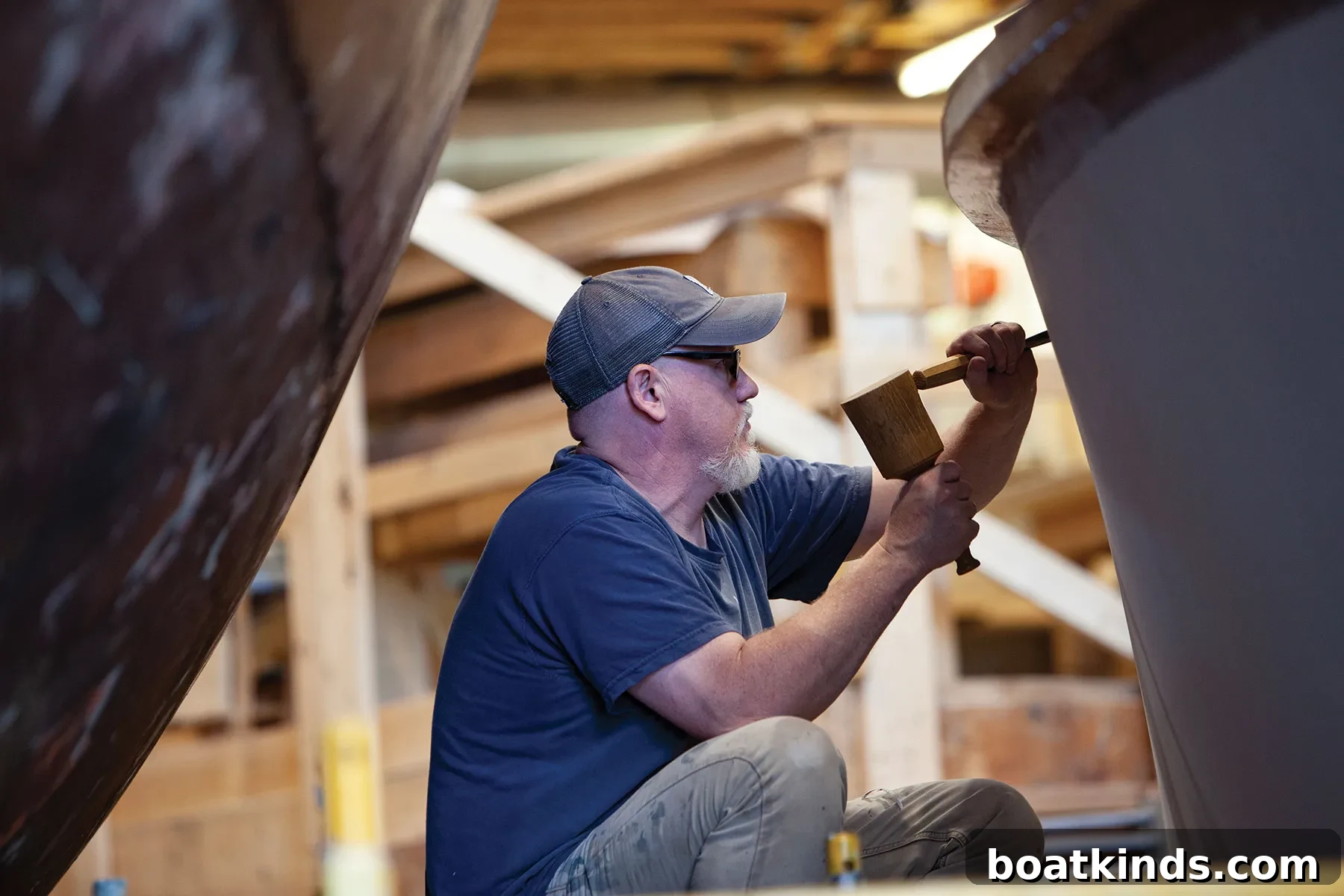
Ship carving is an ancient art. From Greek figureheads symbolizing vision and ferocity, to Phoenician birds and horses meant to protect crew and vessel, and Viking figureheads designed to scare off danger, carved ornament once held meaning and superstition. Sailors sometimes treated figureheads as living parts of a ship—necessary eyes for navigation or omens if damaged.
The craft reached its most lavish expression during the Baroque period, from the early 1600s to the mid-1700s, when European East India companies used elaborate carvings to signal wealth and prestige. Ships displayed figureheads, nameboards, trailboards and richly carved tafferels and interiors; major yards employed specialist carvers. In late 19th-century New England, for example, Mystic, Connecticut supported a dedicated ship-carving shop that served multiple shipyards.
With the advent of iron and steel hulls in the mid-1800s, decorative wood carving declined sharply. Today, trained maritime carvers are few. Reed Hayden is one of the small number keeping the trade alive, particularly in Maine.
Hayden traces his path to carving through a lifetime of hands-on craft and art. He grew up on Cape Cod and remembers a first job at Baxter Fish-N-Chips in Hyannis, where time on the dock and conversations with boaters sparked his interest in boats. He studied sculpture at the University of Massachusetts Dartmouth, where he learned welding and woodworking, and began working in a Cape Cod sign shop. There he met Doug Amidon and crossed paths with noted Sandwich carver Paul White—contacts that helped shape his early career.
Hayden’s first real marine carving work came while restoring the Herreshoff-built power cruiser Ariel II at Ballentine’s Boat Shop in Cataumet, Massachusetts. Though new to boat carving, Hayden was asked to make the pilothouse nameboards, and the experience tied together his training in sculpture, joinery and boatbuilding. After college he moved to Maine to focus on custom boat work, briefly worked at Hinckley, and then joined Brooklin Boat Yard as a shipwright—continuing to carve, paint, and apply gold leaf for local boatbuilders.
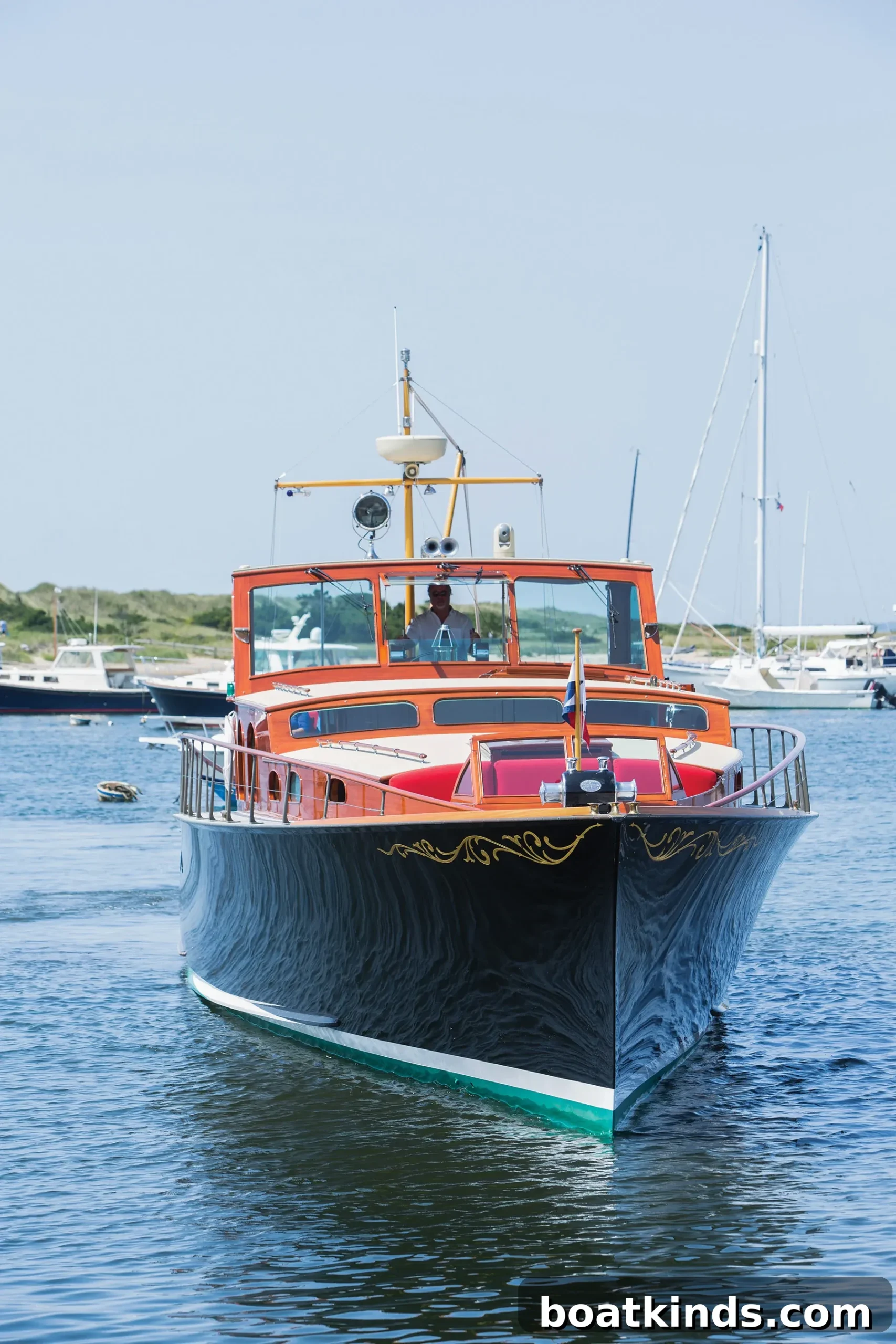
At BBY, Hayden contributed scrollwork to significant restorations, including the full rebuild of the 74-foot commuter yacht Aphrodite, originally launched in 1937 by Purdy Boat Company. The yard removed old scrolls from the hull and Hayden reproduced the pattern on the restored bow. He recalls that during his time at BBY he was often the only dedicated carver among a crew of many builders.
After 15 years at BBY, Hayden shifted to run Hayden Sign Company full time. Like historic carvers who supplemented ship work with signs and interior carvings, he now spends much of his time painting, gilding, and hand-carving names and decorative elements for boats and local businesses. Maritime wood carving remains a niche skill—fewer wooden vessels are built, and American carving traditions differ from Europe’s more formal guild-based apprenticeship system. Hayden teaches at the WoodenBoat School with a distinctly New England approach: practical, functional, and informed by a local folk-art tradition rather than ornate European excess.
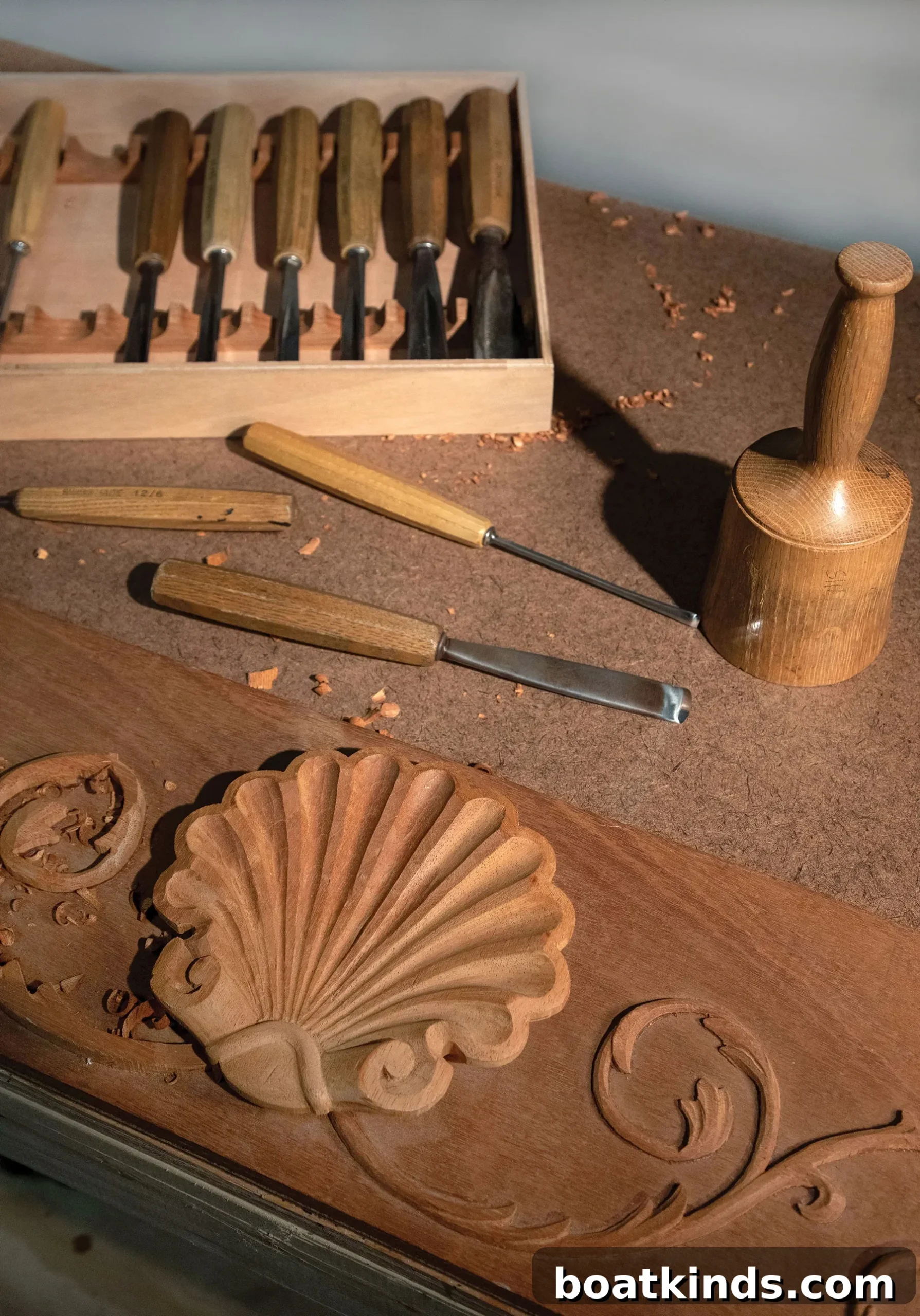
Most of Hayden’s maritime carving is incised lettering and scrollwork. He uses a V-shaped chisel to create a “root” that intensifies how light plays on the gold leaf—a technique that makes names and ornamentation visually pop. He favors Swiss-made Pfeil chisels, praised for their quality, and uses mallets he turned on his own lathe: one from laminated mahogany offcuts and a heavier one from white oak.
Hayden prefers Honduran mahogany for its carving qualities and rot resistance, though African mahogany is commonly used in boatbuilding despite its ribbon grain, which is less ideal for carving. He also works in white pine and teak, and produces nameboards and gilded lettering for shops and yards across the region. Alec Brainerd of Artisan Boatworks praises Hayden’s hand-carved nameboards as art: routers and computers can generate precise shapes, Brainerd says, but they lack the subtle layout, curvature and handcrafted character that Reed brings to a piece.
Rockport Marine’s Sam Temple similarly lauds Hayden, recounting a restoration of the 51-foot ketch Saphaedra. An earlier attempt to redo the bulwark scrolls had strayed from the original. Hayden overlaid photographs, consulted maritime historian Maynard Bray and historical references, and then carved, painted and gold-leafed a new set of scrolls that captured the spirit of the original design. Temple describes Hayden at work on the toerail—bouncing on a staging plank, chipping away—and marvels that he could take on such a delicate intervention.
Hayden values Maine as a place to work and build relationships. He collaborates with maritime historians like Maynard Bray and has been exploring projects that translate historic photos into large-scale wood carvings for exhibition. He also continues his academic work: after earning an MFA in intermedia from the University of Maine at Orono in 2020, he is pursuing further graduate study.
“The art, the sign making, the boatbuilding—I’ve been doing it all along,” Hayden says. “I always try to do everything, which is probably not the greatest habit, but at this point I have years and years of experience of carving. It’s my greatest skill. And it is what I’m most confident about.”
This article was originally published in the March 2022 issue.