
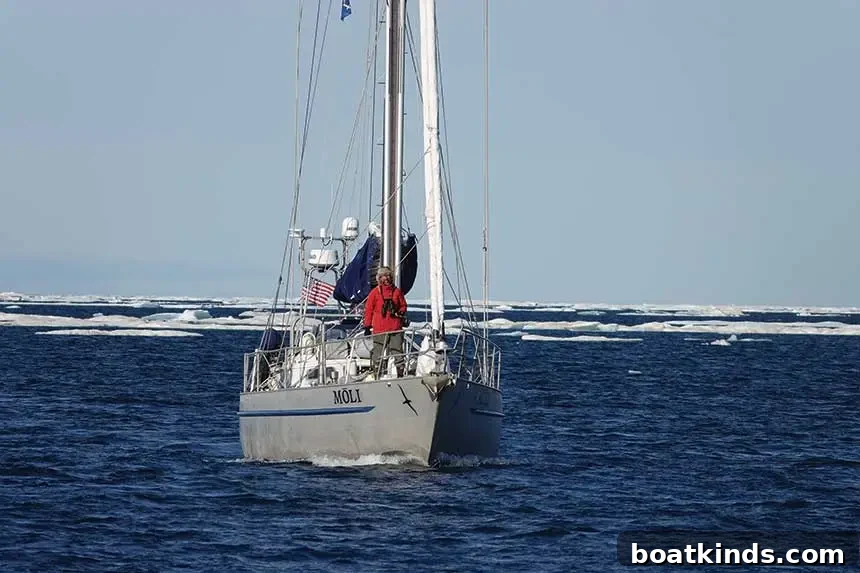
Last October, Randall Reeves completed what he calls the “Figure 8 Voyage” — a solo circumnavigation that linked Antarctica and the Americas in a continuous route shaped like a figure eight. Over the course of the journey he crossed five oceans, skirted three continents, rounded Cape Horn twice and logged nearly 40,000 miles — a distance well beyond the Earth’s circumference of about 25,000 miles.
Reeves set out to attempt something unique. While sailors had previously tackled the “Five Capes” or navigated the Northwest Passage on their own, no one had combined both achievements in a single expedition. “I think it’s the first time anyone has done it,” he says, “solo or with crew.”
At 57, Reeves completed the entire route within what he calls “one season.” That required precise timing: he needed to be in the Southern Ocean during the Antarctic summer, then sail north to reach the Arctic in time for the brief northern summer window, and finally run the Northwest Passage before ice locked the route again.
Reeves’ passion for sailing began in high school in California’s Central Valley. One outing on the family sailboat was enough to hook him. Early adventures were often on the San Joaquin River; his father, a U.S. Merchant Marine captain, kept a boat the family used, and young Reeves remembers “borrowing” it when his father was away — until missing winch handles and other signs revealed his covert trips. One early voyage took him out to the Golden Gate Bridge, and San Francisco Bay felt immense to him.
He progressed to bluewater sailing. In 2010, his wife Joanna Bloor agreed he should make a solo Pacific cruise aboard their 31-foot Mariner Murre. What began as a one-year plan limited to Mexico and Hawaii expanded when Reeves learned about the Marquesas and other Polynesian islands while in La Paz. After convincing Joanna with a couple of margaritas, they extended the itinerary to include the South Pacific and Alaska, turning the trip into a two-year voyage.
“My wife is very understanding,” Reeves explains. “She comes from a cruising family. It’s not her thing, but she gets the drive.”
Work toward the Figure 8 Voyage began in 2013, but the prospect of navigating the Northwest Passage was intimidating. “I’m a bluewater sailor,” he says. “It was hard for me to figure out the pilotage through the shallows and the pack ice.”
To gain experience, Reeves joined a 2014 expedition through the Northwest Passage as crew aboard a 43-foot steel cutter. Of thirty boats attempting the route that summer, only seven made it through — all in steel or aluminum hulls. Reeves’ boat was one of the successful vessels, and the trip proved pivotal.
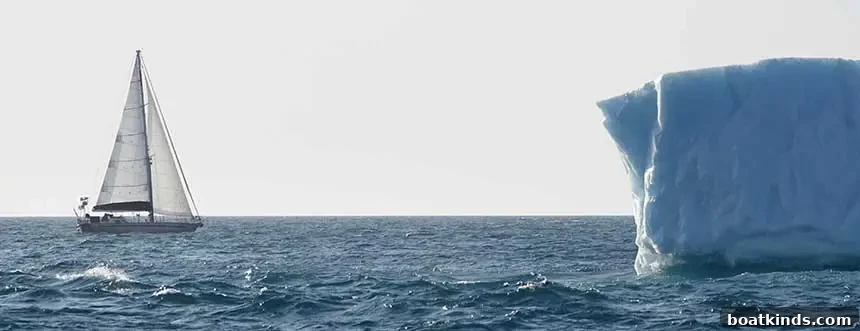
On that voyage he discovered the boat that would become his long-term companion: a 1989, 45-foot aluminum expedition sloop rigged as a Solent. The owners were initially adamant it wasn’t for sale, but two years later they changed their minds. Reeves bought her and renamed her Moli, after the Laysan albatross.
Reeves identifies with pelagic birds, especially albatrosses, which spend most of their lives at sea. “I really do love the long passages at sea in that alien environment,” he says. “These birds live there like it’s nothing. When the weather is honking, they’re still out there flying.”
He began testing Moli with a Pacific cruise in 2016. In September 2017 he departed San Francisco for his first attempt at the Figure 8. About 500 miles from Cape Horn a fierce gale produced 70-mph gusts and destroyed his self-steering gear. Reeves hand-steered the 45-foot boat to Ushuaia, Argentina, fighting the tiller for 12 to 15 hours a day to keep her upright.
After repairs he continued, but another storm, a third of the way to Australia, delivered a severe knockdown. A window above the navigation station broke, the cabin filled with water, and his electronics were lost. He limped into Hobart, Tasmania, for further repairs, but by then he had missed the critical window to reach the Arctic and transit the Northwest Passage.
From that experience Reeves learned a valuable lesson about speed in heavy seas. “In the Southern Ocean, the wind pushes down on the seas, but as the wind lessens, the seas stand up,” he explains. “I wasn’t sailing with enough sail. I wasn’t going fast enough, and I would stall at the bottom of the sea where my storm sail couldn’t catch the wind. When you slow down, you become victim to these heavy seas.”
On September 30, 2018, Reeves restarted from San Francisco. This time he adjusted his sail plan: he avoided relying on a storm sail in the Southern Ocean and used a number two headsail to maintain better speed and control. The change worked; he encountered no further problems of the same kind.
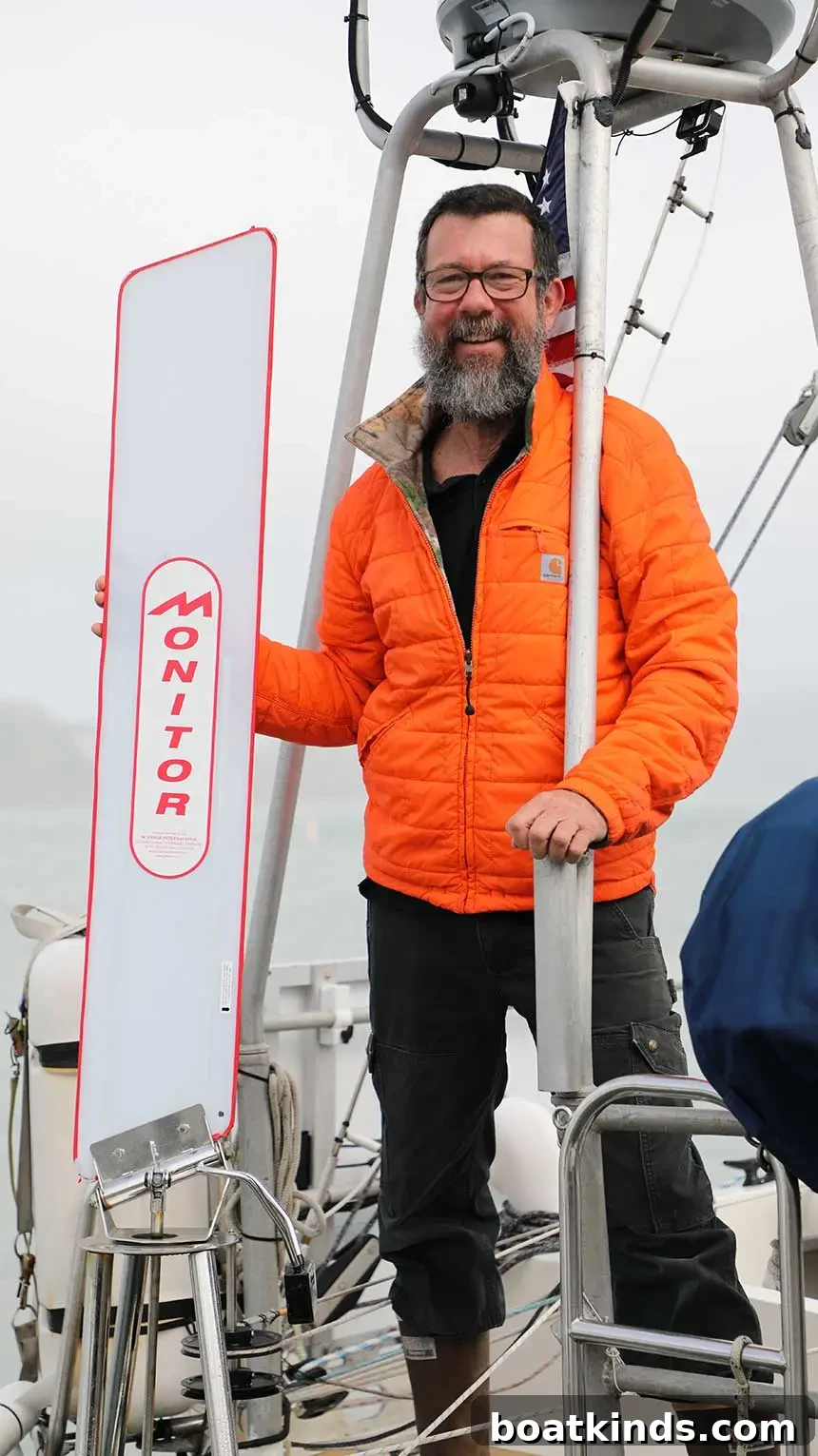
“Speed is safety,” Reeves says, though he admits it can feel counterintuitive while pushing a small boat in big weather. For 237 consecutive days he kept watch with sleep stints of roughly 90 minutes, saw land only twice — Cape Horn before and after his Antarctic circuit — and heard a human voice just three times, most notably his wife’s over the satellite phone. After some 35,000 nonstop miles he reached Halifax, Nova Scotia.
With Arctic ice still present he paused to resupply and rest. The Northwest Passage required motoring at times due to light winds caused by the polar high-pressure zone. Using internal fuel and 70 jerry cans, he refueled five times to get through, then pointed Moli south and sailed toward home.
He arrived back in San Francisco on October 19, 2019, passing beneath the Golden Gate Bridge to be greeted by many of the same friends and family who had seen him off 384 days earlier. In January, the Ocean Cruising Club honored him with the Barton Cup, its premier award, in recognition of the achievement.
Today Reeves is back home with his wife, busy with speaking engagements and everyday responsibilities. He still entertains the idea of spending extended winters in both hemispheres — roughly ten months in each — and he admits he may attempt the Figure 8 again, but at a much slower pace so he can savor the places along the way. “Say, in five years as opposed to one,” he says. Asked how many margaritas it would take to convince his wife to approve such a plan, he pauses and laughs: “It’ll be at least two margaritas.”
This article originally appeared in the May 2020 issue.