
Congress Weighs Speed Limits and Real-Time Monitoring to Protect North Atlantic Right Whales
On June 6, leaders from the recreational boating industry urged Congress to fund research into real-time technological monitoring of marine mammals as an alternative to a sweeping set of speed restrictions proposed by the National Oceanic and Atmospheric Administration (NOAA). Industry representatives argued that effective, real-time whale detection would help preserve public access to the Atlantic for tens of thousands of boaters while protecting endangered North Atlantic right whales.
Frank Hugelmeyer, president and CEO of the National Marine Manufacturers Association (NMMA), testified before the U.S. House Committee on Natural Resources Subcommittee on Water, Wildlife and Fisheries that NOAA’s plan represents “the greatest restriction of public access to our nation’s cherished waterways in our time.” The agency’s proposal would expand 10-knot speed zones along much of the Eastern Seaboard, reaching out to 90 miles offshore and extending seasonal go-slow periods to as long as seven months in many areas.
The NOAA proposal, developed by the National Marine Fisheries Service, would lower the size threshold for vessels subject to the speed limit from 65 feet to 35 feet. NOAA says this step is needed to address a troubling decline in the population of critically endangered North Atlantic right whales, which suffer from vessel strikes and entanglements in fishing gear.
Industry leaders warned that the proposed rules could have major economic impacts. “If allowed to proceed, this proposal will have devastating impacts on thousands of jobs and small businesses supported by boating-fueled economies,” Hugelmeyer told the committee. He also criticized the agency for what he called inaccuracies and safety concerns in the proposal, noting a failure to distinguish between small recreational craft and large oceangoing vessels that pose different risks.
The debate revealed a stark partisan divide. Committee Chairman Bruce Westerman of Arkansas described the proposal as an example of a bureaucratic agency acting without proper accountability, saying NOAA “chose to ram policies through without any regard for their impacts.” In contrast, Representative Jared Huffman of California, the committee’s top-ranking Democrat, called the Republican criticism “extreme hyperbole.” Huffman warned that without decisive action to reduce vessel strikes, the North Atlantic right whale could face extinction within decades.
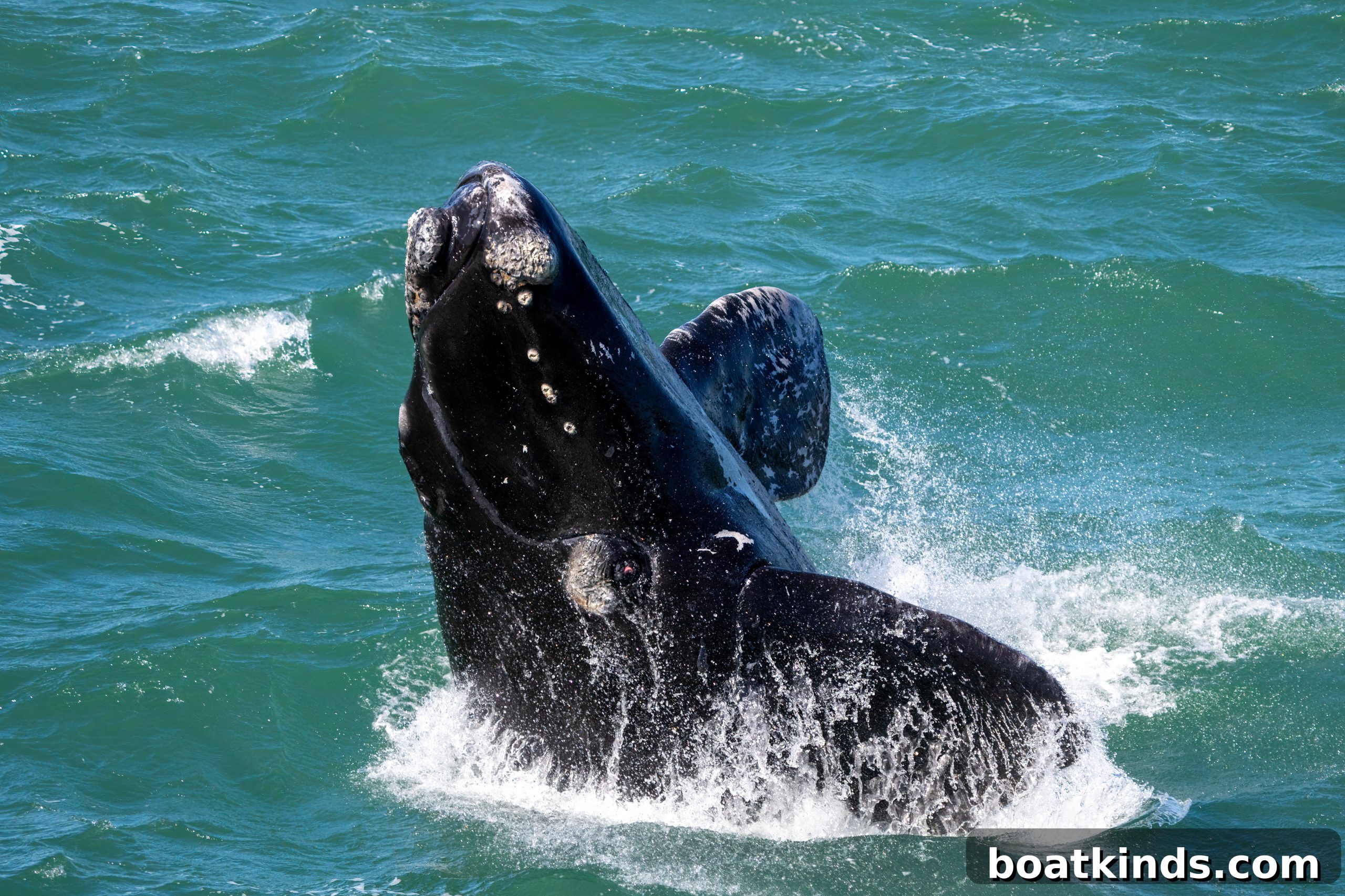
Janet Coit, deputy administrator of NOAA, defended the need for stronger speed rules, telling the committee that even a single additional mortality per year would undermine recovery goals for the species. NOAA’s review of the rules dates back to 2013, with published findings in 2020 that noted small vessels operating faster than 10 knots are common in right whale habitat and that documented collisions involving vessels smaller than 65 feet warranted further action.
Industry Response: Technology and Collaboration
Rather than simply opposing speed limits, industry stakeholders including boatbuilders, fishing organizations and operators have proposed technological solutions. In March, Viking Yachts and partners announced the Whale and Vessel Safety (WAVS) Task Force. The group advocates for a coordinated effort between NOAA and maritime industry stakeholders to develop a reliable, real-time whale-detection network that could transmit alerts to boaters’ smartphones and chartplotters.
WAVS and others point to the potential of multiple technologies to reduce collisions while limiting economic disruption: aerial surveys assisted by artificial intelligence, coordinated crowd-sourced sighting apps, infrared cameras, shipboard drones, forward-looking sonar, and radar systems tuned to detect whale blows. A recent study by Oceana also highlighted a compliance problem in some existing management areas, finding that a substantial portion of regulated ships were exceeding speed limits—an issue WAVS says better detection and notification could address.
Emily Charry Tissier, co-founder of Whale Seeker in Montreal, described how AI-assisted aerial photography can dramatically accelerate surveys that once took years. By combining automated image analysis with human review, Whale Seeker has compressed large-scale population assessments from years to hours. Tissier envisions integrating drone photography and other real-time data streams into a unified alerts network accessible to mariners.
Greg Reilly, marine campaigner for the International Fund for Animal Welfare, supports the WAVS approach and highlighted ongoing efforts to crowdsource sightings. His organization helped develop the Whale Alert app, which aggregates reports from the public and official sources so boaters can better understand where to slow down. “All this stuff gets reported, often into different databases,” Reilly said. “So our app developer works to aggregate it and then push it out to the public.”
Scientific and Conservation Context
All sides agree the North Atlantic right whale faces grave risk. Once heavily hunted, the species was protected by laws enacted in the mid-20th century and listed under the Endangered Species Act. Population counts peaked at different times, but recent estimates place the current population at roughly 340 animals. Only about 72 of those individuals are breeding-age females, and reproductive rates have declined, raising real concerns about recovery.
Entanglement in fishing gear and vessel strikes have been persistent causes of injury and death. Studies suggest up to 90 percent of North Atlantic right whales show evidence of entanglement injuries, some severe. Between 2008 and 2022 there were 12 documented right whale deaths from vessel strikes, five of which involved vessels smaller than 65 feet.
Given the species’ small size and low reproductive rate, conservationists argue that stringent protections are necessary to prevent extinction. Industry representatives counter that broad, inflexible speed rules will impose unnecessary social and economic costs and that more targeted, technology-driven solutions could better balance conservation and access.
Next Steps and Possible Outcomes
As NOAA’s proposed rule moves through the public comment and regulatory review processes, the outcome remains uncertain. Participants on both sides of the debate have emphasized collaboration—whether through formal task forces, improved enforcement, expanded detection networks or additional research funding. The central challenge is to reduce vessel strikes and entanglements in a way that conserves the species while minimizing undue harm to coastal economies and recreational boaters.
Advances in detection technology and data aggregation offer a promising path, but many experts caution that technology alone may not solve all risks immediately. Meanwhile, NOAA maintains that regulatory steps are necessary now to prevent any further mortalities while complementary technological and management solutions are developed and deployed.