
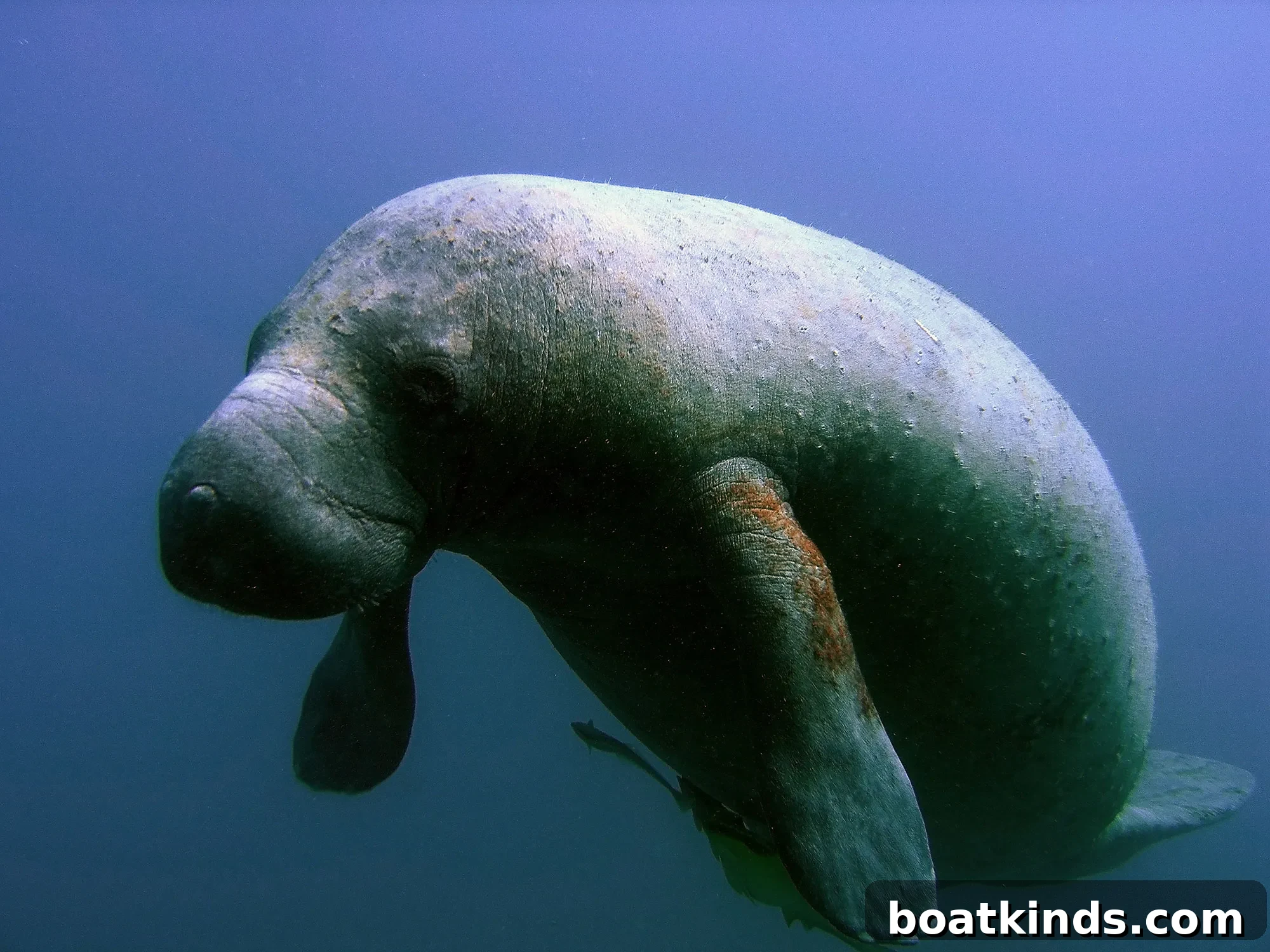
Florida Manatee Crisis: Causes, Protections, and How Boaters Can Help
Florida’s manatee population suffered a catastrophic loss in 2021, with 1,101 recorded deaths — nearly double the number documented in 2020. This sharp rise in manatee mortality has raised alarm among wildlife managers, conservationists, and the public, highlighting a combination of environmental stressors and human impacts that are pushing these gentle marine mammals toward greater risk.
A substantial portion of the 2021 deaths occurred early in the year in the northern Indian River Lagoon, where cold stress during unusually cold conditions weakened many animals. In addition to the effects of cold, at least 100 recorded deaths were attributed to collisions with watercraft, although officials caution that the true number of boat-related fatalities is likely higher because not every carcass was necropsied. Historically, watercraft collisions have accounted for as much as half of manatee deaths in some years.
Beyond direct human-caused injuries, manatees face chronic threats from habitat loss and food scarcity. Seagrass beds, the primary food source for manatees, are disappearing in many coastal waters. Nutrient pollution from failing septic systems, sewage overflows, agricultural runoff and urban fertilizer encourages harmful algal blooms. These blooms block sunlight, reduce oxygen levels, and smother seagrass. Red tides and other harmful algal events further degrade feeding habitat. Last year, in an extraordinary emergency measure, Florida wildlife officials temporarily fed romaine lettuce to starving wild manatees to reduce immediate mortality risk while longer-term solutions are pursued.
Legal protections helped manatee numbers recover for several decades. Manatees were first listed as endangered under the Endangered Species Act as early as 1967, and broader protections followed with the Marine Mammal Protection Act of 1972 and the Endangered Species Act provisions implemented in 1973 that prohibit harassment, hunting, capture or killing of marine mammals. Aerial surveys and conservation measures — including designated sanctuaries, speed zones, rescue and rehabilitation programs, and public education — supported steady population growth. For example, a 1991 aerial survey counted 1,267 manatees, and by 2017 Florida’s count had reached about 6,300 animals. In 2017 the federal government reclassified the species to “threatened,” but the species’ naturally low reproductive rate — adult females typically give birth only once every two to five years — makes the population vulnerable to sudden losses like those seen in 2021.
Manatees are slow, buoyant, and often feed in shallow waters, which makes them particularly susceptible to collisions with fast-moving boats and personal watercraft. Their need to surface regularly to breathe makes them visible to attentive boaters, but many collisions still occur because of speed, distraction, or lack of awareness. Because not all carcasses are recovered or examined, wildlife biologists believe the number of boat strike fatalities in 2021 was likely higher than reported.
To protect manatees, the Florida Fish and Wildlife Conservation Commission (FWC) advises the public not to feed, touch, pursue, chase, or otherwise disturb these animals. Manatees migrate seasonally and can range from as far north as Massachusetts down through Florida and west to Texas. Boaters play a key role in conservation by watching for animals at the surface, heeding posted signs in manatee habitats, and obeying speed limits and zone rules.
The four typical signs used in manatee protection zones are:
Idle speed zone: Vessels must move no faster than necessary to maintain steerage and must avoid creating any wake. This reduces the chance of striking or startling manatees in the area.
Slow speed zone: Boats must be fully off plane and moving slowly with minimal wake, allowing time to spot and avoid manatees and reducing the force of any accidental contact.
Motorboats prohibited zone: Power-driven vessels are not allowed to enter these areas, protecting sensitive feeding or resting habitat from disturbance and collision risk.
No entry zone: Entry into these areas is prohibited for boating, swimming, wading, fishing or diving, providing sanctuaries where manatees can feed, rest, and move without human interference.
Boaters and beachgoers can further help by reporting tagged, sick, injured, orphaned or dead manatees, and by notifying local wildlife authorities of any harassment or disturbance. Timely reporting supports rescue, rehabilitation and scientific monitoring efforts that are essential to understanding and reversing the recent spike in manatee mortality. Collective caution, adherence to protections, and long-term improvements in water quality and habitat restoration are necessary to secure a healthier future for Florida’s manatees.