
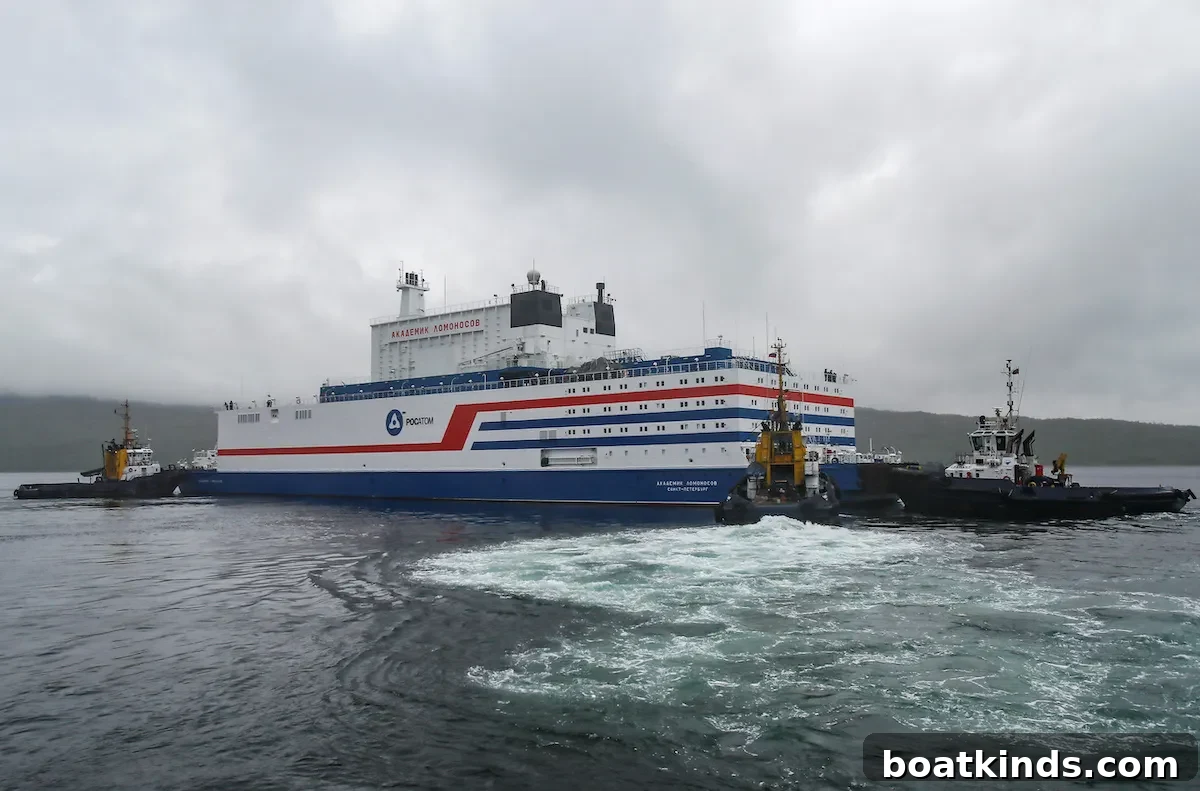
Akademik Lomonosov: Russia’s Floating Nuclear Power Plant Heads to the Arctic
The 474-foot-long Akademik Lomonosov is a block-shaped floating nuclear power plant equipped to generate roughly 70 megawatts of electricity. Built and operated under the auspices of the state-controlled company Rosatom, the vessel was recently declared operational and has begun a long voyage to the Arctic—an estimated 3,100-mile transit to its intended area of operation.
Rosatom and Russian authorities present the ship as a practical solution for delivering reliable power to remote and hard-to-reach communities, industrial sites, and ports across the Arctic. In regions where grid infrastructure is sparse and fuel logistics are costly or seasonal, a floating nuclear plant can provide continuous baseload electricity and heat without the need for extensive terrestrial construction.
Proponents emphasize several advantages of floating nuclear plants: compact design, centralized maintenance of the reactor systems, and the ability to relocate the platform as demand or strategic needs change. Supporters also point out that modern reactor designs aim to improve safety systems and reduce the likelihood of severe accidents compared with older generation reactors.
Despite those arguments, the concept has drawn sharp criticism and vocal concern from environmental groups and international observers. Greenpeace and other organizations have labeled the project with alarmist nicknames such as the “Nuclear Titanic,” reflecting deep unease about potential risks. The memory of high-profile nuclear accidents—most notably Chernobyl—lingers in public consciousness and shapes perceptions of any new nuclear deployment.
Critics raise a number of safety and environmental questions specific to floating reactors: how well they will withstand harsh Arctic weather and sea conditions, the consequences of a serious incident in a remote marine environment, the adequacy of emergency response capabilities far from populated centers, and the long-term handling of nuclear waste and decommissioning. They also call for transparent, independent oversight and robust international safety standards to govern any maritime nuclear installations.
Rosatom has maintained that the Akademik Lomonosov was designed with multiple redundant safety systems and complies with applicable regulatory requirements. The company says the platform will undergo continual monitoring and maintenance, and argues that the floating concept can be safer than older land-based sites in certain respects, because it allows for controlled environments and professional crews focused solely on reactor operations.
Public debate around the vessel reflects broader tensions over energy policy, climate challenges, and Arctic development. On one hand, reliable low-carbon electricity could support local communities and economic activity while reducing dependence on diesel generators that emit greenhouse gases and require complex fuel logistics. On the other hand, introducing nuclear power into fragile and rapidly changing polar ecosystems raises questions of risk tolerance and long-term stewardship.
Independent experts and local stakeholders have called for full, transparent reporting on safety testing, certification, contingency planning, and environmental impact studies. They stress the importance of clear communication between operators, regulators, and the public, particularly for populations living in the Arctic whose livelihoods and environments could be affected.
As the Akademik Lomonosov completes its transit and arrives at its destination, the floating plant will remain a focal point for discussion about the future of energy in the Arctic: a technological experiment that promises benefits but also demands rigorous safety oversight and ongoing public scrutiny. Whether it becomes a model for remote power delivery or a cautionary example will depend on operational performance, regulatory transparency, and the degree to which concerns from scientists, environmental groups, and local communities are addressed.
For readers watching developments, the vessel’s arrival underscores the complex trade-offs inherent in deploying ambitious engineering solutions in sensitive regions: potential gains in energy access and emissions reduction counterbalanced by the need for heightened safety, strong governance, and careful risk management.