
The call of the ocean
You can take the woman out of the sea, but you can’t take the sea out of the woman.
Linda Greenlaw – first introduced to readers in Sebastian Junger’s book “The Perfect Storm,” and the 2000 film of the same name – shares her return to bluewater fishing at age 47 in Seaworthy: A Swordboat Captain Returns to the Sea ($25.95, Viking, 2010).
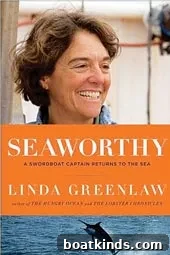
Returning to the Blue
After a decade away from longline swordfishing, Linda Greenlaw answers a pull she can’t ignore. Tired of hauling rusty lobster traps and watching bills stack up on the kitchen counter, she accepts a seasonal captaincy and heads back to the Grand Banks of Newfoundland. Seaworthy recounts that return—what drew her back to open water, the practical and emotional challenges of life at sea, and the unpredictable events that came with commanding a small, aging vessel called Seahawk.
Adventure, Risk, and the Realities of a Swordboat Season
Greenlaw’s narrative is direct and unromantic about the daily work of a swordboat crew: the hours, the weather, the maintenance, and the ever-present concern over equipment and crew safety. She describes the exhilaration of bluewater fishing alongside the blunt realities of small-boat life, from cramped quarters to mechanical failures. The season she takes on brings more than routine strain—an episode in which Seahawk drifts across a maritime boundary lands the crew in a Canadian jail and highlights how quickly plans at sea can turn into legal, logistical, and personal crises.
A Unique Voice in Maritime Memoir
Seaworthy complements Greenlaw’s earlier books—The Hungry Ocean, All Fishermen Are Liars, Slipknot, Fisherman’s Bend, The Lobster Chronicles, and Recipes from a Very Small Island, co-written with her mother, Martha Greenlaw—by returning to themes she explores throughout her work: independence, the demands of a working waterfront, and the relationship between a captain and her crew. Her voice, familiar from both her writing and from appearances in media such as the Discovery Channel series “Swords: Life on the Line,” balances wry humor with hard-earned authority.
Representation on the Water
Greenlaw is notable not only for her stories but for her place in a traditionally male-dominated field. Described in this account as America’s only female swordfish boat captain, she brings a perspective on leadership, competence, and resilience that resonates beyond the fishing industry. Her experience illustrates how one person’s determination and skills can reshape expectations and open conversation about who belongs on the ocean’s working decks.
Life Ashore and at Sea
Although much of Seaworthy focuses on the rhythm of a swordfishing season, Greenlaw’s life ashore anchors the narrative. Living on Isle au Haut, Maine, she maintains a connection to small-island life that informs her decisions and her sense of place. The juxtaposition of island living with the vast, sometimes hostile sea underscores the emotional stakes of her return: this is as much a personal reckoning as it is a professional undertaking.
Why Seaworthy Matters
For readers drawn to maritime memoirs, Seaworthy offers a candid and textured account of returning to work that tests both skill and nerve. It provides insights into the culture of commercial fishing, the particular demands of swordfishing, and the cost—and reward—of pursuing a life dictated by tides, seasons, and weather. Greenlaw’s storytelling is practical and vivid, and her experience on the Grand Banks brings alive the tension between the call of the ocean and the everyday needs that often pull people ashore.
This article originally appeared in the Home Waters sections of the July 2010 issue.