
Approaching my 77th year, I set out to make a cruise from my home port at the Seaford Yacht Club on the York River to Baltimore and back before I stopped doing lengthy passages. During the past decade I’ve done plenty of singlehanded sailing in the lower Chesapeake Bay, and I kept imagining a grand loop that would include Annapolis, the Bay Bridge, Baltimore, the Chester River, Kent Narrows, St. Michaels and Oxford.
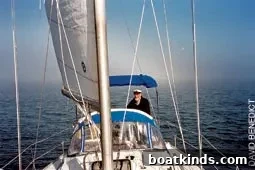
The practical question was whether, given my age, the 25-year-old, 31-foot sloop Caper II and its modest 13-hp diesel, we could manage the 165-nautical-mile push to Baltimore. Three years earlier my brother-in-law Carl and I had tried the same direct transit and were turned back by a persistent northeast gale that pounded us for three days with 3- to 4-foot waves. This time, with better timing and lighter winds, we succeeded.
Carl is a former Marine; I come from old whaling stock on Long Island. We don’t quit until we reach shore. We made Baltimore in five days with mostly light winds and considerable motoring—Caper II isn’t equipped for night sailing—and completed the entire loop in 11 days, covering nearly 400 nautical miles. The trip had its trials and triumphs and remains one of my most memorable cruises from 2010.
A good first leg
The first three days gave us strong progress. Hoping to head north with the usual southwesterlies, we instead took advantage of a brisk northwest flow of 15–20 mph and made a five-hour, 36-nautical-mile crossing to the Occohannock River, anchoring just south of G-13. The evening was sheltered and calm, with a brilliant star-filled sky.
The next morning we expected the forecasted northeast winds as we crossed back northwest to Point Lookout on the Potomac’s north side. For a short time the northeast breeze built, but by midmorning it veered north and eased, so we burned diesel for about six hours. Temperatures were in the 70s, and we reached the Point Lookout State Park basin in midafternoon. We swam across the small lagoon to a pristine beach, enjoyed an idyllic evening as the only boat at anchor and watched cormorants dive and a bald eagle nesting nearby.
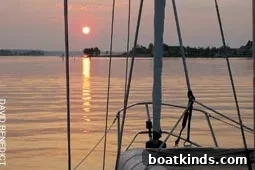
The following day brought spirited sailing. Rounding Point Lookout, a southeasterly-by-south flow pushed us quickly up the western shore toward the Patuxent River. Rounding Cedar Point produced a tidal race with surging waves that heeled and bucked the boat, but the strengthening south-southeasterlies carried us into the Patuxent and on to Solomons Island, averaging 6–7 knots. We had reserved a slip at the Solomons Island Yacht Club, which gave us club facilities and easy access to a nearby seafood restaurant. After three productive days, we were well on our way to Baltimore.
Midday doldrums
The next two days, however, were dominated by light winds and sweltering heat, forcing long motoring stretches—five to six hours at a time—to keep our five-day timetable. At Annapolis the dinghy outboard failed, and friendly fellow cruisers towed us from our mooring on the Spa River into Ego Alley. That evening a pink sunset silhouetted the State House dome and steeples, and early the next morning the harbor filled with color and quiet yachts at rest.
Sailing out of Annapolis on the Severn River past Greenbury Point was a highlight: a steady westerly took us toward the Bay Bridge. As winds waned we motored under the bridge’s left span to avoid the main channel and passed beneath the twin spans with a memorable view. We reached the Patapsco and on to Baltimore’s Inner Harbor around 2:30 p.m., registering at the Baltimore City Docks for two nights. The public docks were surprisingly empty; the urban skyline felt imposing and the city lights intense, but this urban stopover was a necessary part of our northern Chesapeake cruise.
We had covered 173 nautical miles in 36 hours and 42 minutes underway, averaging just over seven hours per day—an accomplishment we were proud of at our ages.
New places on the Eastern Shore
On the seventh day we motored six hours in high heat from the Patapsco southeast across the Bay into the Chester River, then northeast into the Corsica River to a beautiful anchorage in Tilgham’s Cove. A cooling swim in the Corsica River and a quiet evening with wine and cheese made for a welcome respite.
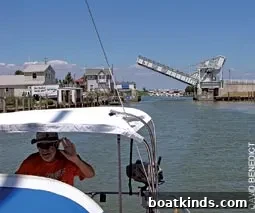
The next day we experienced Kent Narrows for the first time. We cut southwest down the Chester, found the channel entrance, and arrived at the drawbridge in time for a quick opening; the south-flowing tidal current gave us right of way, allowing the single-file passage. After that narrow stretch, we sailed again along the Eastern Shore on steady 10–15 mph southwesterlies toward St. Michaels. We reprovisioned, visited the Baltimore Maritime Museum to view the restored skipjack, and anchored near the Miles River Yacht Club. A squall with thunderstorms and gusts to 25–30 mph rolled through that evening—our only rainstorm of the trip—leaving Caper II rinsed clean.
More narrows navigation
On the St. Michaels-to-Oxford leg we threaded past Poplar Island into Knapps Narrows at Tilgham Island. The bridgemaster promptly raised the single-span draw so we could motor through without delay, but calm conditions on the Choptank meant motoring continued. In Oxford we used the three-hour limit at the public pier to shower at the Tred Avon Yacht Club and enjoy homemade rum-raisin ice cream and a fish dinner overlooking Town Creek. For the night we shifted to moorings north of the public docks, where cooler evening breezes improved our comfort.
The final run to home port
On day ten we left at 6 a.m. for Point Lookout on the Potomac. The morning remained windless, so we motored until a strong southerly built up on the nose—18–22 mph with higher gusts—and 4–6-foot waves thumped Caper II into the troughs. After four hours of hard pounding we reached the Point Lookout boat basin and enjoyed another refreshing swim.
The last day moved quickly. We weighed anchor at 7 a.m. and had a satisfying two-plus-hour sail on moderate westerlies across the Potomac entrance for about 12 miles beyond Smith’s Point. We then motored to Windmill Point on the Rappahannock and caught fresh westerlies off Stingray Point that allowed us to sail past Gwynn’s Island toward Wolf Trap light. With only a few hours to go we pressed on and reached our slip at Seaford Yacht Club around 7 p.m., finishing the grand loop in two days less than planned. That final day was the longest I’ve done: about 62 nautical miles in 12 hours. We were relieved to escape the heat wave and sleep in an air-conditioned house that night.
When we returned the next day to clean Caper II, it was clear that our decision to head home early had been wise; had we stayed the full 12 days we likely would have faced another headwind battle. The cruise remains a satisfying example of Chesapeake Bay sailing—challenging, beautiful and full of memorable tidal narrows, historic ports and the variety that makes sailing along the Eastern Shore so rewarding.
This article originally appeared in the Mid-Atlantic Home Waters section of the December 2010 issue.