SS Hope and Project HOPE: A Legacy of Medical Outreach
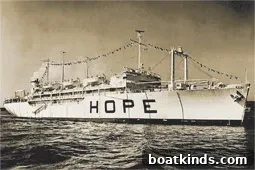
Boaters who grew up in the late 1950s and early 1960s may recall the image of this distinctive ship from school newsletters or classroom publications. This is the hospital ship Hope, the seafaring symbol of Project HOPE (Health Opportunities for People Everywhere). For 14 years the vessel carried American medical personnel and equipment around the world, delivering clinical care, training local health workers, and building goodwill in numerous countries.
Origins: From USS Consolation to SS Hope
Project HOPE was founded in 1958 by Dr. William Walsh, a physician who had served as a medical officer during World War II. Deeply affected by the poor health conditions he witnessed in the post-war South Pacific—especially among children—Dr. Walsh sought a practical way to bring medical services and education to underserved regions. He persuaded the Eisenhower administration to donate a decommissioned Navy hospital ship to his new nonprofit organization.
The donated vessel was the USS Consolation (AH-15). Built by Sun Shipbuilding and Dry Dock Company in Chester, Pennsylvania, the ship was launched in 1944. With an 800-bed capacity and a length of approximately 500 feet, the Consolation had an active wartime and postwar service record, serving in the Pacific, transporting prisoners of war, and later taking part in humanitarian evacuations. Decommissioned in 1955, the ship was chosen as the foundation for Dr. Walsh’s vision.
Conversion, Relaunch, and Global Voyages
Dr. Walsh led a fundraising campaign that raised the necessary funds to convert the former Navy hospital ship for civilian humanitarian use. The refit took around two years, and in 1960 the vessel was relaunched as the SS Hope. Staffed by American doctors, nurses, and technologists, the ship set sail from San Francisco on September 22, 1960, on its maiden voyage to Indonesia.
Over the course of the next 14 years the SS Hope visited many countries, combining direct patient care with training programs for local health professionals. Ports of call included Vietnam, Peru, Ecuador, Guinea, Nicaragua, Colombia, Ceylon (now Sri Lanka), Tunisia, Jamaica, and Brazil. By the time the ship was retired in 1974, she had logged more than 250,000 miles and established a model for delivering medical services and capacity-building in developing regions.
Mission and Impact
The ship’s model emphasized two complementary aims: providing immediate clinical care to patients and offering hands-on training and education to local medical staff. Onboard teams worked in wards and clinics, performed surgeries when needed, and conducted public health and preventive medicine programs. Equally important was the transfer of skills—nurses, physicians, and technicians trained local counterparts in methods and protocols that could be sustained after the ship departed.
Beyond clinical services, the SS Hope became a potent symbol of international goodwill. The presence of a floating hospital staffed by volunteers helped strengthen diplomatic and cultural ties, and the training component aimed to leave a lasting legacy by improving local health systems.
Project HOPE Today
After the retirement of the SS Hope in 1974, Project HOPE continued its mission on land and in partnership with other organizations. The organization has worked in collaboration with military and civilian partners—at times including naval cooperation—to deploy medical volunteers, send supplies, and run training programs worldwide. Project HOPE’s ongoing programs focus on health system strengthening, emergency response, disease prevention, and workforce development, building on the practical, education-first approach pioneered aboard the SS Hope.
The story of the SS Hope remains an important chapter in the history of global health outreach: a concrete example of how medical expertise, coordinated logistics, and a commitment to training can combine to deliver care and build capacity across borders.
This article originally appeared in the August 2012 issue.