
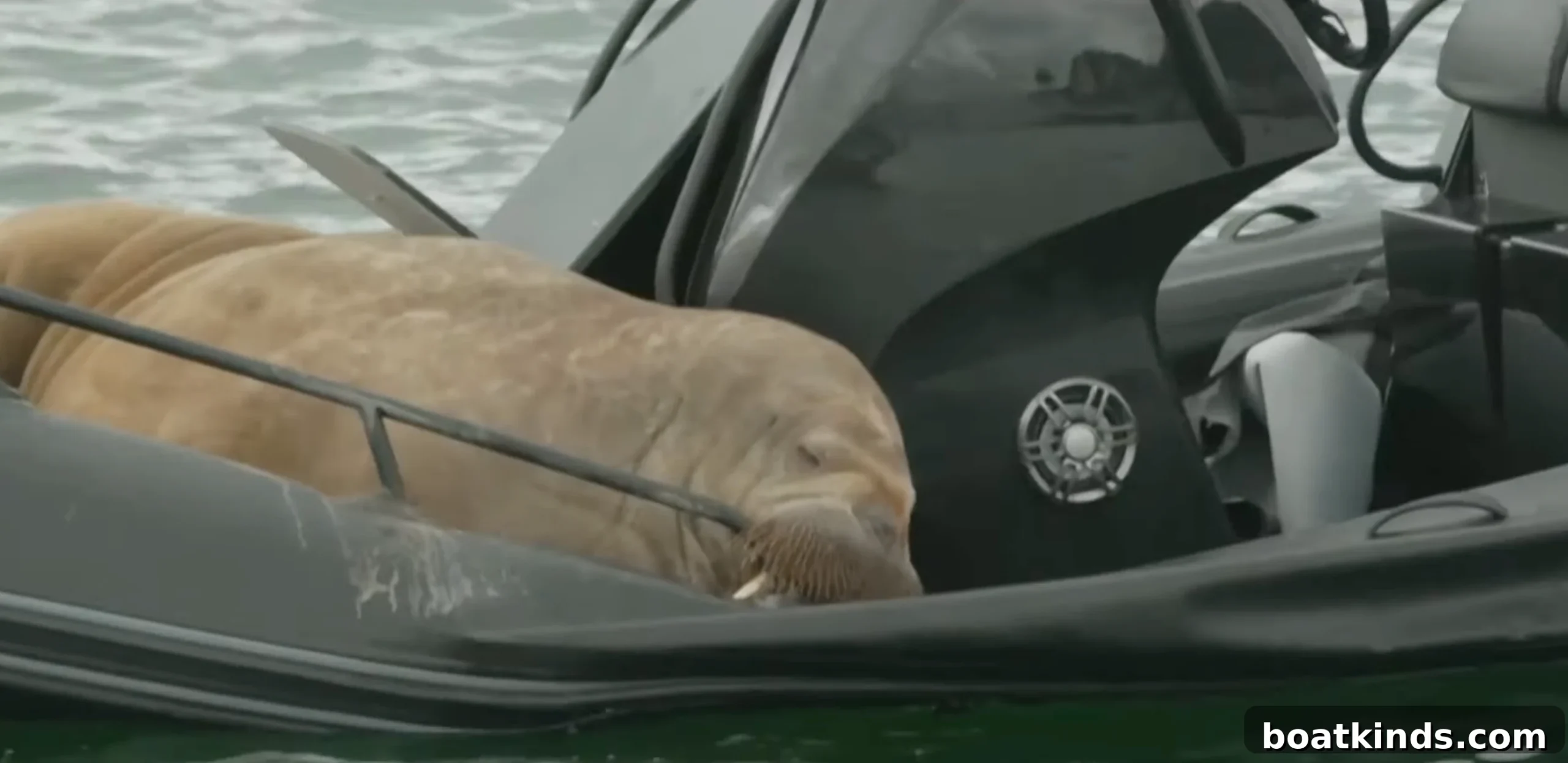
Freya the walrus — the large marine mammal that became a global news story for repeatedly hauling out on small boats and even sinking some of them while searching for a place to rest — was euthanized by Norwegian authorities last week. The decision sparked widespread debate and anger from wildlife advocates, scientists and members of the public.
Norway’s Directorate of Fisheries said the animal was put down to protect crowds of people who were repeatedly approaching the walrus too closely. Freya had drawn tourists and local onlookers to the Oslo Fjord, and officials said they could not guarantee the safety of the public or the welfare of the animal with the measures available to them.
That justification prompted sharp criticism from some Norwegian scientists and animal welfare advocates. Rune Aae, a biologist at the University of South-Eastern Norway, argued that the crowds would likely have dispersed as schools reopened and that Freya would have left the fjord on her own, based on past patterns of walrus movement. In a social media post he wrote that killing the animal was “completely unnecessary” and characterized the decision as an example of overly ready use of lethal measures.
Frank Bakke-Jensen, Director General of the Norwegian Directorate of Fisheries, said the agency had considered alternatives. Officials looked into options such as anesthetizing Freya for relocation or attempting to capture her by placing a net under a boat. They rejected those approaches for safety reasons, saying there were substantial risks that the animal could drown if sedated or become entangled in gear.
Not everyone accepted that there were no viable nonlethal solutions. Critics suggested a more robust and immediate focus on crowd control, public education and temporary exclusion zones could have reduced human-wildlife conflict while giving the animal time to move on naturally. Fern Wickson, a professor at the Arctic University of Norway, described the government’s choice to shoot the animal rather than intensify efforts to manage human behavior as “surprising and disappointing.”
Internationally, there are examples of different approaches to accommodating large marine mammals near people. In the United Kingdom, for example, a floating pontoon was installed to provide a resting platform for a walrus known as Wally, illustrating how targeted infrastructure and management can sometimes resolve situations with minimal harm to the animal and the public.
The Freya case highlighted the practical difficulties of wildlife management when charismatic, large marine animals appear in heavily populated areas. Walruses can be unpredictable and strong, and close human interactions present risks both to people and to the animals. Authorities must weigh public safety, animal welfare, logistical feasibility and legal constraints when deciding on a course of action. In this instance, Norwegian officials concluded they could not ensure welfare through any means available; opponents say other measures should have been pursued more vigorously.
Public reaction included grief, anger and a wave of fundraising to remember Freya. Supporters have raised funds to erect a statue in her memory, arguing that the shooting sends a negative signal about how society treats wildlife and public space. The appeal for a memorial framed the statue as a permanent reminder that removing or killing wild animals should not always be the first response when nature intersects with urban life.
Beyond the immediate controversy, the episode has renewed calls for clearer protocols and better preparedness when large marine mammals visit populated waters. Recommended responses from conservationists and some scientists typically include rapid deployment of trained personnel to establish buffer zones, consistent enforcement of exclusion areas, clear public communication, and, where feasible, nonlethal measures such as temporary resting platforms. Where capture or sedation is considered, experts stress the need for careful planning and veterinary oversight to minimize risks.
Freya’s death has become a flashpoint in broader conversations about coexistence with wildlife in coastal cities. For many, the outcome represents a missed opportunity to demonstrate how cities and governments can protect both people and wildlife through planning, restraint and humane, nonlethal management. For others, it underscores the real and sometimes immediate dangers posed when large wild animals and dense human activity collide.