
Boatbuilding Graduation at the International Yacht Restoration School in Newport, RI
At IYRS, commencement isn’t about caps and gowns — it’s about launching the boats students built and restored.
The graduation ceremony at the International Yacht Restoration School in Newport, Rhode Island, is a decidedly different kind of commencement. Rather than formal robes and mortarboards, many graduates arrive in work clothes and flip-flops; one mortarboard even sported a tiny mast and sail. After a short ceremony, students head outdoors to launch the boats they spent the year restoring or building — a fitting finale for a school focused on hands-on craftsmanship.
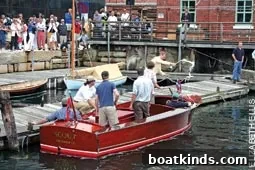
Classic Vessels Back on the Water
At this graduation, students launched a variety of classic craft: a fleet of 12-foot Beetle Cats — the iconic New England catboat first seen in 1921 — a restored 1929 Herreshoff 12-1/2, a fully restored 20-foot 1941 Gar Wood “Vacationer” motor launch, and a 15½-foot Chris-Craft Model 17 Deluxe Runabout from 1940. These projects showcase the range of traditional and technical skills students gain at the school.
Strong Job Placement and Career Launches
The programs at IYRS have a strong record of helping graduates find work. According to school administrators, a large majority of students finish with employment: many graduates of the boatbuilding and restoration program move directly into industry roles, and marine systems graduates also find positions quickly. The hands-on training, internships and industry connections make IYRS graduates attractive hires.
Student Stories
Kenny Grauer, 24, completed the nine-month marine systems program this year after finishing the two-year boatbuilding and restoration track last year. He earned a full-time technician position at Cay Electronics in Portsmouth, Rhode Island, after an internship arranged through the school. Grauer, who grew up in Middletown, R.I., had experience with cabinetry and woodworking from high school. He left a traditional college path when it didn’t fit and found a practical, rewarding education at IYRS. The combined training taught him a broad set of skills — from woodwork to installing and troubleshooting marine systems like air conditioning and watermakers — and helped him secure steady employment.
Daniel Burkhart, 27, of Hudson, Massachusetts, made a career change from film industry lighting technician to boatbuilding student. With a background in woodworking inherited from his grandfather, Burkhart followed his passion for making tangible, hand-crafted work. He played a key role in restoring the Chris-Craft runabout and emphasized the deep satisfaction that comes from bringing a project from plans to a finished boat that floats. After sending out about 60 résumés, he found a position at Dockside Boat Works in Cordova, Maryland.
Industry Mentors and Practical Wisdom
The featured graduation speaker was Donn Costanzo of Wooden Boatworks Inc., a yard in Greenport, New York, that restores classic wooden vessels and employs several IYRS alumni. Costanzo urged graduates to respect the craft’s processes and reminded them that cutting corners often leads to problems later. “People don’t build boats; boats build people,” he said, urging students to slow down, focus, and learn from mistakes rather than being discouraged by them. He praised the graduates for choosing a demanding but rewarding field and encouraged them to be kind to themselves as they gained experience.
Community, Internships, and Global Opportunities
One distinctive strength of IYRS is its community-based learning environment. That supportive culture helps students graduate with a broad, holistic understanding of their craft — a quality employers value. For example, a group of students will spend the summer interning at Alto Adriatico Shipyard, a wooden-boat yard near Trieste, Italy. There they will build three Feather 14s, a traditional-styled wooden catboat constructed with cold-molded techniques — laminated timbers and epoxy — blending classic design with modern methods. The students will document their experience in a public project blog.



Why the Work Matters
As the newly restored and built boats drifted away from the shore, champagne foam still speckled the water. For many, that scene captured the essence of why they chose this work: to be outside, connected to wind and sea, and to experience the satisfaction of turning raw materials into vessels that carry people across the water. Costanzo summed it up simply: the craft is about being part of the sea and the natural world — and that connection is why people dedicate themselves to building and restoring boats.