
Clipper Race Founder Orders Full Investigation After Death of IchorCoal Crew Member
Clipper Round the World Race founder Sir Robin Knox-Johnston has ordered a full investigation into the death of IchorCoal crewmember Sarah Young, who was swept overboard shortly before midnight on April 1. The incident occurred in heavy seas and 35–40 knot winds as a localized low-pressure system surrounded the 12-boat fleet in the North Pacific.
What Happened Onboard IchorCoal
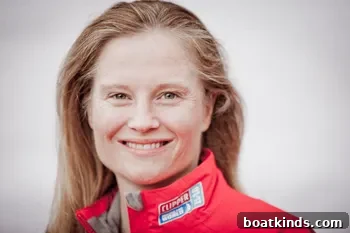
Young, 40, from London and the quartermaster for IchorCoal, was racing on the leg from Qingdao, China, to Seattle with about 3,242 miles remaining when the accident occurred. According to race officials, she was tidying the cockpit after reefing the mainsail in very strong winds when a wave knocked her from her position. A subsequent wave swept her back under the guard wire and she went overboard.
At the time she went into the water, Young was not tethered to the yacht. Her shipmates immediately executed their man-overboard drill, but strong winds, heavy seas and the rapid loss of visual contact made searching difficult, skipper Darren Ladd said. Young was wearing a man-overboard beacon, which ultimately helped rescuers locate her. Her body was recovered 1 hour and 17 minutes after she went overboard. Despite immediate efforts to resuscitate her, she could not be revived.
Investigation and Safety Questions
Sir Robin Knox-Johnston has said the inquiry will be conducted with British maritime authorities, likely involving the Maritime Accident Investigation Branch. He told the BBC the investigation will examine why Young was not clipped on to the yacht. “The only person who can tell us why she wasn’t tethered is Sarah herself, and of course, she never will,” he said. “We are all frustrated she wasn’t tethered on — terribly sad we’ve lost her, obviously, but just frustrated. … Clipping on takes about three seconds, and it’s cost her her life.”
The loss has renewed focus on safety procedures such as tethering, the correct use of life jackets and man-overboard beacons, and the practical challenges crews face when conducting a recovery in severe weather conditions.
Sarah Young’s Life and Role in the Race
Young was the owner of Bespoke Establishments, a company providing luxury personal services. She led an active, adventurous life: mountaineering in Nepal, leading cycling expeditions in northern Borneo, Zambia, Botswana and Namibia, running marathons, leading dive expeditions, and extensive sailing. Except for a brief return home to visit her mother, who was in failing health, she had been aboard IchorCoal since the Clipper Race began in August 2015 from London and had completed roughly half of the race’s approximately 40,000-mile course.
With the agreement of her family, medical advisers and the Maritime and Coastguard Agency, Young was buried at sea on April 3. Race organizers said that returning to land for a formal interment would have taken too long under the circumstances.
Context: Clipper Race Safety History and Previous Incidents
The Clipper Round the World Race has involved more than 4,000 amateur sailors over the past 20 years and has generally been regarded as having a strong safety record. Until this edition of the race there had been no fatalities. Tragically, there have now been two deaths on IchorCoal during this event.
Earlier in the same race, Andrew Ashman, a 49-year-old paramedic from Kent, England, was injured while reefing the mainsail off Portugal on Sept. 5. He was struck and knocked unconscious by the mainsheet and possibly the boom during a sudden wind burst. He never regained consciousness and died two days later on the yacht.
In a separate incident on the 2013–14 Clipper Race North Pacific leg, Andrew Taylor, a London events caterer, went overboard during the day when he was not tethered. He survived after spending about 1 hour and 40 minutes in 52-degree water; he was wearing a dry suit and a life jacket, and was eventually recovered when his crew located him despite initial problems activating his man-overboard beacon. Taylor credits his survival to his protective equipment and to eventually getting the beacon working.
These incidents underline the risks inherent in offshore ocean racing and the importance of strict adherence to safety procedures, especially wearing tethers, correctly operating beacons and maintaining situational awareness in severe weather.
This article originally appeared in the June 2016 issue.