
Prospector at the RORC Caribbean 600: A Firsthand Offshore Racing Account
Prospector was carving through the night with 20 knots of wind on her starboard bow. The full moon hadn’t risen yet, and the island silhouette of Redonda Rock—jagged and foreboding—fell away astern as we held our course. I stood on the stern, sheets pulled tight, straining to grind in the mainsheet, thinking I still could not believe I was there.
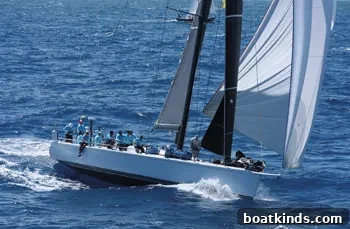
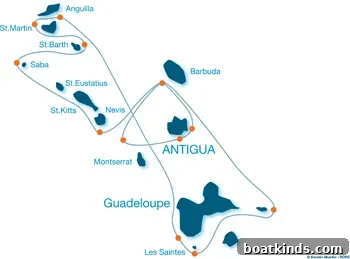
At the helm and navigating were two world-class sailors, Volvo Ocean Race veterans Jonathan “Jono” Swain and Campbell Field. We were closing on the finish line after starting the RORC Caribbean 600—a demanding 600-mile race that loops around 11 Caribbean islands—55 hours earlier. Twelve crewmates were hiked out on the rail while whitecapped waves glowed against the dark sky. It was one of those sailing moments that stays with you.
The fleet at the RORC Caribbean 600 is wonderfully varied: some of the fastest multihulls and monohulls in the world alongside Corinthian entries and charter-based teams run by companies such as OnDeck and Global Yacht Racing. Walking the docks before the start, I inspected the lineup and struck up conversations with sailors from 24 countries. Of the 69 starters, only two were local. The docks were packed with elite yachts—Comanche, Varuna, Highland Fling XI, Bella Mente, Spookie and La Bete (ex-Rambler)—all available for a close look.
High-Performance Multihulls and Record-Breaking Speed
The two trimarans in the race, Phaedo3 and Concise 10, are MOD70s racing in their own class. These machines routinely touch speeds above 30 knots and can surge to 40 knots in the right conditions, a striking reminder of how far offshore sailing technology has advanced. Phaedo3’s owner and co-skipper Lloyd Thornburg set a new RORC 600 record this year, completing the course in 31 hours, 59 minutes, 4 seconds—bettering his own previous mark by more than an hour. “It’s incredible to cross oceans at 28 knots,” Thornburg said, and the sentiment captures the thrill of modern multihull sailing.
Prospector: A Veteran Farr 60
The boat I sailed on, Prospector, is a Farr 60 built by Carroll Marine in Rhode Island in 1998. Over the years she has raced under names such as Deep Powder, Carrera, Hissar and Captivity and has a long list of campaigns and results to her credit. Two years prior to this event, a syndicate from the Shelter Island Yacht Club refurbished her with plans for offshore events and a trans-Atlantic race, and she placed second overall in the 2015 Atlantic Ocean Racing Series.
I joined the crew through Tony Rey, head of Cloud10 Racing in Newport, Rhode Island. Cloud10 runs organized racing programs for owners and clients and partners with the Camper & Nicholsons brokerage to provide turnkey regatta experiences. Together with longtime client Peter Cunningham, Rey put together Prospector’s RORC 600 team—combining new talent with Prospector’s longtime captain Tery Glackin and Newport mates Quinn Tobin and Scott Tompkins. Cunningham recruited experienced sailing friends to round out the roster.
My own sailing background spans more than 30 years: deliveries from Bermuda to Maine, adventure sailing to Cape Horn, and regular cruising on my Sabre 38, Sachem, to Nantucket and Martha’s Vineyard. I’ve raced frequently and enjoy daysailing an Etchells or my Sabre. Still, the professionalism and speed of the dedicated offshore racers on board eclipsed anything I had seen before. They reacted to Swain’s commands with precision and instinct born of repetition and practice.
Constant Trade Winds and Tactical Sail Changes
One of the Caribbean’s great advantages for offshore racing is the consistency of the trade winds. When our division’s start horn sounded, strong wind set in and didn’t let up for the entire 2 days, 14 hours, 7 minutes and 10 seconds we raced. The trades typically blow from the east with a north or south component; in protected lee areas they might dip to 12–15 knots, while in open water 20-plus knots was common. Proper sail selection and timely adjustments were crucial; we ended up sailing only about 20 miles more than the theoretical 600-mile course.
Swain and Field, in consultation with Glackin, called the sail plan while a highly skilled foredeck crew executed rapid changes. We performed more than two dozen spinnaker peels, switched jibs repeatedly, sometimes flew three headsails at once, and used a Code Zero on its own internal stay. Heavy sail bags came up from below, were hoisted, and set—day and night. We used red-light headlamps at night to preserve night vision while managing sheets and lines.
Living and Working at Sea
The Caribbean sea state is “lumpy”: waves of four to six feet create random motion that demands constant attention. On deck every move has to be deliberate—where to place hands and feet, how to brace. Even after the race, I slept deeply; the nonstop motion and exertion leave you exhausted. Watches provided scheduled downtime, but real sleep was elusive. Berths were damp from sea spray and the noise below decks—groaning rigging, winch squeals, blocks and shackles—made restful sleep a rare commodity.
Deck work required precision and fitness. Foredeck ace Dave Tank moved with balletic agility while the rest of us learned to think several moves ahead. I kept myself busy with practical tasks: raising and bagging sails, bringing empty bags below, pulling down the spinnaker during letterbox drops, refilling water bottles, and grinding winches until my shoulders ached. When it came time to gybe the spinnaker, every hand on board was needed; the crew executed complex line handling and transitions flawlessly, without the shouts and errors that often accompany such maneuvers.
Moments of Awe and Final Results
When not required on deck I sat on the rail, watching the sea, clouds and islands glide by. A sunrise watch off Dominica, with the island’s cloud-covered peaks and rich biodiversity, felt like a rare privilege—far removed from my usual morning view. The camaraderie aboard Prospector was outstanding, built on mutual respect for skill and a shared love of sailing. One highlight was lining up for the start alongside Comanche—a thrilling test of tactics and nerve.
Prospector finished ninth in IRC Zero among 18 boats. As skipper Peter Cunningham put it, we “punched above our weight.” Many boats that placed ahead were sailed by long-standing teams who train together regularly, which makes our result all the more gratifying.
The RORC Caribbean 600 is now in my blood. Between the intense racing, the world-class boats and crews, and the unique Caribbean conditions, this regatta is a sailor’s dream. I plan to return next year to race again among these islands, under the steady pull of the trade winds and among a fleet that represents the best of offshore sailing.
This article originally appeared in the May 2016 issue.