
Cape Dory 28 — A Classic Down East Semidisplacement Cruiser
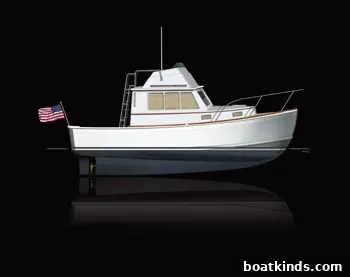
The Cape Dory 28 made its debut in 1984 as a straightforward, seaworthy powerboat that married traditional styling with practical cruising accommodations. Built with a trunk cabin, a single engine and an interior designed for comfort underway, the design quickly became a standard-bearer for the Down East–style cruisers that followed.
Designer Heritage and Builder Background
Cape Dory, founded in Massachusetts in 1963 by Andrew Vavolotis, was already a respected name in sailboat construction long before it ventured into powerboats. During the company’s history it produced many sailboats up to 45 feet, often designed by Carl Alberg. Alberg’s aesthetic and naval-architecture philosophy—clean lines, a relatively narrow beam and a full keel for predictable, comfortable motion—carried over into the Cape Dory 28, giving the power version the same focus on seaworthiness and simplicity.
Hull, Propulsion and Performance
The Cape Dory 28 uses a semidisplacement hull form and a moderate draft to balance stability and efficient cruising. The design was intended to be easily driven while remaining stable in a range of sea conditions. Buyers could opt for a single 200-hp Volvo diesel or a 275-hp Chrysler gasoline engine. Advertised speeds were around 14 knots for cruising and roughly 20 knots at top end. A full keel protects the propeller and contributes to the boat’s steady tracking and forgiving handling characteristics, especially in offshore conditions.
Models and Helm Layouts
Cape Dory offered the 28 in several configurations—Open Fisherman, Sport and Cruiser—each tuned for different boating styles. The Flybridge model earned a reputation as the “queen of the fleet.” Its elevated helm station provided broad visibility and comprehensive instrumentation, making navigation and maneuvering easier in busy harbors or open water. A lower helm positioned to starboard, forward in the salon, gave the skipper an alternate control station with good sightlines and easy access to the interior living spaces.
Interior and Fit-and-Finish
Below deck the Cape Dory 28 emphasized comfortable, practical cruising accommodations. The layout commonly featured a forward V-berth and a galley located down from the main salon, which included an L-shaped settee and an adjacent table for dining or lounging. Interior joinery and finishes were notable for their quality: teak cabinetry and a teak-and-holly sole gave the cabin a warm, classic yacht-like feel while remaining durable for the realities of cruising life.
Seakeeping and Practical Appeal
The Cape Dory 28 was promoted for its “incomparable seakeeping abilities” derived from the Down East semidisplacement hull and for offering a rich, yacht-style interior in a compact package. The combination of a conservative hull shape, protected propeller and thoughtful interior arrangement made the design appealing to boaters who wanted a capable coastal cruiser with traditional lines and comfortable liveaboard or weekend-cruising spaces.
Why the Cape Dory 28 Still Matters
Even decades after it first appeared, the Cape Dory 28 remains a reference point for buyers seeking a classic-looking, well-built semidisplacement cruiser. Its emphasis on simplicity, good seakeeping and quality joinery resonates with owners who value dependable performance and a timeless aesthetic over flashier, trend-driven designs. For sailors and powerboaters who appreciate traditional styling combined with practical cruising features, the Cape Dory 28 continues to be admired for the thoughtful design choices carried forward from Cape Dory’s sailing heritage.
This article originally appeared in the June 2016 issue.