Ivory tree coral is one of the planet’s most remarkable corals. The branching species, Oculina varicosa, creates a deepwater reef that runs along the east Florida coast from Fort Pierce to Daytona. That 90-mile reef is unique—there is no other like it in the world—and historically it was dense enough to be widely known as Oculina Banks. Decades of damaging fishing practices severely harmed the reef, so the area is now federally protected and remains in recovery. Populations of species that once thrived there, such as large grouper, are still rebuilding along with the coral habitat.
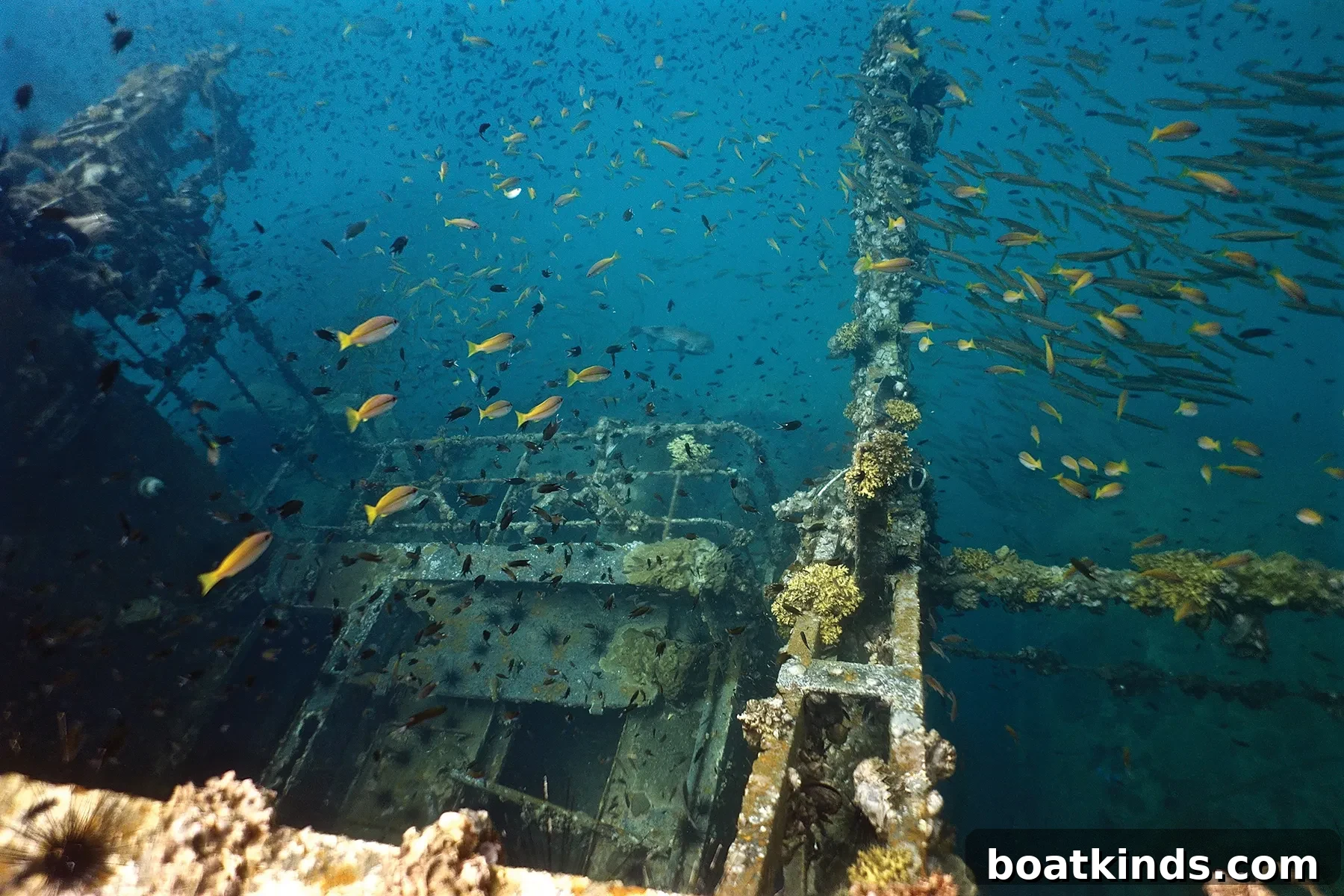
This year, however, Oculina varicosa and many other marine organisms gained a new place to live: an artificial reef intentionally sunk about 160 feet deep near Fort Pierce. Stretching 126 feet long and 27 feet wide, the structure—soon to be officially named the A.A. Hendry Reef—offers numerous cavities and surfaces for marine life to settle. Technical divers will be able to visit the site, though they should expect an unusual and striking sight.
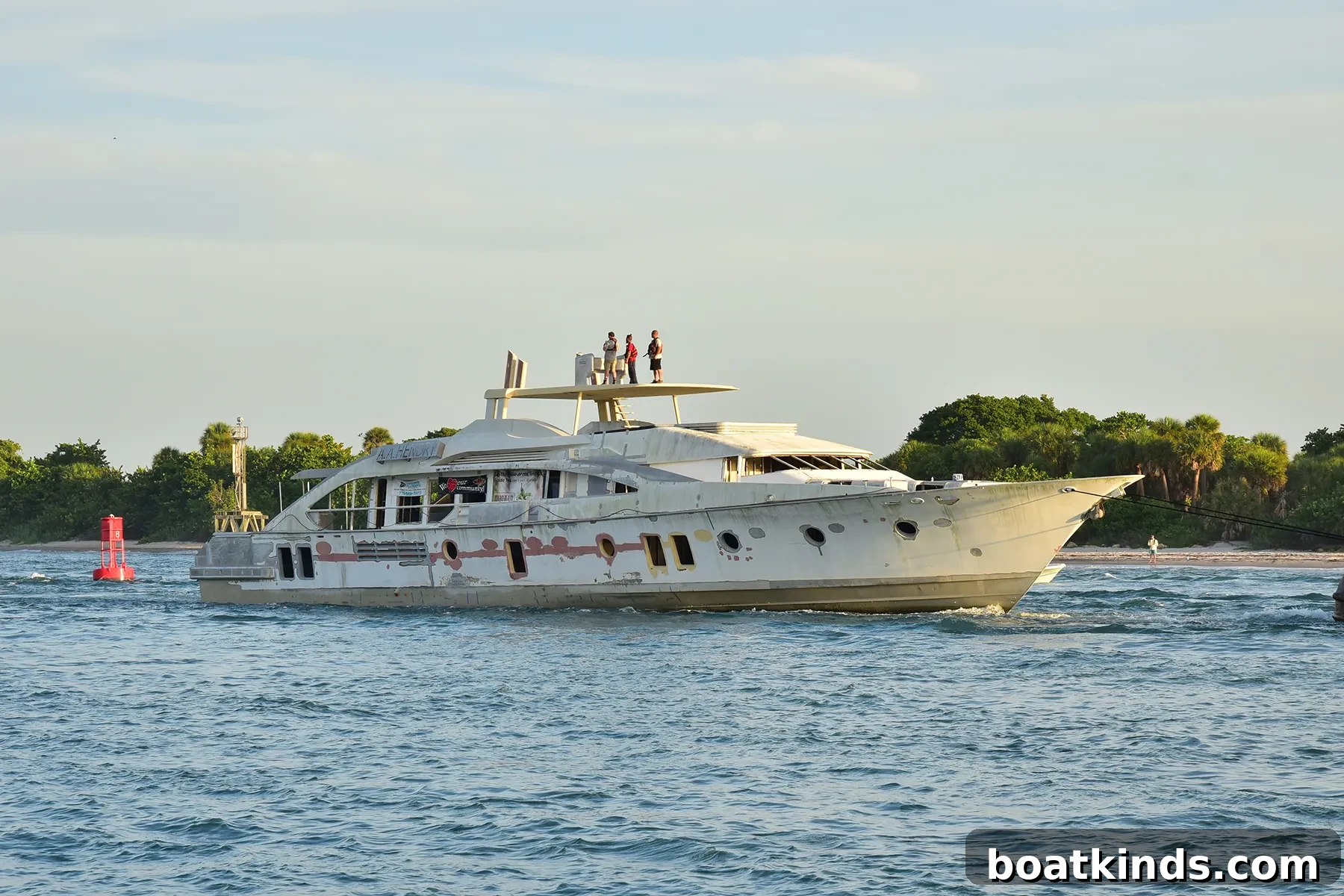
Unlike most artificial reefs that repurpose barges, tugboats or commercial vessels, the A.A. Hendry Reef began life as a stripped-down superyacht. The yacht, named Time, is an iconic American-built vessel, and its transformation into an artificial reef is an uncommon and dramatic example of a luxury yacht finding a second life as marine habitat. The story of how Time became a reef is filled with twists and turns that read like a screenplay.
Time was commissioned at the now-defunct Palmer Johnson shipyard in Wisconsin and launched in 1987 as the world’s largest aluminum yacht at the time. Designed by naval architect Tom Fexas, it stood out visually and technically: a sleek, low-slung profile with an expansive, arched deck layout and performance capable of topping 30 knots. Its interior was styled by J.C. Espinosa with contributions from architect Diane Atwood, and for years the yacht served as a private winter retreat for her owner.
Over subsequent decades Time passed through multiple owners and periods of uncertain history. In the early to mid-2000s the yacht belonged to an owner in Mexico and was listed for sale in 2007. According to naval architect Arthur Barbeito—president of AMB Design Consulting Group—U.S. marshals, with help from Mexican authorities, seized the yacht at one point. That same owner later purchased Time from the U.S. Marshals Service and planned a modest refit with Barbeito’s input. Barbeito remembers it fondly: “It was a great boat. Tom was an excellent designer.”
When Time arrived in Miami for work, however, the project quickly expanded. Mold was discovered in the insulation, forcing crews to strip the vessel back to bare metal. The owner also requested additions—a pool on the extended swim platform and a belowdecks gym—turning the refit into what Barbeito describes as essentially a “do-over.” Progress stalled for several years, and when the owner re-engaged in 2021 and moved the yacht to a shipyard in Stuart, it became clear stored furnishings and woodwork had deteriorated without climate control. Faced with the scale of work required, and despite his emotional attachment to the vessel, the owner concluded continuing the rebuild was impractical.
Rather than let the yacht languish, Barbeito suggested donating her to become an artificial reef. With the owner’s blessing, initial inquiries to the county went unanswered, but subsequent communications—assisted by the owner’s attorneys—connected the owner with the Marine Cleanup Initiative (MCI), a Fort Pierce nonprofit that leads projects for healthier Florida waters. MCI had experience creating reefs, having managed five reef deployments in 2021 alone.
Although Time was first intended for Martin County’s reef program, permit issues led MCI to collaborate with the St. Lucie County Artificial Reef Program, led by coastal resources coordinator Jim Oppenborn. “The yacht was handed to us on a silver—or aluminum—platter,” Oppenborn says. Converting a superyacht to a reef required funds beyond the owner’s donation; Willis Custom Yachts in Stuart removed her engines and outdrives, and the yacht was towed to Causeway Cove Marina in Fort Pierce in September 2022. Crews spent months stripping the vessel down to its half-inch aluminum plating, and although stability analyses showed it would be secure once sunk, the team still poured six tons of concrete inside for added assurance.
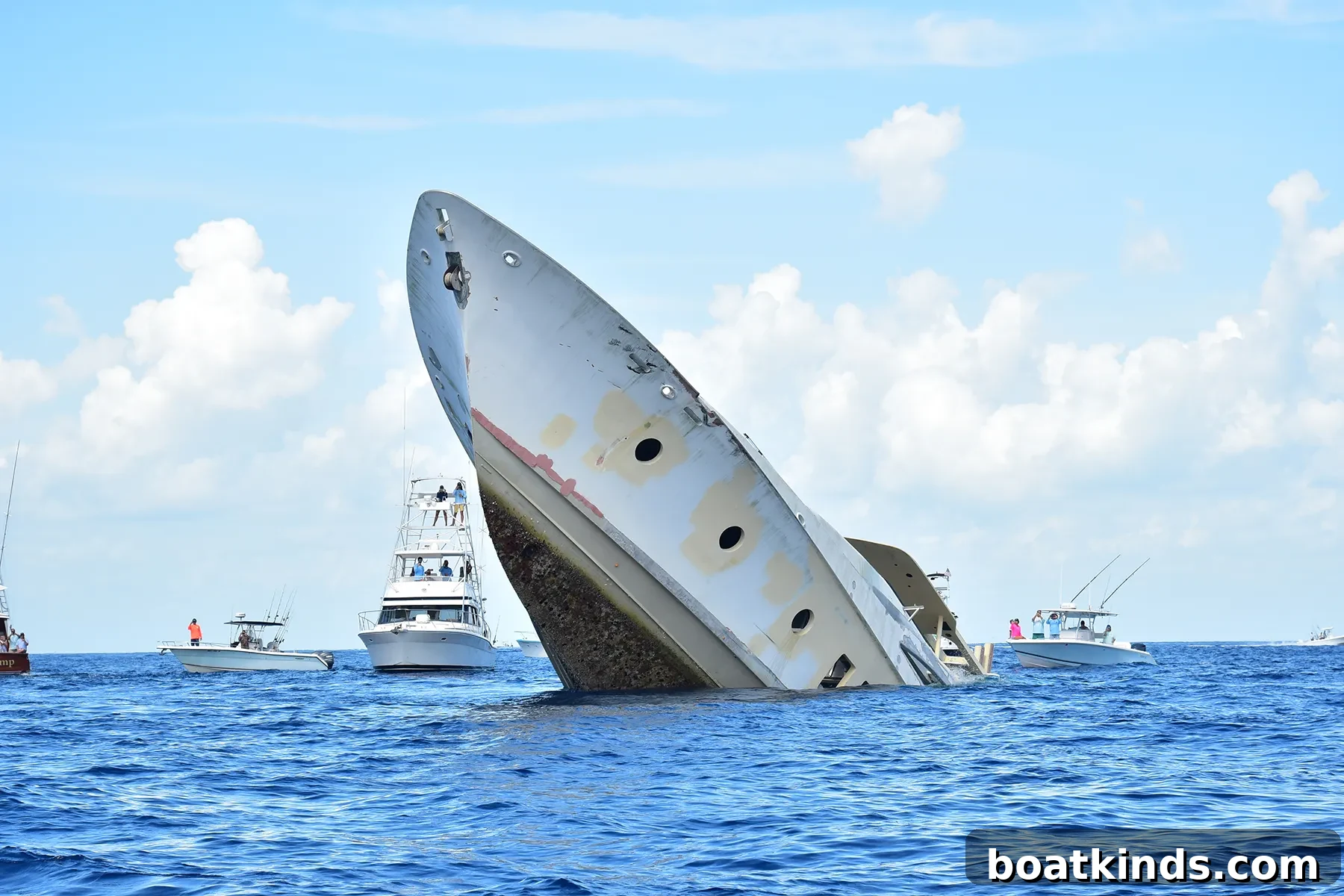
On July 15 of this year, under the watchful eye of the U.S. Coast Guard and surrounded by boaters eager to witness the moment, tugs towed Time offshore from Fort Pierce and sank her stern-first. As the yacht slipped below the surface, onlookers cheered and sounded horns in celebration. While the owner was not present, Barbeito has seen footage of the deployment and emphasizes the reef’s importance: “The fish population is depleted. We need it.”
At the time of publication, the final formal step pending was the St. Lucie County commissioners’ approval to officially name the vessel the A.A. Hendry Reef, honoring the Hendry family patriarch who helped establish Hendry, St. Lucie and Martin counties. Meanwhile, marine life wasted no time moving in: based on past projects, MCI and county staff expected microbes and small invertebrates to colonize the new structure within 24 hours. They also anticipate coral arrival; the Tug Lesley Lee Reef, sunk in 2008, showed Oculina varicosa present within a year and thriving in subsequent years, with branching visible after several more years.
Turning a superyacht into an artificial reef is unconventional, but for Oculina varicosa and the many other species that will use the site, it represents meaningful new habitat. As the reef matures, researchers, divers and conservationists alike will watch closely to see how the former yacht supports the recovery of local marine ecosystems.
This article was originally published in the October 2023 issue.