
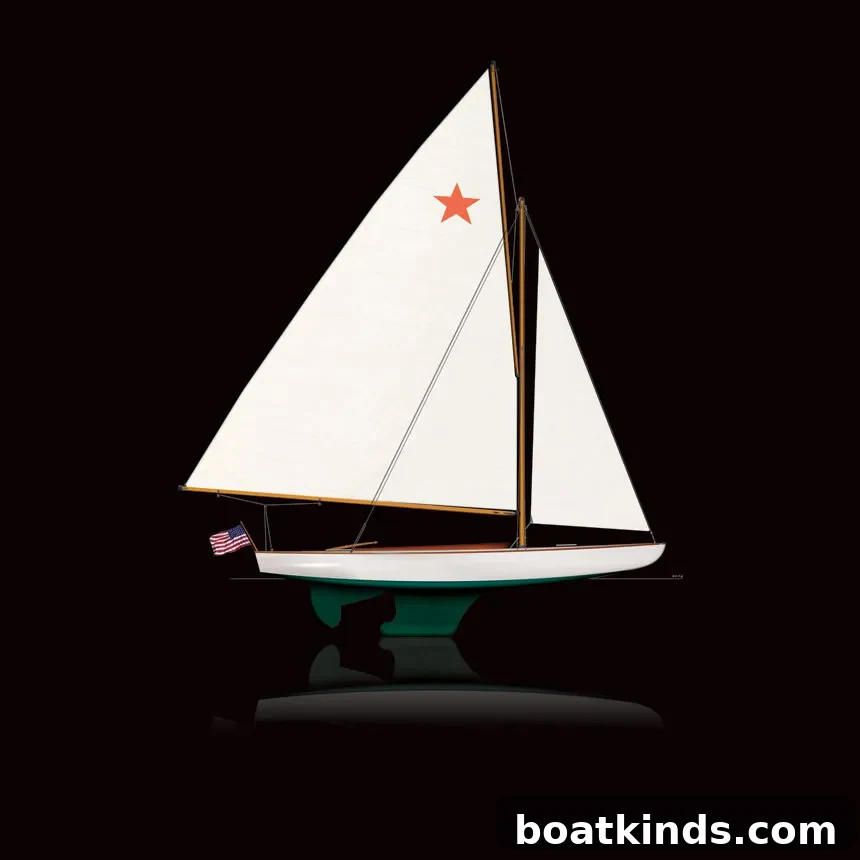
The Star: How a One-Design Keelboat Redefined Racing
What began as a modest one-design called the Bug evolved into one of the most influential keelboats in sailing history. The Bug was William Gardner’s 1906 design for a simple, affordable 17-foot one-design that cost just $140. George “Pop” Corry, commodore of Larchmont Yacht Club, appreciated its fairness and racing potential, but he found the little boat a touch too small and a bit too wet for his ambitions. He wanted something larger, more seaworthy and every bit as competitive.
In 1910 Corry returned to Gardner for a new design. Draftsman Francis Sweisguth translated that brief into a larger keelboat a little over 22 feet overall. The new boat kept the spirit of one-design racing while introducing graceful overhangs and a striking gaff rig whose boom extended aft over the transom. The resulting lines gave the boat a purposeful, racing appearance even when it sat at anchor.
Boatbuilder Ike Smith of Port Washington, New York, constructed the first 22 examples for Corry and his supporters. The fleet made a memorable debut on Long Island Sound at the Harlem Yacht Club’s Memorial Day regatta on May 30, 1911. From the outset, the new design—soon known simply as the Star—proved itself: fast, sturdy and demanding, offering both mental and physical challenges to helm and crew alike.
Beyond being a capable racing yacht, the Star went on to influence the sport in broader ways. Skipper George Elder pushed the idea of a centrally governed class association, helping to shape how one-design fleets organize nationally and internationally. That governance model ensured strict class rules and fair competition, which in turn helped the Star class flourish and spread.
The Star also became a technical proving ground. Innovators experimented with new rigs and equipment on Stars, including transitions from traditional gaff setups to more modern sailplans and the introduction of devices designed to improve safety and performance, such as auto-bailers. Its configuration and popularity made it an ideal platform for developments that would later become widespread in small-boat racing.
Competitive milestones followed. The Star class hosted world championships beginning in 1923, a tradition that continues today, and in 1932 it was selected as an Olympic class—an endorsement of its international stature and competitive breadth. Over the decades, the class has attracted some of the sport’s most famous names, from President John F. Kennedy to Olympic champion Paul Elvstrom, America’s Cup hero Dennis Conner and world-class sailor Buddy Melges. Their participation helped raise the Star’s profile and inspired successive generations of racers.
What truly sustained the Star’s success, however, was not only the quality of its design but the commitment of its owners and organized class structure. William Gardner himself recognized this when he noted that the boat alone did not account for the class’s unprecedented success. He credited the sustained enthusiasm of owners and the active promotion and stewardship by the class association for bringing the Star to the attention of the wider yachting world.
Today the Star stands as an important chapter in one-design racing history: a boat that combined elegant lines with rugged capability, strict class governance with room for innovation, and grassroots support with international competition. Its story is a reminder that a successful class requires more than a good hull and rig—it needs engaged owners, thoughtful rules and institutions that nurture competition and improvement.
This article originally appeared in the February 2018 issue.