
Bob Apple is the Senior Vice President of Sales and Marketing for Volvo Penta North America, based in Chesapeake, Virginia. Before joining Volvo Penta, Apple spent 22 years in the automotive industry, including 11 years with Saturn Corporation where he played a key role in building that new car company.

Apple joined Volvo Penta in 1999 and initially led the Lexington, Tennessee, marine engine plant through the introduction of lean manufacturing techniques that produced a significant business turnaround. That success led to his promotion to Vice President of Manufacturing and eventually to the role of head of global manufacturing for Volvo Penta facilities in the United States and Sweden. He assumed his current position in October 2008.
Bob and his wife, Ann, live in Chesapeake, Virginia. They have three adult children and enjoy boating and traveling in their spare time.
Q: Bob, let’s start with Volvo Penta’s latest recreational product – the OceanX sterndrive. What makes this sterndrive notable?
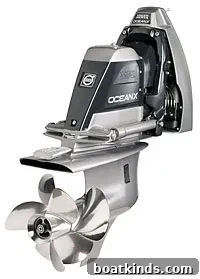
A: The OceanX sterndrive represents a major advancement in corrosion protection. Over several years we evaluated multiple coatings and materials to improve resistance to saltwater corrosion. The OceanX process and product are the result of that work and offer what we believe is a significant industry step forward. We are excited to bring this enhanced durability and protection to customers.
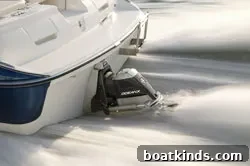
Q: Why did Volvo Penta move away from the composite used in the Ocean Series sterndrive?
A: We haven’t abandoned composite technology. The Ocean Series will continue to be supported in the field, and we will service those units for years. That said, Volvo Penta has a reputation for innovation, and OceanX is a continuous-improvement product designed to offer better protection and durability for consumers.
Q: Will the Ocean Series remain available?
A: From an OEM perspective, the Ocean Series will eventually be phased out. However, we will continue to support and service Ocean Series units in the field, ensuring owners receive the maintenance and parts they need.
Q: The OceanX sterndrive includes two alarms for water intrusion. How do those work?
A: OceanX has two early-warning sensors. The first detects water in the bellows. Bellows leaks can be subtle and go unnoticed until they cause major damage; this sensor alerts the owner early so the issue can be addressed before failure occurs. The second sensor detects water in the drive oil. It signals if water has entered the drive system and similarly provides an early warning so timely service can prevent severe damage. Historically, owners had few effective ways to learn of these internal issues early; these sensors add a practical, consumer-friendly layer of protection that improves reliability and long-term performance.
Q: With the anti-corrosion materials and the new sensors, how much longer will OceanX last compared to its predecessor or competing products?
A: It’s difficult to quantify a specific number of extra hours or years since corrosion failures are relatively rare but can be catastrophic when they occur. OceanX is best viewed as a proactive feature that enhances preventative maintenance and helps extend useful life in normal applications. Rather than promising a fixed additional lifespan, the product is designed to reduce risk and give owners early warnings so issues can be addressed before they become severe.
Q: Tell us about Volvo Penta’s Joystick Sterndrive.
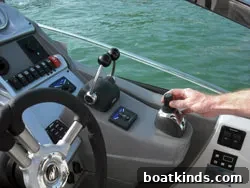
A: The Joystick Sterndrive brings IPS-like maneuverability to a sterndrive, especially for dual-engine installations on smaller boats. It enables joystick control and intuitive docking for vessels as small as 24 to 25 feet with twin engines, improving low-speed handling and making tasks like docking in strong wind or current much easier. It effectively delivers the IPS experience—tight turning, precise control and the ability to rotate on the vessel’s axis—to smaller boat segments where joystick control wasn’t previously available.
Q: How have boatbuilders responded since you launched the Joystick Sterndrive at the Miami Boat Show?
A: Builders have been enthusiastic because the product fills practical gaps in their lineups. More than ten manufacturers have shown strong interest or already created packages that integrate the joystick solution. Even in a weak economy, they recognize the consumer benefits and the opportunity to offer a premium handling experience that can drive sales when the market recovers.
Q: Why introduce OceanX and the Joystick Sterndrive during a recession rather than waiting?
A: Both products were ready after extensive testing, and launching new innovations can help stimulate demand as the market recovers. Introducing fresh, compelling products can attract buyers who are committed to boating and want newer technologies that improve reliability and ease of use.
Q: How far can Volvo Penta’s IPS pod system scale?
A: We plan to scale IPS to support vessels up to roughly 100 feet in length in various configurations, including quad installations of the IPS2 platform we are rolling out. That approach allows IPS to address a broad range of boat sizes and performance needs.
Q: What is the largest yacht currently fitted with IPS?
A: The Lazarra-built 92LXS is an example of a large yacht using four IPS 900 systems.
Q: Where do you see marine engines in 50 years?
A: Predicting that far ahead is challenging. Hybrid systems could play a larger role if battery and control technologies continue to advance, and fuel cells may become viable in certain applications. Nevertheless, internal combustion engines have proven durable and dominant in marine use for a century, and we expect they will continue to be an important part of the mix for the foreseeable future.
Q: Have you personally been boating since joining Volvo Penta?
A: I’ve been boating since the late 1970s, starting as a teenager. Over the past 30 years I’ve owned several boats, mostly in the 18- to 24-foot range. Moving from the auto industry to marine manufacturing was a positive change for my family and me.
Q: What boats have you owned?
A: I grew up around a Wellcraft about 20 feet long, and I’ve owned a few Chaparrals ranging from 20 to 23 feet. Most of my boats have been in that 18- to 24-foot category, though I’m now interested in moving up into express cruiser-style boats.
Q: What can consumers expect next from Volvo Penta?
A: We’re committed to continuous innovation. While I can’t reveal everything, you can expect ongoing enhancements to the IPS experience and to the Sterndrive Joystick systems. Those developments will focus on usability, reliability and expanding the market of boaters who can benefit from joystick control and advanced propulsion features.
Q: How often will new IPS features be released?
A: Customers can expect regular updates and improvements—typically something new or enhanced each year—as we refine systems and introduce new capabilities.