
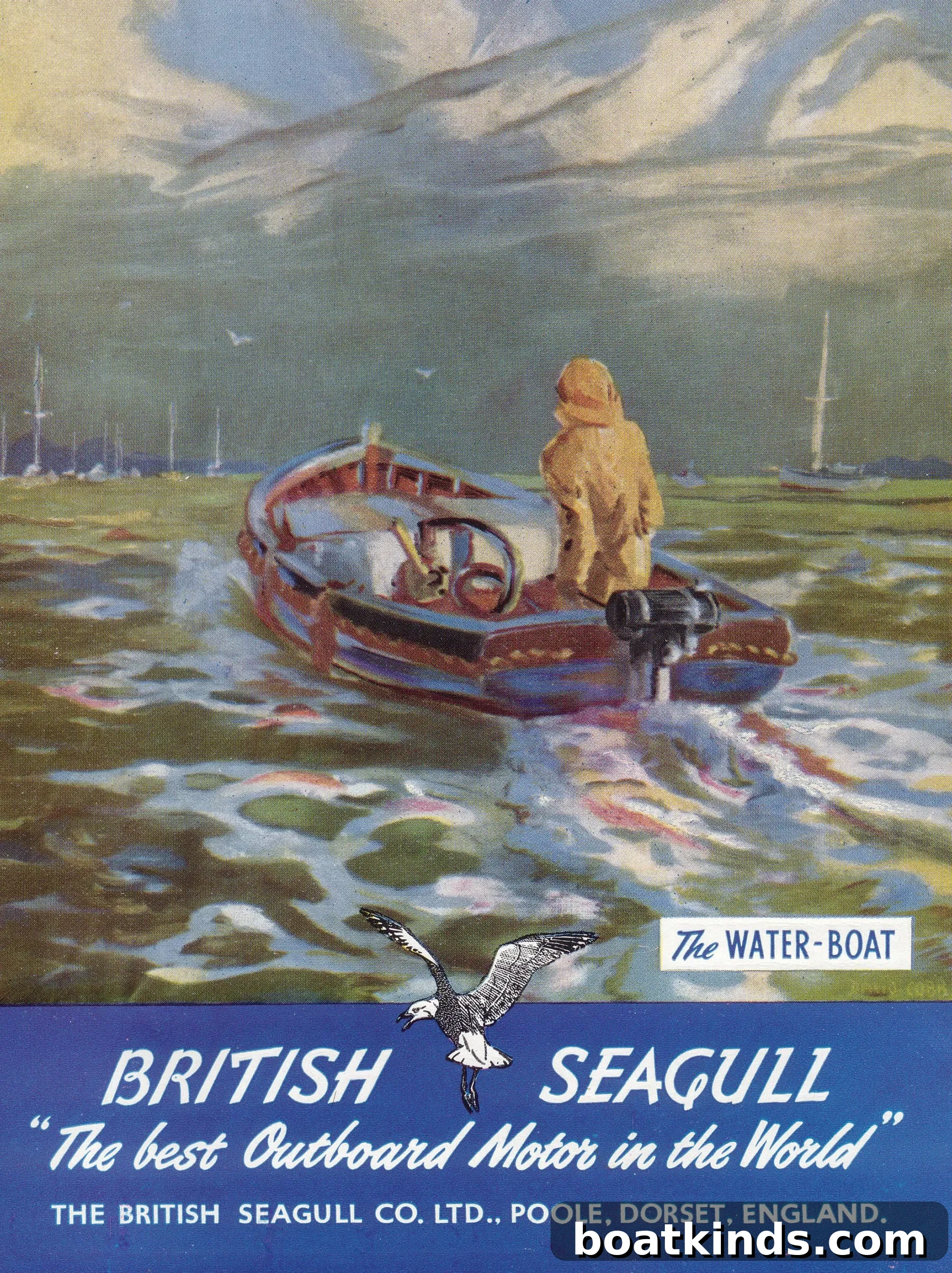
British Seagull: The Rugged Outboard from Poole That Became a Legend
In the early 1930s the English harbour town of Poole was the unlikely birthplace of an outboard engine that would earn a devoted following worldwide. Built from parts made in small machine shops and yards around the town, the engine first emerged as the Marston Seagull before becoming better known as the British Seagull. Its straightforward design, durability and ease of repair made it a favorite among fishermen, yacht owners and, eventually, even the British Admiralty.
From Marston to British Seagull
Designer John Marston originally called the powerplant the Marston Seagull. The simple single-cylinder engine—displacing 102 cc—was assembled in a harborside building on Poole Quay, where flywheels, gas tanks, gears, gaskets and prop shafts were fitted together into a compact and practical unit. When engineers John Way-Hope and Bill Pinniger took over production, they renamed the motor British Seagull and promoted it with an enduring slogan: “The Best Outboard Motor in the World,” later adjusted to “for the World.”
Simplicity and Practical Design
The Seagull’s appeal rested on a no-frills philosophy. It was built to be tough rather than quiet or sophisticated—features the company saw as unnecessary for its intended users. One early refinement, a reverse gear, was removed after Way-Hope dismissed it as “a rather sissy refinement rendered superfluous by efficient boat handling.” What remained was an uncomplicated, easy-to-maintain outboard that owners could service themselves with basic tools and replacement parts.
That combination of simplicity, reliability and affordability helped the British Seagull become widely popular. By the 1960s the company was selling as many as 25,000 engines worldwide, with post-war model names such as the 40 Minus, 40 Plus and Century, followed later by the 170 and QB series.
Service in War and Peace
The British Admiralty recognized the Seagull’s virtues, and the motor saw military service during World War II. Thousands of Seagull outboards powered assault craft during the D-Day landings, helping deliver troops and supplies to the beaches of Normandy. Anecdotal accounts hold that many of the motors left behind along the shore were later recovered, restored and pressed into service by local French fishermen—a testament to their durability and the ease with which they could be returned to working order.
Decline and End of Production
Despite its success, the Seagull’s basic design left it exposed to changing expectations. By the late 20th century the public and regulators demanded quieter, cleaner marine propulsion systems. The classic British Seagull, built for rugged practicality rather than meeting modern emissions and noise standards, struggled to compete with newer technologies. Production finally ceased in 1996, marking the end of an era for the Poole-built outboard.
Legacy and Enthusiast Support
Although the original company closed, the British Seagull has not been forgotten. Owners and collectors still maintain and restore these engines, and spare parts remain available from specialized suppliers such as Sheridan Marine in Oxfordshire. “Seagull outboards are tough old birds,” says one owner—an observation echoed by many who appreciate the model’s straightforward mechanics and long service life.
Today the Seagull is prized among vintage outboard enthusiasts and small-boat owners who value reliability and an engine they can understand and repair themselves. Restoration projects and parts suppliers keep the legacy alive, ensuring that these distinctive outboards continue to run on harbors, rivers and coastal waters.
This article originally appeared in the August 2020 issue.