
Returning to Newport: Memories from the Eagle Syndicate and the 12 Metre Magic
In the summer of 1984, fresh out of college and living with my parents in New Jersey, my brother Rik called from Newport, Rhode Island. He was working for naval architect Johan Valentijn on the design of the 12 Metre Eagle. The Newport Harbor Yacht Club’s Eagle Syndicate was mounting a challenge for the 1987 America’s Cup in Perth, Australia, and they were looking for a head gofer.
Rik offered me the job. The title was undignified and the pay was only $250 per week, but the position included free sailing gear and a generous beer budget. That night I climbed into my rusty 1976 Plymouth Volare and drove the four hours to Newport.
Two years earlier Rik and I had sailed to Newport aboard his 1968 Pearson Lark and quickly fell in love with the city. Newport had everything young sailors wanted: lively bars, attractive people, impressive yachts and a waterfront alive with Navy personnel, fishermen, locals and visiting yachtsmen.
The following summer we returned in time to watch Australia II beat Victory ’83 in the Louis Vuitton lead-up to the 1983 America’s Cup. Standing on a dock that day, Rik swore we would someday work on an America’s Cup campaign. That fall he wrote to Valentijn, and in 1984 he accepted an engineering position that eventually led to my hiring with the Eagle Syndicate.
The Eagle campaign had acquired the 12 Metre Magic, a compact Twelve Valentijn had designed for the unsuccessful 1983 defense. She’d been fitted with a winged keel—like the one Australia II used to defeat Liberty—and was packed with test equipment, much of which Rik oversaw.
When I arrived in late August 1984, Rik had moved from his boat into a one-bedroom apartment on Simmons Street; his wooden living room floor became my bed. Working for the Eagle Syndicate was intoxicating. As a sailor I was out of my depth, but I worked hard to prove myself alongside seasoned Newport crew. Our days were spent scrubbing and preparing the boat, driving her hard across Rhode Island Sound, and testing performance in demanding conditions—sometimes burying the bow in heavy swell, sometimes working below decks inside a sweltering aluminum hull.
We quickly befriended Matt Boyle, a Newport native and crewman aboard Magic, who became our local guide. One of our favorite hangouts was the Narragansett Café, known for its great jukebox, pool table and cheap beer. Locals called it the Purple Lady because of the purple-and-white ceiling tiles; after a 1976 incident some referred to it as the “Nasty Narry.”
For four months I kept my newspaper job in New Jersey on weekends and commuted back to Newport each Sunday night. I’d crash at Rik’s place, eat breakfast at Gary’s Handy Lunch (where the syndicate kept an open account for crew), work on Magic, sail, party at night and then return to New Jersey to work. Eventually I was offered a full-time newspaper position and had to choose between journalism and chasing a life as a professional boat bum bound for Australia. I reluctantly left the Magic campaign. Rik later married, had a child, and also moved back to New Jersey. For nearly 25 years I didn’t return to Newport, though I missed its salty energy.
Recently, Rik and I visited Newport again to reconnect with Matt, 37 years after our time on Magic. We met at an old favorite, The Brick Alley Pub on Thames Street. A faded 1984 article still hung on the wall. Over a massive plate of nachos and beers we reminisced, then walked to Johan Valentijn’s old office at 204 Thames Street and laughed when we discovered it was now occupied by a psychic reader named Maria.
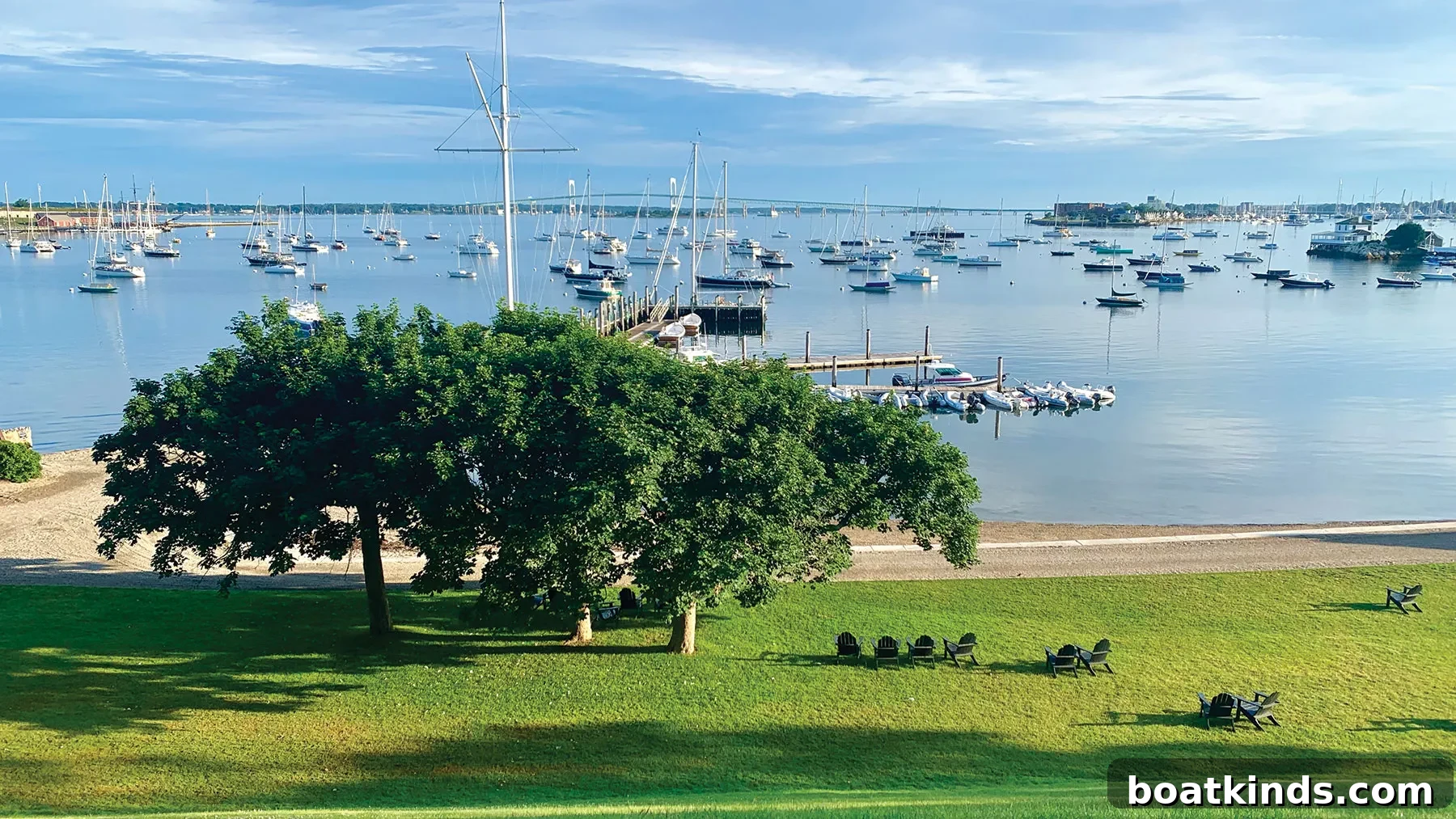
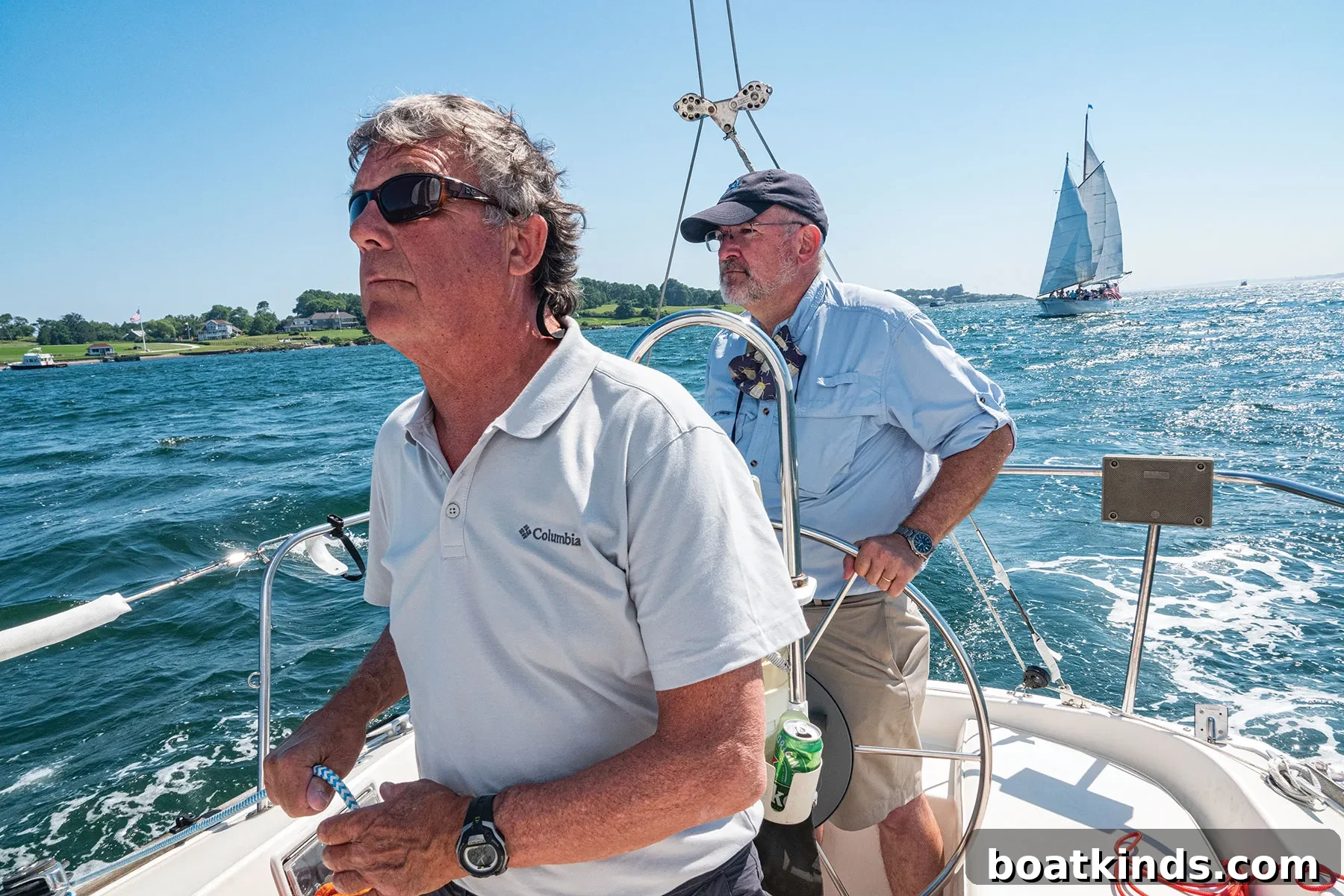
We sailed from Fort Adams on Matt’s 1986 Pearson 28. In the harbor there were more and larger motoryachts than in our earlier years, including an imposing Feadship docked at Goat Island, but sailboats still dominated the mooring field. Several classic 12 Metres—American Eagle, Nefertiti, Columbia, Courageous, Onawa and Intrepid—lined the floats. Under a clear blue sky and a steady 18-knot sea breeze the boat heeled smartly and we traded playful barbs about sloppy sail handling, even mimicking Robin Fuger, the intense British manager who had run us aboard Magic.
As we cleared Narragansett Bay into Rhode Island Sound we watched small powerboats fight Atlantic swells, cruised past Castle Hill with its crowded Adirondack chairs, and saw Hammersmith Farm—site of John F. Kennedy and Jackie Bouvier’s wedding reception—where local sailing programs and tourist schooners shared the water.
Back on shore, much had changed. Rik’s old Simmons Street apartment was gone. Behind the International Tennis Hall of Fame a nail salon and a sushi restaurant had replaced the Pit & Patio, where we once swilled pitchers and ate pizza while Rik’s laundry tumbled at the laundromat. The old J.T. O’Connell Ship Chandlery, where we’d collected our Line 7 Eagle Syndicate foulies and an early Helly Hansen PolarFleece, had become a clothing store called Re-Sails. Sala’s, the noisy neighborhood restaurant that served generous portions for little money, had been demolished. “You could get a half pound of their oriental spaghetti and fried rice for four dollars,” Matt recalled with a laugh.
We checked other landmarks. Cappy’s still stood; Joe the bartender greeted Matt like family and made a potent G&T. Long Wharf held some rusty fishing boats, but many of the crusty old businesses were gone. The Narragansett Café’s space now housed Celtica Public House. The pool table remained where it had been, but the purple tiles and the old jukebox were gone. The barmaid at Celtica had worked there only five years and knew little about the original Narragansett Café, which had closed two decades earlier. We tried to summon the old spirit with a round of whiskey, but it felt like a chapter that had quietly ended.
We paused at the Fastnet Pub under the bow of the fiberglass 12 Metre nicknamed the “Plastic Fantastic,” then wandered into O’Brien’s Pub on Thames Street, once a hangout for Australia II sailors. Inside, Matt pointed out an irreverent drawing of Alan Bond, a relic of the era’s colorful, sometimes bizarre humor.
After a ten-hour afternoon of sailing, walking and storytelling, we finished the day with a nightcap on the New York Yacht Club’s Harbour Court patio, watching lightning flash over the dark harbor and the silhouettes of sailboats. The accommodations we enjoyed that night were a far cry from the wooden floor of Rik’s old apartment, but the view of the bridge and the bay the next morning felt timeless.
Breakfast at Gary’s Handy Lunch felt like a time capsule. Joel, Gary’s son, still manned the grill, and Tina waited tables with her familiar cheer. Regulars Elaine and C.B. Smith were there, and the place still accepted only cash. Tina told us Gary’s was for sale; the staff was aging and the youngest waitress was already in her 50s. We left a tip, stepped back onto Thames Street and realized that change had settled over much of the waterfront.
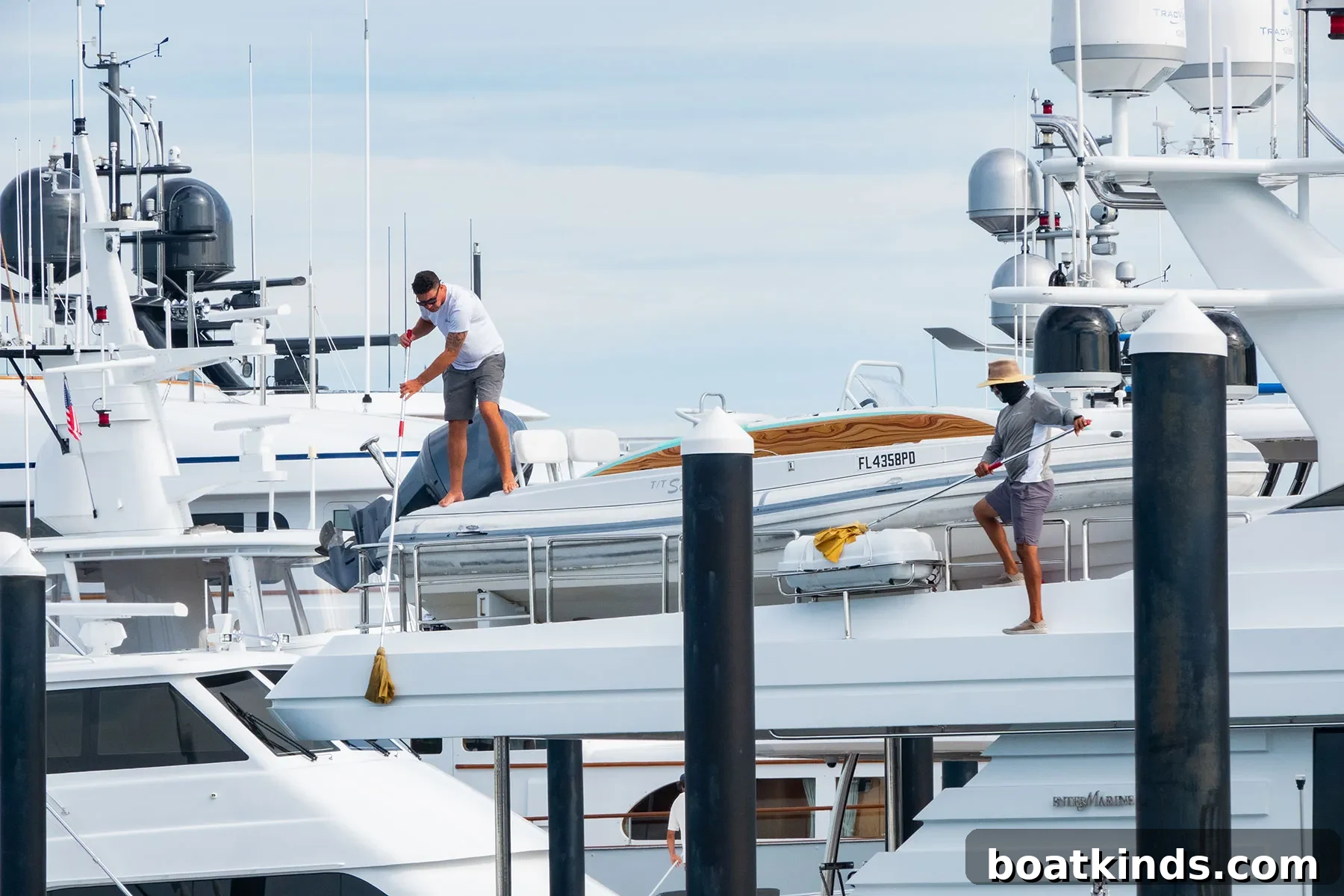
Before leaving, I tried to find the Williams & Manchester Shipyard where Magic had been docked. Condos and marina services had replaced the old yard; boatboys now polished large motoryachts. I remembered Matt’s warning from the day before: tourism had multiplied and long-time local sailors were getting squeezed out of the mooring field by wealthier owners. “People who come to Newport dump on the place,” he’d said. Rik joked that Matt had probably said the same thing in 1984.
Matt laughed and admitted it was true, but he also admitted he loved living on Narragansett Bay. “I’m a lucky bastard,” he said. Despite the changes and the commercialization, the best parts of Newport—its waterfront energy, its sailing culture and the friendships forged there—still endure.
This article was originally published in the September 2021 issue.