
Boat Theft Recovery: How Florida Fish and Wildlife Helped Recover Stolen Gear After a 1,000-Mile Trail
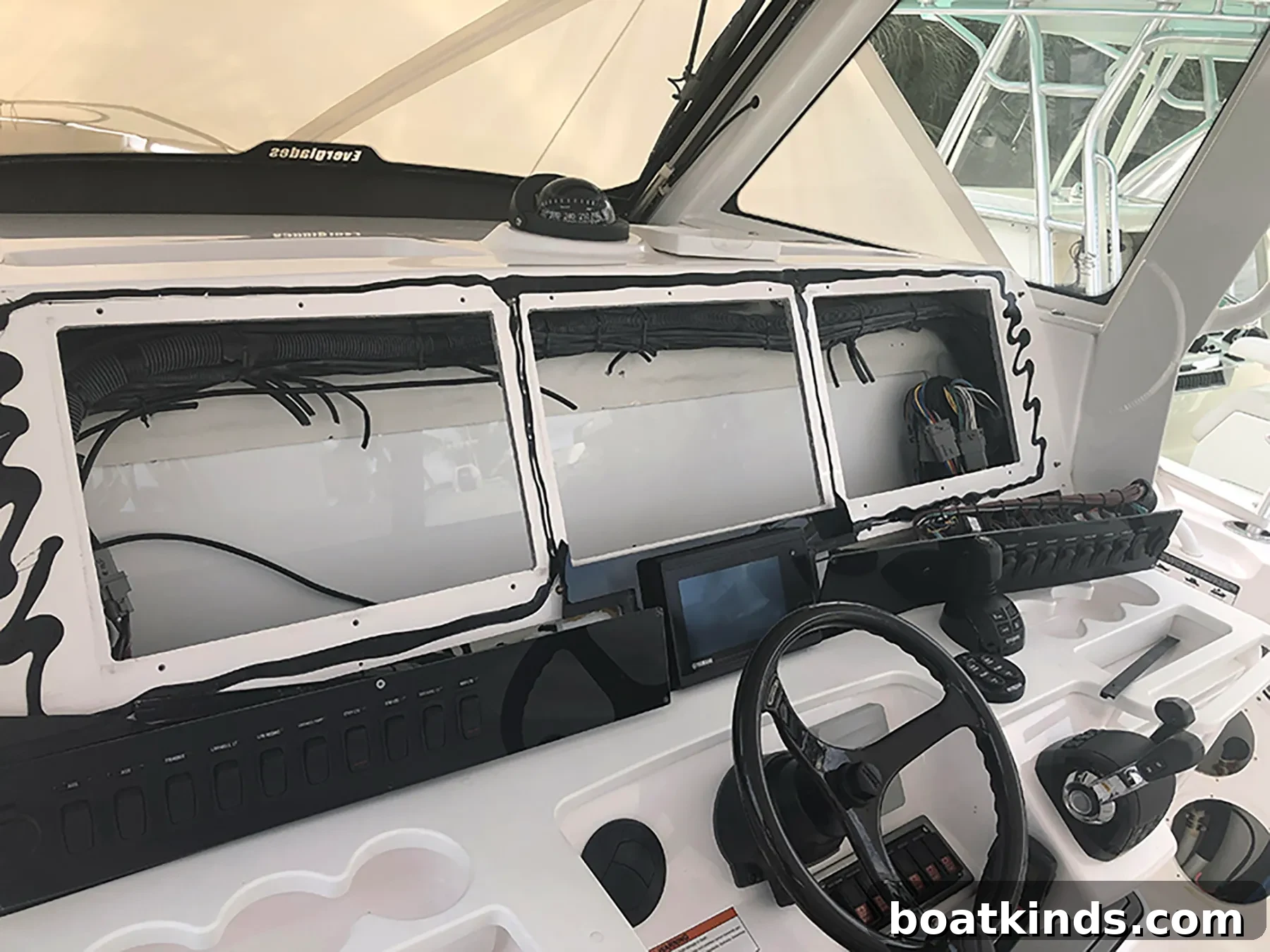
If Florida Fish and Wildlife Conservation Commission officers had not stepped in, this unlikely recovery would have been dismissed as fantasy. The incident began far from Florida—almost 1,000 miles away—in Anne Arundel County, Maryland, where a boat owner discovered his cockpit table missing and roughly $30,000 in other equipment gone. Among the stolen items were a heavy anchor, a bow thruster and an underwater drone.
Walking the marina to look for clues, the owner found his cockpit table on a nearby dock along with a pile of canvas where a 50-foot sailboat had recently been berthed. He reported the theft to local police and guessed the sailboat likely would head south for the winter. That hunch would prove accurate.
Weeks later in Jupiter, Florida, the Maryland boater went ashore to file a report and ask authorities to watch for the sailboat. While speaking with a Florida Fish and Wildlife officer on the dock, the very sailboat passed them on the Intracoastal Waterway. Officers boarded, verified ownership of the recovered gear using photographs and serial numbers provided by the Maryland owner, and seized the stolen equipment for return.
The recovery reads like a movie plot, yet it also highlights a growing trend in marine crime: thieves are targeting equipment and electronics more than the vessels themselves. Brian Kane, chief technology officer at GOST Global, a company that develops boat security, tracking and surveillance systems, says his team has seen this shift firsthand. “They don’t steal boats as often as they used to,” Kane says. Fifteen years ago, reports of stolen boats were far more common; today, owners more often lose navigation electronics, fishing gear, engines parts and other high-value components.
Modern outboards contain valuable computer chips, Kane explains, and thieves have learned to remove engine control units and other electronics from cowlings. Fishing-rod lockers, helm electronics, and specialty gear all present easy resale value and are frequently targeted on open decks and flybridges.
GOST Global focuses on preventing break-ins and, when intrusions occur, on deterring thieves quickly. Kane has reviewed recordings showing intruders boarding vessels while visible on camera—and continuing their thefts undeterred. Cameras alone are often insufficient deterrents: if a thief is masked and no one is physically present, they may ignore visible surveillance and remove equipment even as an owner watches a live feed.
Another tactic Kane has observed is persistent alarm-tripping. Thieves sometimes patrol a dock repeatedly, triggering alarm systems on multiple boats night after night. After several false alarms, some owners assume their systems are malfunctioning and silence them, giving thieves an opportunity to return and carry out thefts without alarm response.
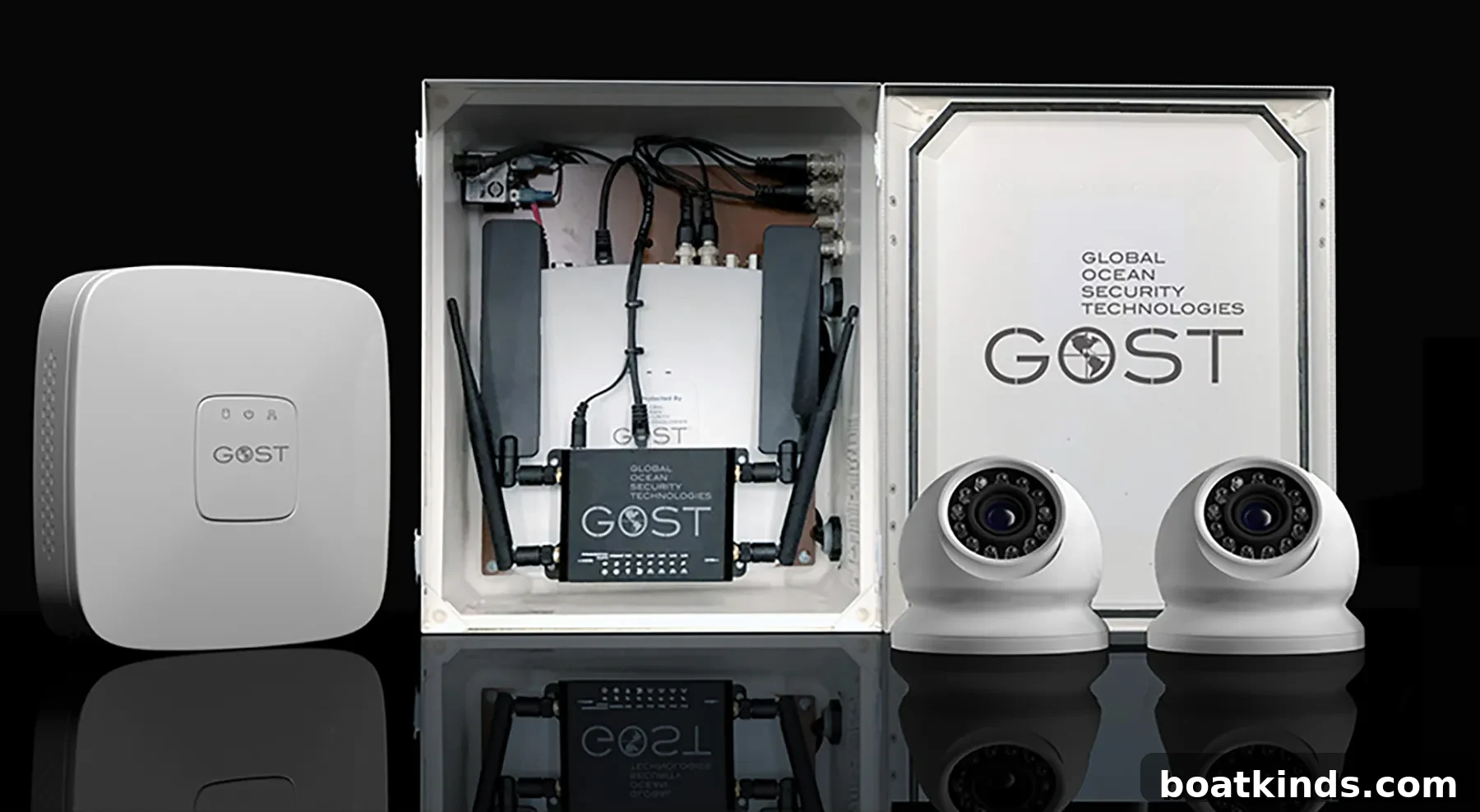
Because these theft patterns repeat across regions, Kane emphasizes prevention: stop the break-in before thieves get on board. For boats roughly 25 feet and up, GOST’s Apparition security system is designed to do exactly that. The system supports up to 32 wireless zones, tying together laser beams across cockpits, door and hatch sensors, bilge high-water alerts and more. With approximately 20 different sensor types available, owners can monitor access points, power systems and environmental conditions while configuring automated responses.
Deterrent measures can be linked directly to alerts: strobe lights, loud sirens and even fog-generating devices activate when a sensor is tripped. Kane notes that sportfishing yachts—where rod lockers on open flybridges can hold tens of thousands of dollars’ worth of tackle—are frequent users of layered deterrents and alarm packages. GOST works with major builders and distributors to integrate scalable security options into new and existing vessels.
The theft problem is not confined to the Eastern Seaboard. Kane reports rising incidents on the West Coast, including California, and says that distributors and marine-electronics dealers also face break-ins at their warehouses and service centers. As a result, boat owners, marinas and equipment vendors are increasingly investing in prevention—combining sensors, real-time monitoring and active deterrents to reduce losses and protect valuable marine gear.
This case in Jupiter underscores how coordinated response, accurate documentation and proactive monitoring can help recover stolen property even over long distances. It also illustrates why boat security has evolved beyond cameras alone into integrated solutions that stop thieves before they leave the dock with costly equipment.
— Kim Kavin
This article was originally published in the May 2023 issue.