
Gigantic Pliosaur Skull Unearthed on Dorset Beach
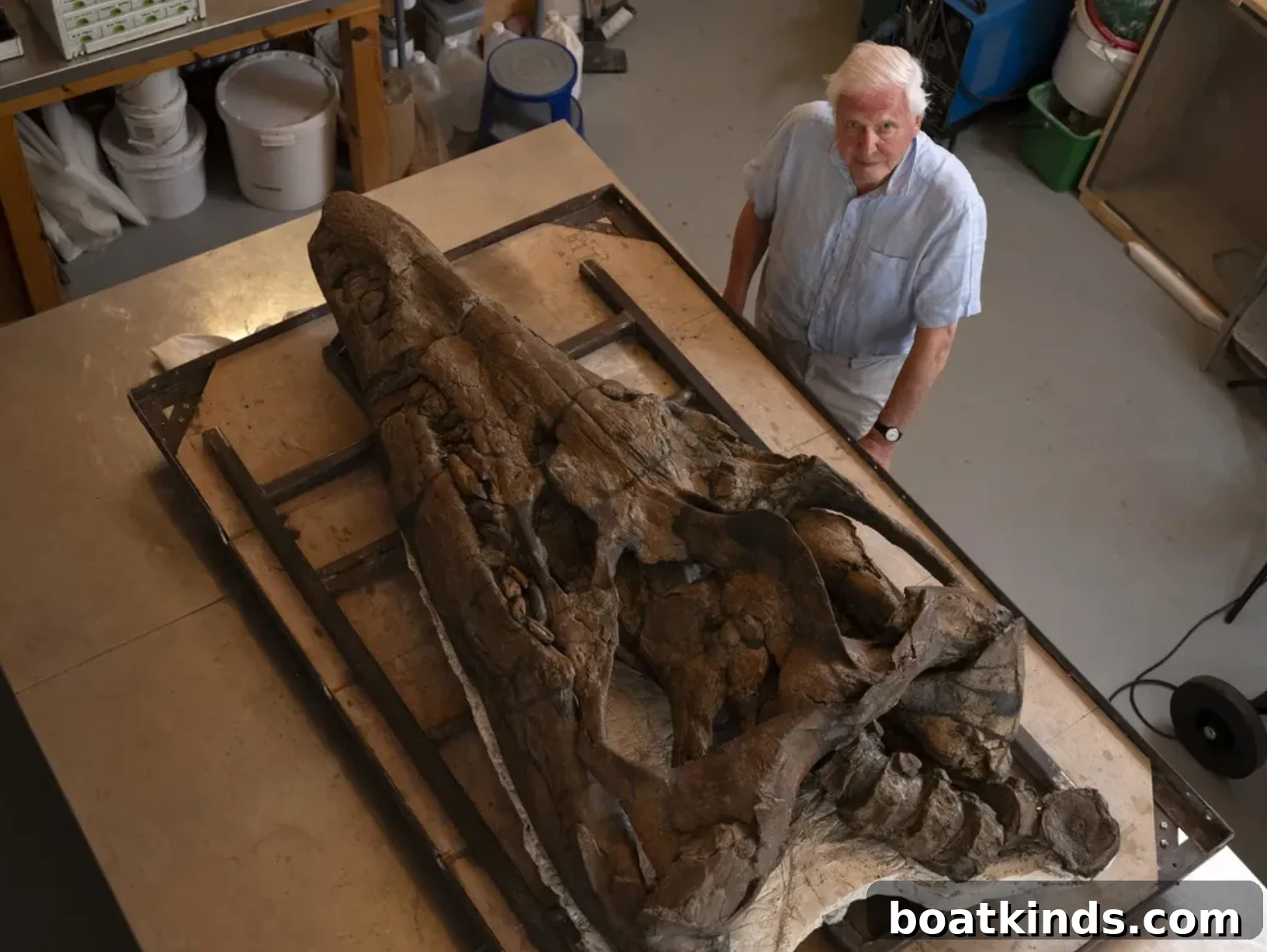
A remarkably well-preserved skull from a gigantic pliosaur, a carnivorous marine reptile that lived alongside dinosaurs, was discovered on a beach in Dorset county, southern England. The specimen dates to roughly 150 million years ago, a time when pliosaurs ruled the oceans while dinosaurs dominated the land. Although pliosaur fossils have been found before, this particular skull stands out for its exceptional condition and for being nearly three million years younger than most previously recovered examples.
Size and Condition
The skull measures approximately 6.6 feet (about 2 meters) in length and weighs over 1,102 pounds (500 kilograms). According to Encyclopedia Britannica, some pliosaurs could grow to lengths of around 50 feet, making them among the largest predators of their era. This skull’s intact state — with the jaw reportedly closed when first exposed — suggested to the discoverers that the fossil might be largely complete and offered a rare opportunity for detailed study.
Discovery and Excavation
The skull was discovered in 2022 by beachgoer Philip Jacobs. The fossil was embedded in a cliff face, located about 36 feet above the beach and 49 feet down from the top of the cliff. After uncovering the snout, Jacobs contacted his friend, local fossil collector and paleontologist Steve Etches. Because the jaw was closed and the specimen appeared intact, both men were optimistic about its scientific value.
Recovering the fossil was a delicate operation. An excavation team worked for three weeks to remove the skull before the onset of summer storms, carefully protecting the specimen as it was exposed and prepared for transport. The combination of rapid burial and favorable sediment conditions likely contributed to the skull’s remarkable preservation.
Why This Find Matters
Steve Etches described the discovery as a “freak of nature,” noting that the regional conditions at the time of burial were unusually favorable. Rapid sedimentation on the seafloor appears to have covered the carcass soon after death, minimizing scavenging and decay and allowing bone material to be preserved in a near-complete state. Well-preserved large pliosaur skulls are rare, and each new find helps paleontologists better understand the anatomy, diet, and ecology of these apex marine predators.
Beyond its scientific importance, the skull provides a tangible connection to the Jurassic seas that once covered much of what is now southern England. Finds like this help reconstruct marine ecosystems of the past and clarify how large marine reptiles adapted to life in open water, including their feeding strategies, swimming capabilities, and growth patterns.
Public Interest and Media
The fossil has attracted significant public and media interest. A BBC documentary titled “Attenborough and the Jurassic Sea Monster,” featuring naturalist Sir David Attenborough, profiles this discovery and explores the wider world of Jurassic marine life. The program is scheduled to air on February 14, 2024, on PBS. The documentary aims to bring the science and the story of the excavation to a broader audience, highlighting both the careful work of paleontologists and the dramatic nature of coastal fossil hunting.
Ongoing Study
Following its excavation, the skull underwent detailed scientific investigation, a process that took time to ensure proper conservation and analysis. Specialists will continue to study the specimen to learn more about pliosaur anatomy and taxonomy, and to place this individual in the broader context of known pliosaur diversity. Careful preparation and peer-reviewed research will be essential to establishing the fossil’s significance and sharing findings with the scientific community.
Discoveries like this one underscore the importance of coastal fossil sites and the need for careful, professional excavation. The Dorset coastline has long been a rich source of fossils, and this new pliosaur skull adds a remarkable chapter to that ongoing story.