
Yacht Transport from Newport to the Caribbean — Dockwise Yacht Transport
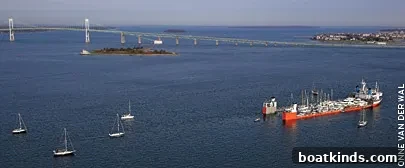
Photos by Onne van der Wal
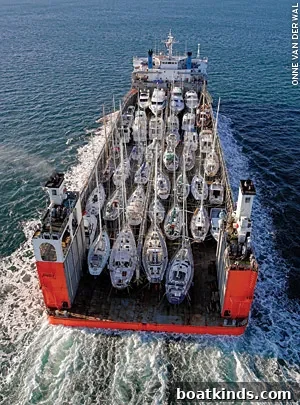
Every fall, many boat owners who prefer to spend the winter cruising in the Caribbean opt to ship their yachts south rather than make the long ocean passage under their own power. Fort Lauderdale–based Dockwise Yacht Transport offers a convenient solution: they load yachts onto enormous submersible carriers in Newport, R.I., and deliver them to St. Thomas in the U.S. Virgin Islands in about five days.
Seasonal Runs and Fleet
Dockwise dispatches two carriers from Newport each fall — the 456-foot Super Servant 3 and the 521-foot Explorer — with return trips in the spring. Each ship typically carries roughly 30 yachts, most frequently sailboats measuring 30 to 60 feet, though an increasing number of powerboats and a few megayachts now travel this way as well. Ann C. Souder, Dockwise’s Newport sales agent for the U.S. East Coast and Caribbean, notes that about half of the arriving yachts remain in the U.S. and British Virgin Islands, while others disperse throughout the Caribbean.
Why Owners Choose Yacht Transport
For many seasonal cruisers — often called snowbirds — the decision comes down to time, safety and cost. Three-quarters of Dockwise’s seasonal clients use the service repeatedly because they prefer to avoid the uncertainties and delays of a long, down-island ocean passage. Shipping reduces wear and tear on the vessel, saves fuel, and can be dramatically faster: a Dockwise passage typically takes about five days compared with roughly three weeks for a conventional crewed delivery. In some cases, smaller or less-capable powerboats simply couldn’t make the offshore trip safely on their own.
How Submersible Carriers Load and Secure Yachts
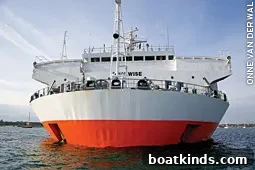
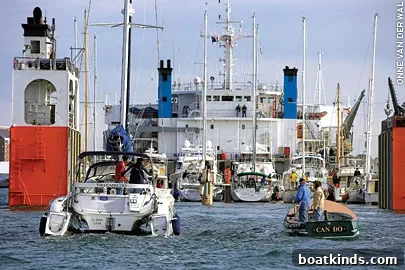
Loading begins with the carrier anchored in the East Passage of Narragansett Bay, usually either south of Goat Island or on the Jamestown side of the bay just south of the Newport bridge. The carrier slowly fills its ballast tanks until the storage bay submerges. Yachts arrive on a staggered schedule and motor into the bay under their own power.
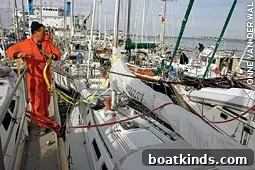
Once all boats are in place, divers position steel stanchions, known as poppets, under each hull. Crews strap the yachts to a center catwalk and to swivels along the carrier’s sides. The ship then deballasts so the bay lifts out of the water. After the deck dries, divers weld the stanchions and poppets in place. A marine surveyor performs a final inspection and must approve the load before the vessel departs. Yacht crewmembers rarely accompany their boats on this route, except in special circumstances or when a large yacht requires onboard engineering support.
Costs and Booking
Pricing for the Newport–St. Thomas run depends on each yacht’s size and the space it occupies aboard the carrier. As an example provided by Souder, one-way fares (with a 10% early-booking discount) are approximately $10,355 for a 38-foot boat, $13,080 for a 40-foot yacht, and $21,725 for a 60-foot vessel. These figures reflect typical seasonal rates but will vary by boat dimensions, required deck space, and timing.
Other Routes and Global Reach
Besides the Newport–St. Thomas service, Dockwise — which also operates the 688-foot Yacht Express — offers seasonal yacht transport between New England and the Mediterranean and runs to destinations including Fort Lauderdale, Puerto Rico, Martinique, the Bahamas, Mexico and Costa Rica, as well as farther-flung locations such as Tahiti, Australia, New Zealand and the Pacific Northwest (Vancouver, British Columbia).
Different types of vessels travel for different seasonal reasons: sportfishing yachts often head to Costa Rica and Mexico for winter big-game fishing; cruising boats move to Europe, Australia and the Far East for extended exploration; and high-performance raceboats ship worldwide to compete in international regattas. In all cases, submersible-carrier transport opens up global waters to owners who prefer not to—or cannot—make long ocean passages themselves.
Practical Benefits and Final Considerations
Using a professional yacht carrier minimizes the time, logistical planning and exposure to weather that a long offshore delivery requires. Owners gain faster transit times, reduced mechanical wear, and predictable scheduling. That simplicity and reliability are the main reasons many owners return to Dockwise year after year to move their yachts between cruising grounds.
This story originally appeared in the January 2009 issue.