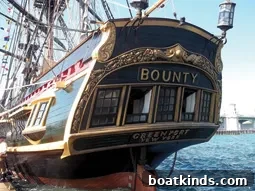
HMS Bounty Sinking: Coast Guard Probes Decision to Sail During Hurricane Sandy
The U.S. Coast Guard is investigating why the tall ship HMS Bounty left New London, Connecticut, bound for St. Petersburg, Florida, as Hurricane Sandy — one of the largest storms on record in the Atlantic basin — approached the East Coast. The square-rigged vessel, built in 1960–61 for the 1962 film Mutiny on the Bounty, foundered on Oct. 29 about 90 miles southeast of Cape Hatteras in winds near 40 mph and seas up to 18 feet.
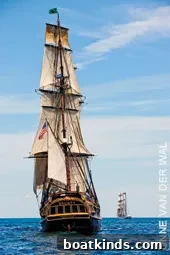
At roughly 180 feet sparred length, the wooden ship had been taking on water and settling lower in the water. According to Coast Guard accounts and crew interviews, its generators and engines failed, cutting power to the pumps and allowing water to flood the bilges until the vessel could no longer remain afloat.
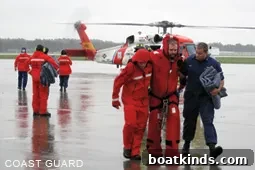
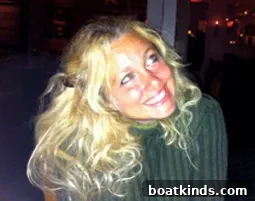
The Coast Guard rescued 13 crewmembers from two life rafts and another from the water nearby. Two people were lost: Captain Robin Walbridge, 63, who had served as the Bounty’s master for 17 years, and crewmember Claudene Christian, 42, a descendant of Fletcher Christian of the original 1789 mutiny aboard the historic Bounty. Christian’s body was recovered later the same day; Walbridge remained missing after extensive search efforts. All survivors were reported to have been wearing survival suits.
Tracie Simonin, director of the HMS Bounty Organization LLC, which operates the ship for owner Robert Hansen, said the organization is cooperating with the Coast Guard and has provided requested documentation. “We trust their findings will tell us what happened,” she said.
Crew radioed the ship’s base at about 8:45 p.m. on Oct. 28 to report taking on water. Simonin initially described the ingress as the kind of seepage expected in a wooden vessel, but crew members later told ABC News they had encountered far worse conditions earlier—winds up to 70 mph and waves three stories high—that may have opened seams and allowed more water aboard. By late Sunday into Monday morning, the pumps could not keep up with the inflow.
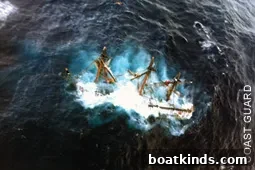
Shortly after the initial report, the Coast Guard received an EPIRB distress signal and re-established VHF contact by midnight. Aircraft and cutters responded, and the ship’s condition reportedly continued to deteriorate. At about 4:30 a.m. on Oct. 29, Captain Walbridge ordered the crew to abandon ship into two canopied 25-foot life rafts. During the transfer, a wave broadsided the vessel, capsizing it and throwing several crew into the sea. Survivors say they deployed a life raft canister that floated free and later were hoisted by Coast Guard helicopters and transported to Air Station Elizabeth City, North Carolina.
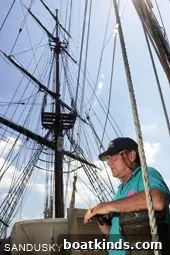
Why put to sea?
The Coast Guard’s investigation will examine multiple possibilities: material or equipment failure, negligence, inattention to duty, potential regulatory contributions to the loss, and whether a Marine Board of Investigation should be convened. At the center of public and professional scrutiny is a single question: why did Captain Walbridge depart New London with 15 crewmembers, ranging in age from 20 to 66, while Hurricane Sandy’s expansive 940-mile tropical-force wind field and far-reaching seas were forecast and closely monitored?
Walbridge had posted on the Bounty’s Facebook page that he intended to sail east and then south to “squeeze around” the storm. Many experienced mariners describe that approach as reckless in a slow, square-rigged vessel that performs poorly to windward and reaches top speeds of roughly 8–10 knots. Capt. Jan Miles, a veteran tall-ship captain, called any attempt to “squeeze around” Sandy in such a ship “too silly for words” and said the decision will be a key focus of inquiry.
Other tall-ship operators made different calls. For example, the Picton Castle, a 179-foot steel barque, remained in Lunenburg, Nova Scotia, until forecasts showed the storm was no longer a threat. Its captain delayed and then postponed departure as Sandy developed, illustrating a cautious alternative to sailing into the path of a major hurricane.
Some experts argue that if the Bounty needed to leave New London, the plan should have included ample time to reach a safe southern harbor such as Norfolk, Virginia, rather than remain in the storm’s projected path. Retired Coast Guard officer Richard Dein suggested the vessel “stuck his nose out,” saw the forecast, and should have diverted to a safe port well in advance.
“Safer at sea” and the idea of hubris
Simonin and owner Robert Hansen said they trusted Walbridge’s judgment when he chose to sail. Crew accounts indicate Walbridge believed the ship might be safer at sea and offered anyone uncomfortable with that plan the option to remain ashore. In interviews, some crewmembers said they trusted the captain’s plan and did not fully appreciate the storm’s size and intensity when they left port.
Maritime experts disagree on the maxim “a ship is safer at sea.” While certain large, fast ships may fare better underway, modern guidance and experienced captains generally counsel that vulnerable vessels — slower, wooden, square-riggers like the Bounty — should avoid severe storms. Andy Chase, professor of meteorology and navigation at Maine Maritime Academy, emphasized that for many vessels the safer choice is to stay in port rather than face a major hurricane at sea.
Capt. Miles described the decision to maneuver near a hurricane as reckless hubris, arguing that reliable forecasts and established safety practices — such as the Mariner’s 1-2-3 Rule, which projects a danger area around a storm with built-in margins for forecast error — would have advised keeping the Bounty in port or diverting well away from Sandy’s projected track.
An old ship made new
Despite its vintage design, the Bounty had undergone extensive restoration work in the 2000s and was widely regarded as being in much better condition than it had been before its owner’s refit. Major refits in 2001, 2004 and 2006 replaced planking, frames, running gear, engines, rigging and more; further work was carried out in 2012 and again the month before the loss. Naval architect David Wyman and others involved in the refits noted the vessel had been substantially rebuilt and was in good condition when it left Maine for New London.
That improved condition, however, does not negate the inherent vulnerabilities of an older-style wooden square-rigger when faced with an exceptional storm. Experts say that in severe weather a single failure — a major leak, loss of propulsion, or electrical failure — can quickly overwhelm a ship’s remaining margin for recovery. According to Maine Maritime’s Chase, the Bounty likely experienced multiple critical failures that, combined with Sandy’s force, left no margin for error.
Captain Walbridge’s long seamanship résumé included service on many well-known tall ships and a reputation for skill and dedication. Crew and colleagues remembered him as knowledgeable and caring. Still, maritime professionals caution that even experienced captains should avoid engaging a storm of Sandy’s magnitude when the vessel and crew can be placed at such risk.
The Coast Guard’s investigation will seek to reconstruct the decisions, actions and mechanical events that led to the Bounty’s loss, and to determine whether regulatory, operational, or human factors contributed. For the maritime community and the public, the tragedy raises urgent questions about risk assessment, decision-making, and the limits of seamanship when confronted with extreme weather.