Restoring Indian: Tumblehome Boatshop Brings a 1903 Launch Back to Life
When Ed Mitchell lived in Maine, he would hop on his Harley-Davidson and ride west through the mountains of New Hampshire and Vermont, then into New York’s Adirondacks on his way to the family camp in Old Forge on the Fulton Chain of Lakes. En route he often stopped at Reuben Smith’s Tumblehome Boatshop, tucked among blue spruces and white pines in Warrensburg, New York, just to see what was happening on the shop floor.
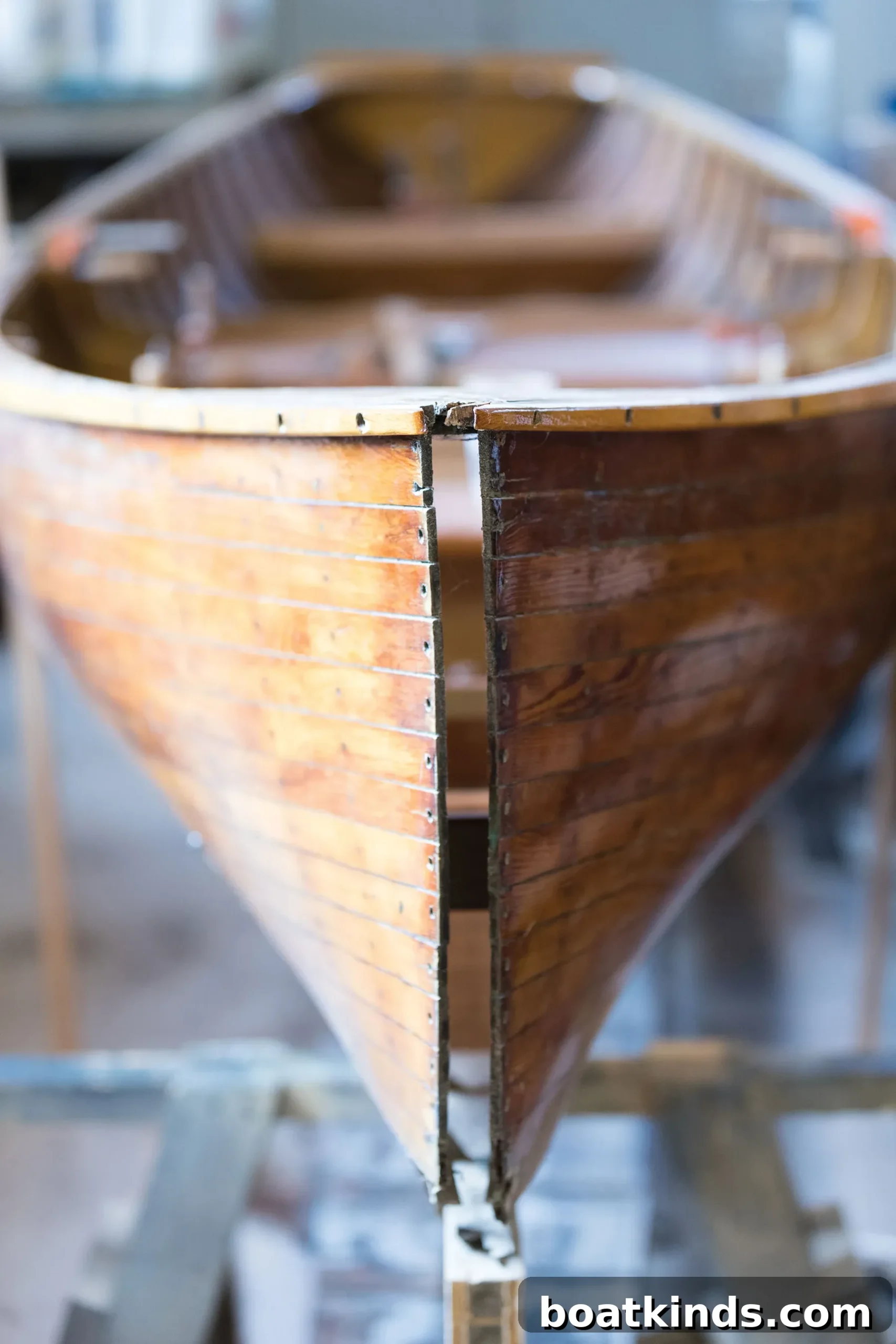
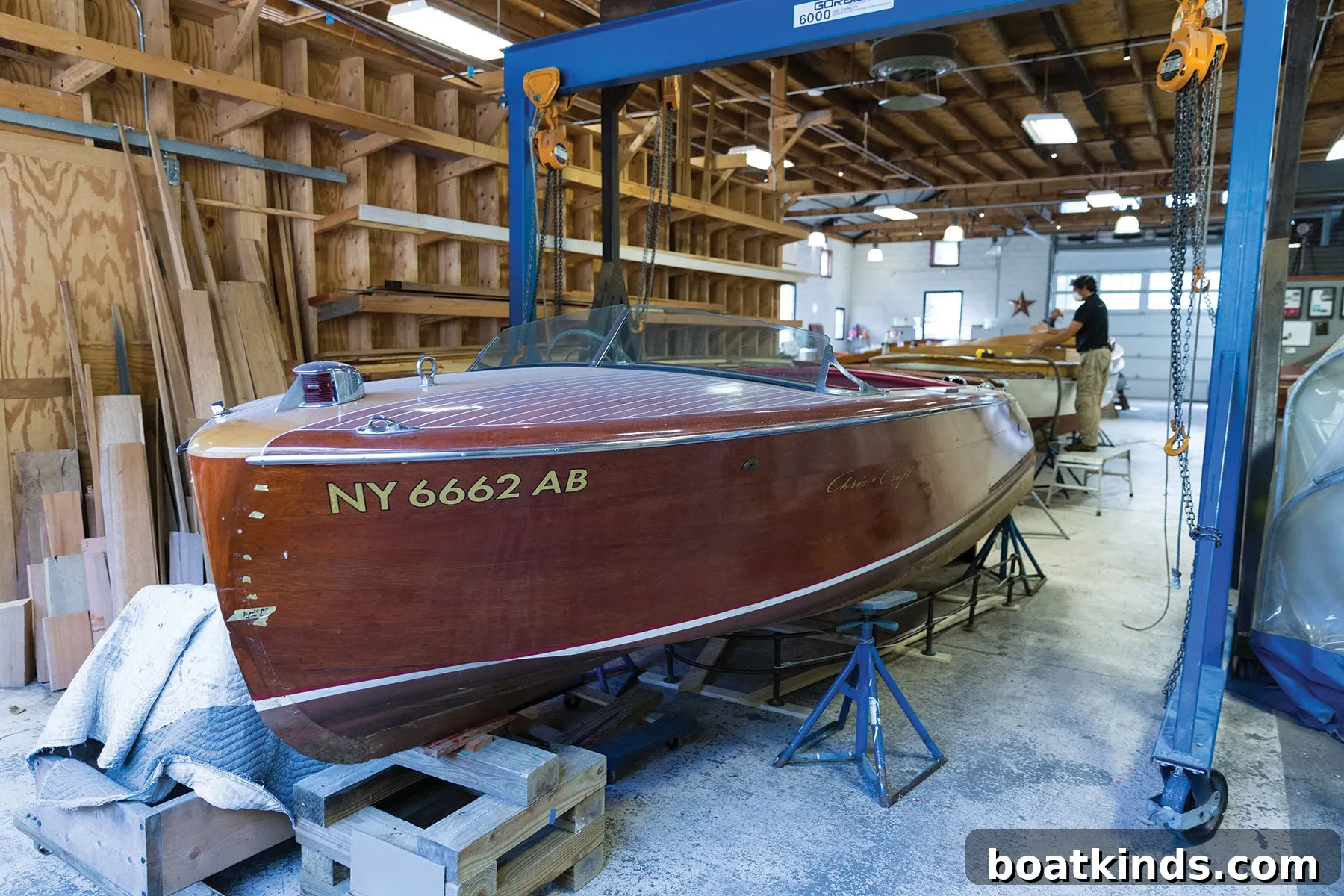
To anyone who loves lake boats, Tumblehome felt like a candy store. One corner might show the elegant sheer and Gatsby-style fantail of a rare Sound Inter Club sailboat; another might display the sleek stiletto bow of an early Fay & Bowen launch. Some decks shone with varnish thick as mercury; others exposed raw framing and ribs. Even motionless in a concrete-block building, these boats seemed poised to glide off the floor and onto the water.
Mitchell and Smith would often talk, and those conversations eventually turned to a remarkable piece of American boating history in Mitchell’s family: the launch Indian, in the family since her 1903 launch. Built by Herbert Leighton—the same designer and builder who, in 1903, won one of the American Power Boat Association’s earliest events by reaching 21.132 mph in Adios—Indian was one of the last known Leighton boats of her type. In her heyday she could cruise at about 18 mph, a quiet, elegant motion compared with the high-revving runabouts that came later.
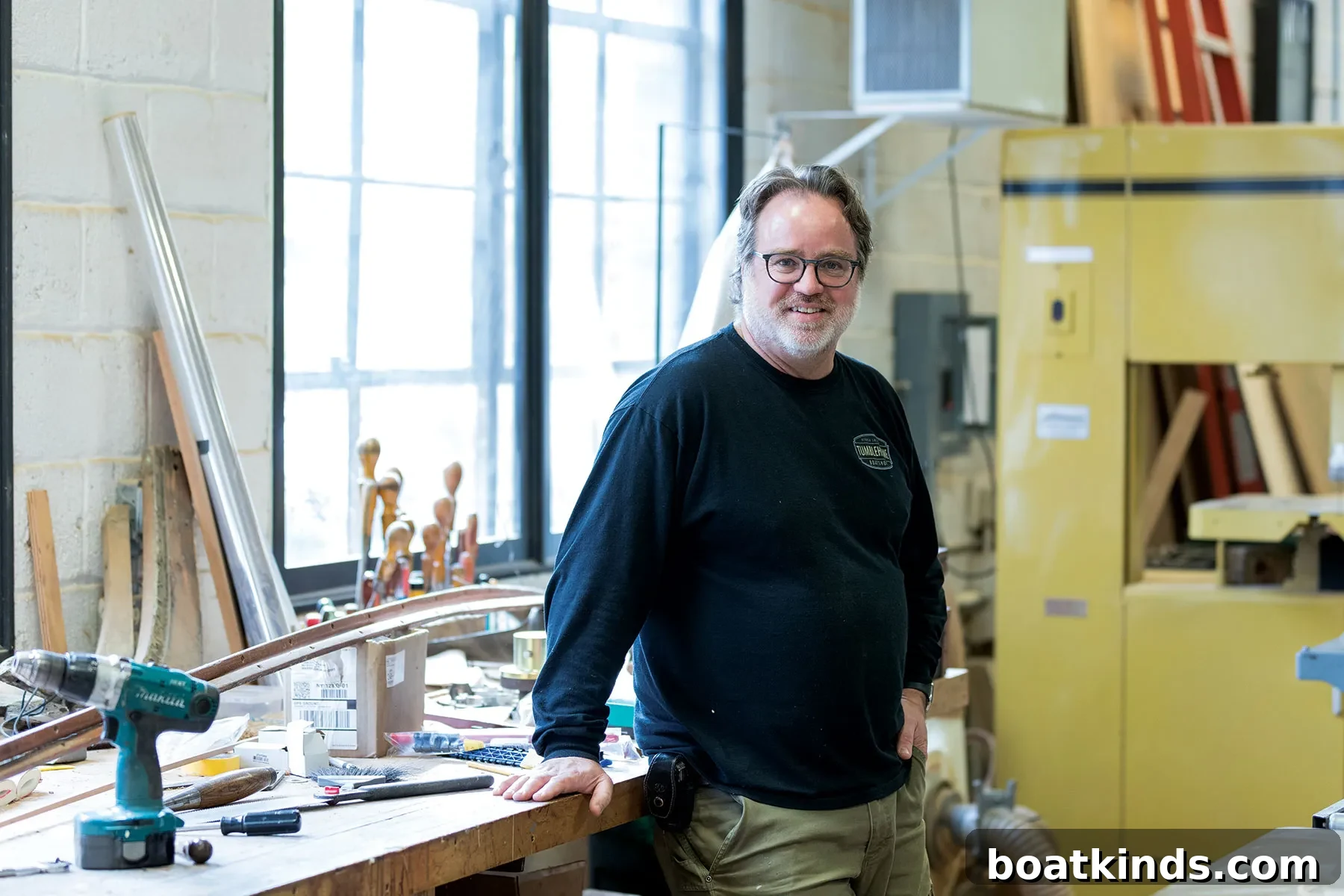
“There are a lot of good shops that restore these mahogany speedboats and do a great job,” Mitchell says. “But Reuben’s true love is launches. And he understood what this boat was.”
So, when Indian was ready to leave the family boathouse for the first time since 1903, Mitchell chose only one place for her restoration. Reuben and the Tumblehome team specialize in projects rich in history, mystery and complexity—restorations where a boat’s past informs the best way to revive it for the future. In Indian’s case, that future included state-of-the-art electric propulsion.
Early twentieth-century semi-displacement and semi-planing launches were built to run at moderate speeds using heavy, low-rpm, high-torque engines driving slow-turning propellers. “The boats charge along at 18 miles an hour, but that’s just over idle speed. They’re very slow, very quiet. I love the sense of it,” Smith says. “When they’re set up right, they’re actually incredibly efficient. With electric coming online, these older, more efficient hulls are starting to make more sense again.”
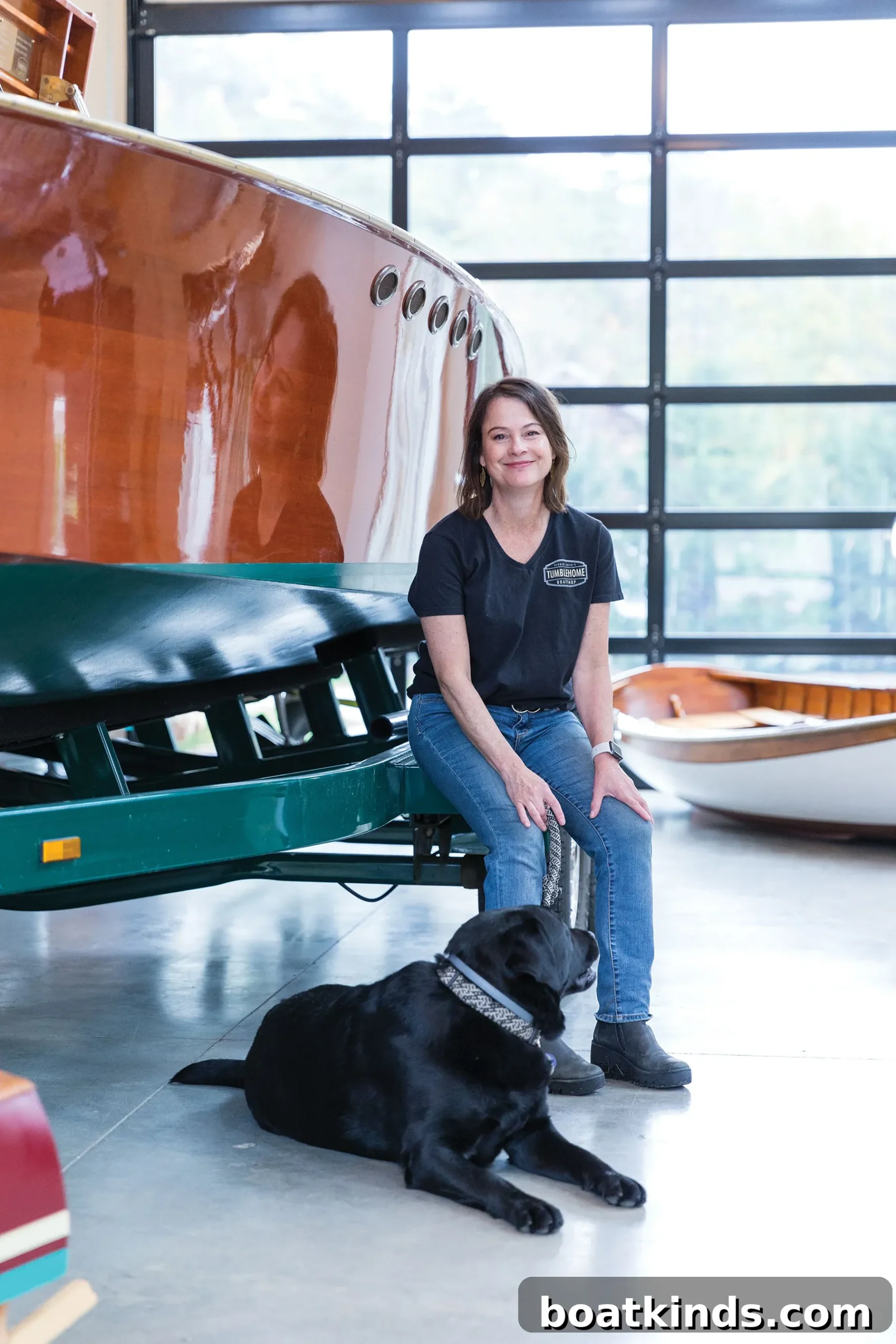
For Tumblehome, restoration is more than replacing rotten planks or rebuilding a sagging torpedo stern. It is a careful effort to restore a boat to its authentic character: the way it looked, felt and behaved on the water. That philosophy guides Smith, his wife and business partner Cynde, and their small team of craftsmen. “It’s about the history of the boat and what it was meant to be and trying to reproduce that experience in the best way you can,” Smith says.
Because few of these boats come with plans or drawings, the shop begins with research—studying photographs, tracing ownership, talking with descendants of early owners and spending time with the boat to learn its structural clues. Historical research, Smith notes, “can be a good deal of work. The boats are a lot of work already, and then you add that to it. But it’s a way we differentiate ourselves from other shops.”
John Kelly, a lifelong boater on Lake George and a repeat Tumblehome client, praises Smith’s depth of knowledge. “Reuben is like an encyclopedia in terms of knowledge and history. He has an incredible network of partners and suppliers for everything you can imagine. He’s as comfortable working on a runabout as he is on a 30-foot antique sailboat or electrifying a boat. He’s so deep and so broad it’s absolutely incredible.”
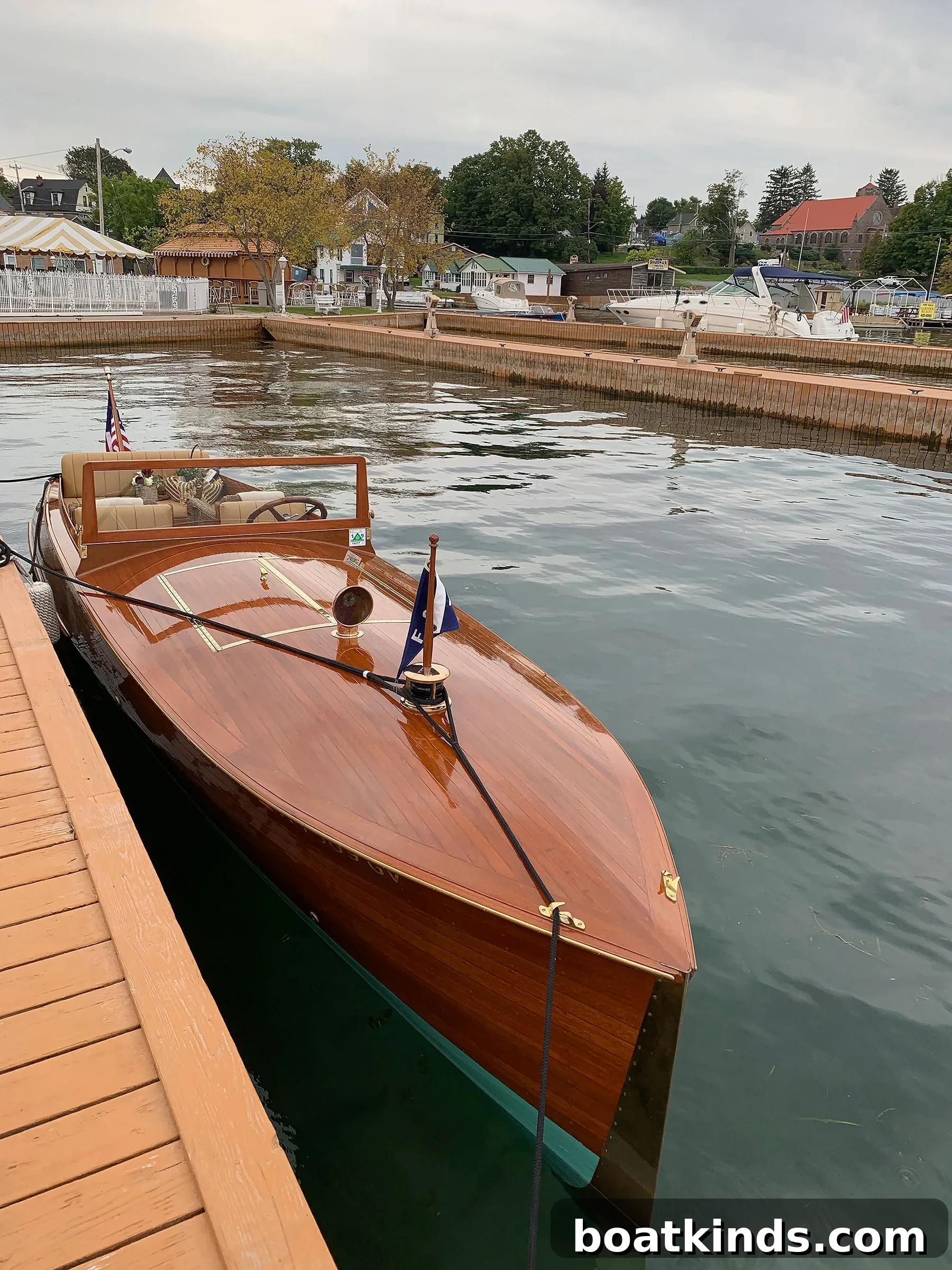
Tumblehome builds custom new boats too, but not in a production-line way. Each project is tailored. Stella Blue, a Tumblehome 24 designed by Stephens Waring Yacht Design, echoes the 1920s Gold Cup racers but pairs a deep-V hull with a marinized Corvette V-8 and modern amenities. The shop also restores factory-built lake boats such as Chris-Crafts and Hackers.
Smith’s passion is rooted in family and place. He grew up in a household steeped in boatbuilding and boat history: his father and uncle built reproductions of classic Adirondack canoes and rowboats in the 1970s; his stepmother curated the collection at the Adirondack Museum; relatives worked with the Antique Boat Museum. Reuben’s father, Mason, still builds boats at 86 and has a background in literature; Reuben himself studied creative writing before taking boatbuilding as a life’s work.
Smith spent time working in saltwater museums and boatyards, which broadened his perspective on regional boatbuilding traditions, and in 2000 he started a mobile boat shop, Tumblehome Boatworks. He later taught boatbuilding at MIT, helped found Mass Bay Maritime Artisans and then returned to the Adirondacks in 2008 to manage a boatbuilding shop on Lake George. In 2011 he opened the current Tumblehome Boatshop in a renovated 6,000-square-foot building.
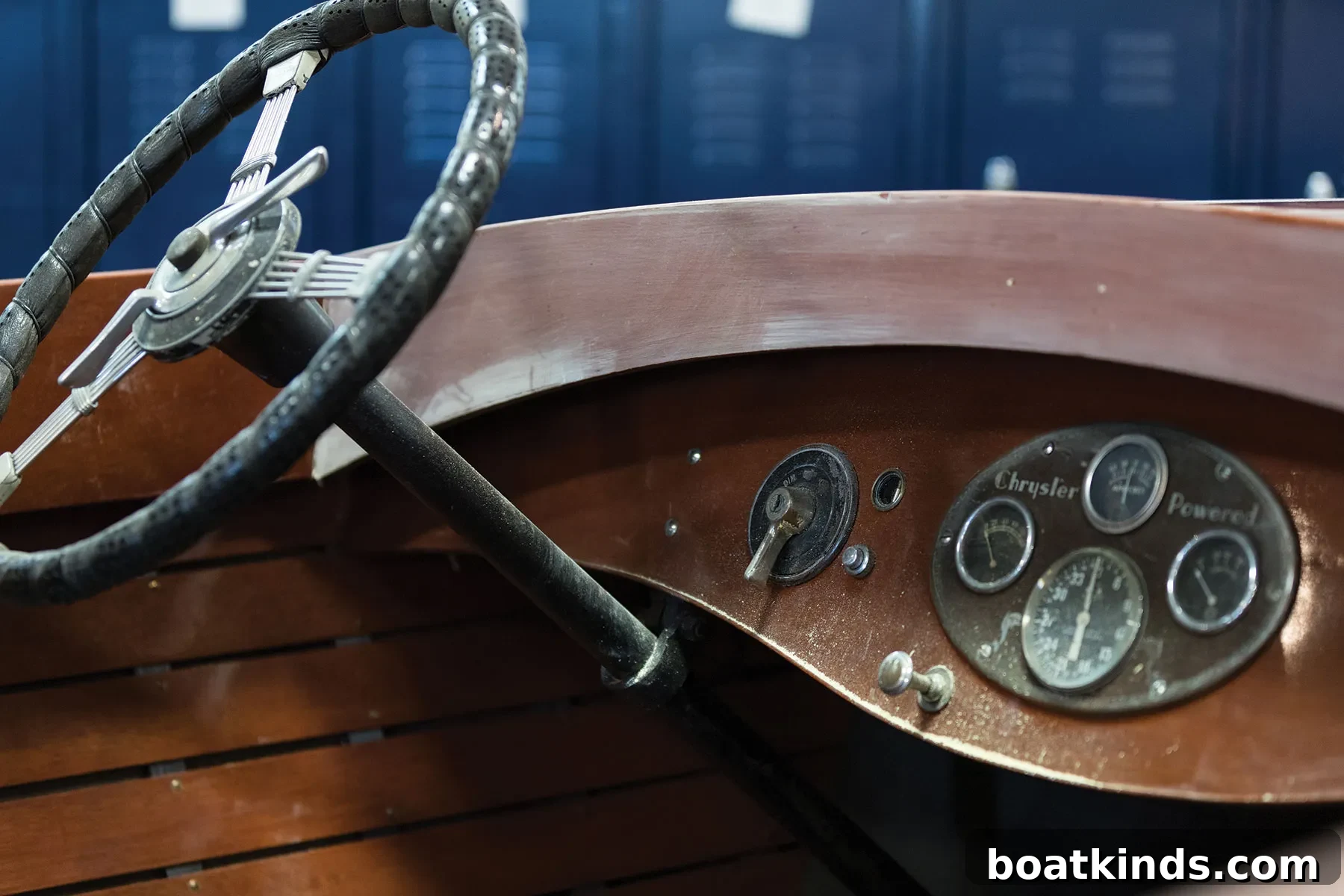
Among early notable projects were John Kelly’s Sound Inter Clubs—graceful 29-foot sloops designed by Charles Mower and built by Henry B. Nevins in the 1920s. Kelly’s interest in restoring these boats led to a collaboration focused on returning them to their original purpose: match racing, preserving the design and keeping the sailing tradition alive.
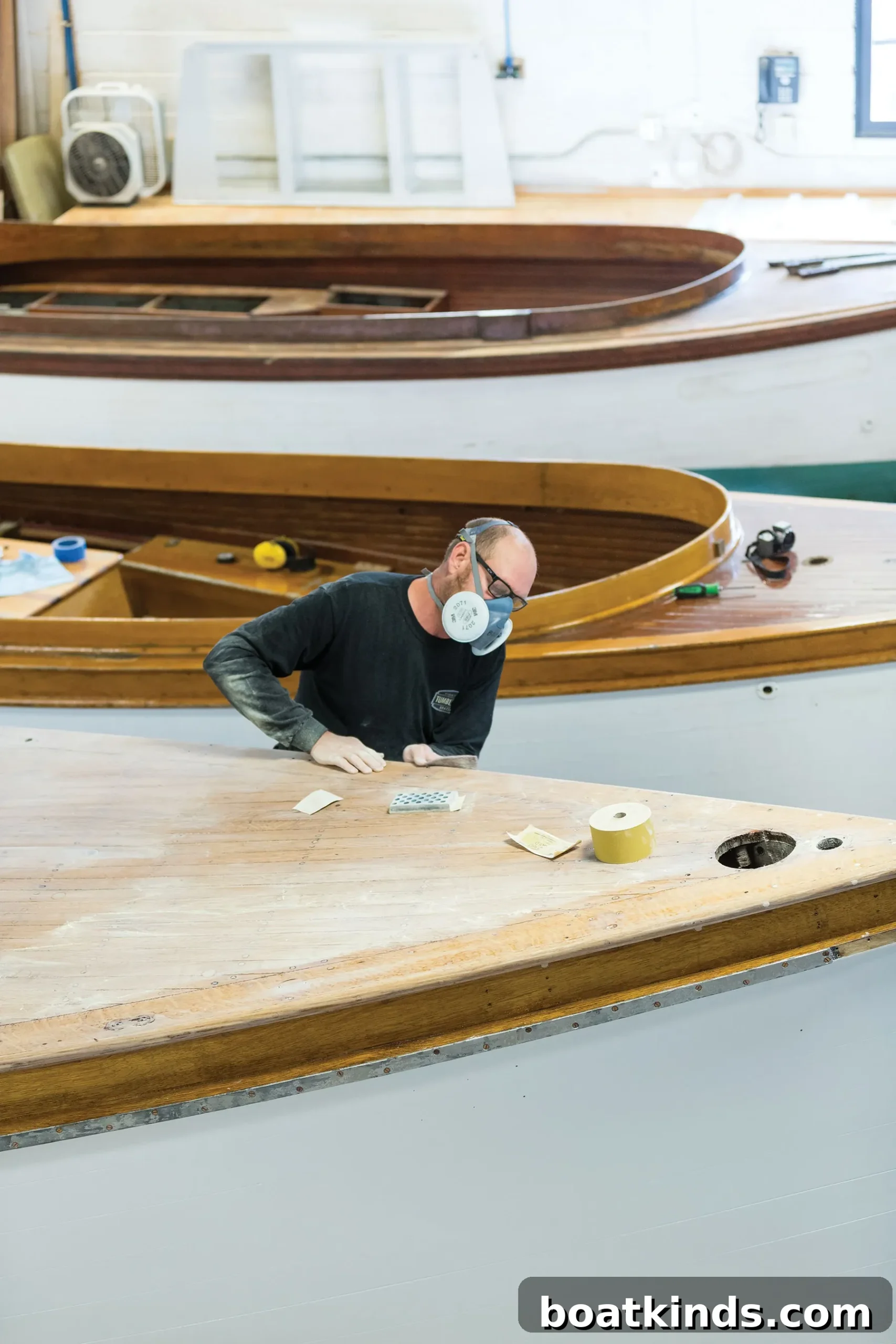
Kelly emphasizes that working with Tumblehome is a relationship: “Reuben draws you in at every step of the process. It’s not like, drop your boat and come back when it’s done.” Over the years, Tumblehome has restored several of Kelly’s boats, including two Fay & Bowens—boats prized for their smooth, quiet cruising thanks to original high-torque, low-rpm engines.
That emphasis on low-rpm torque is central to Smith’s fascination with early launches. “I’m really interested in the earliest days of motorboats, when builders were trying to make boats go and feel nice to be on,” he says. Later trends toward bigger engines and higher speeds changed how boats were used—seating oriented forward, less conversation and more speed. Smith prefers the social, conversational layout of the early cockpits where people sat across from each other as the boat quietly skimmed the water.
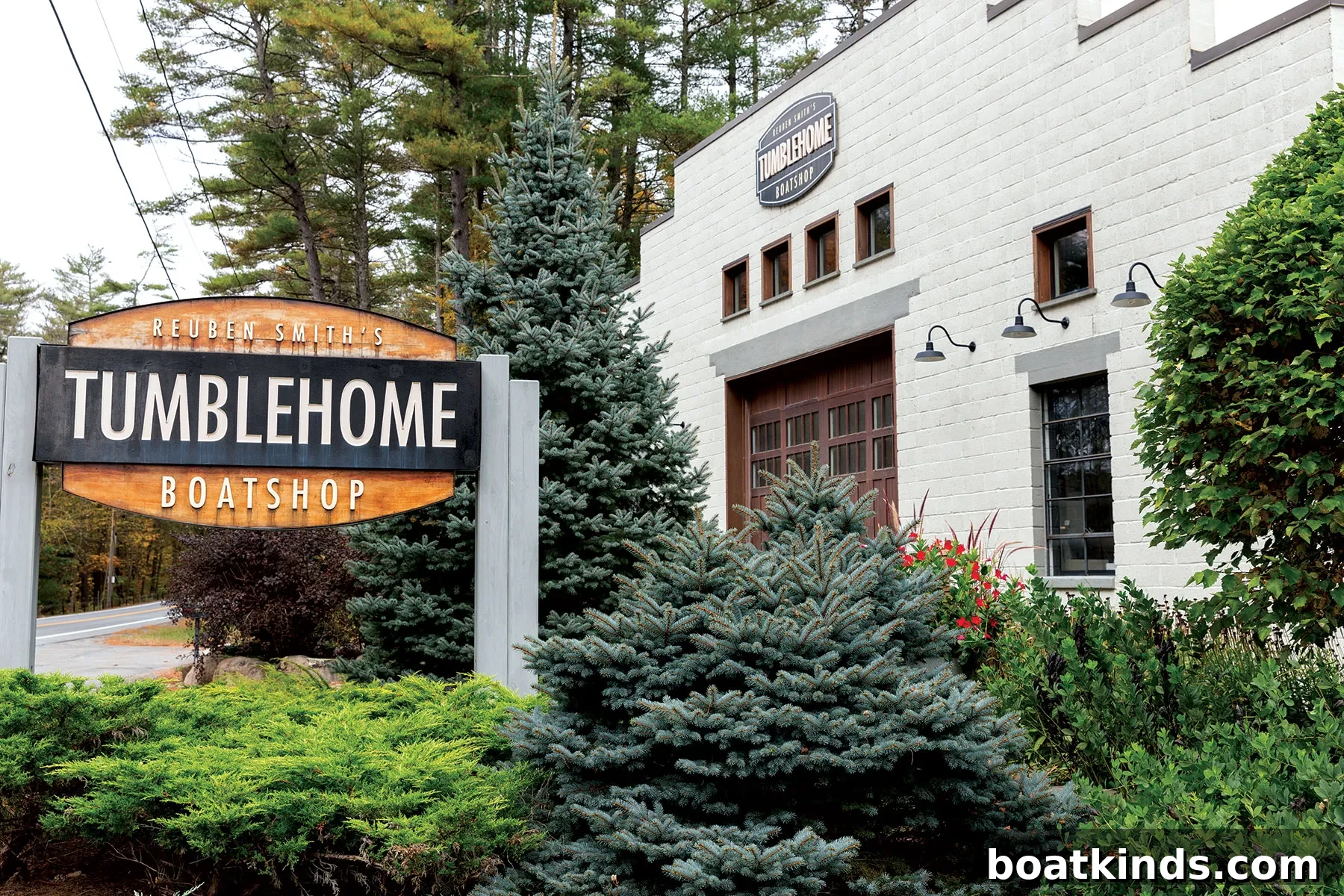
The sleek hulls of these early launches are well suited to modern electric repowerings. For Indian, after months of research, Tumblehome selected a three-phase AC Transfluid electric motor paired with a lithium-ion battery bank. The setup matches the original engine’s weight and trim while delivering high torque—roughly equivalent to 26 horsepower but with substantial low-end power—making it a fitting modern substitute for the heavy, high-torque engines of the past.
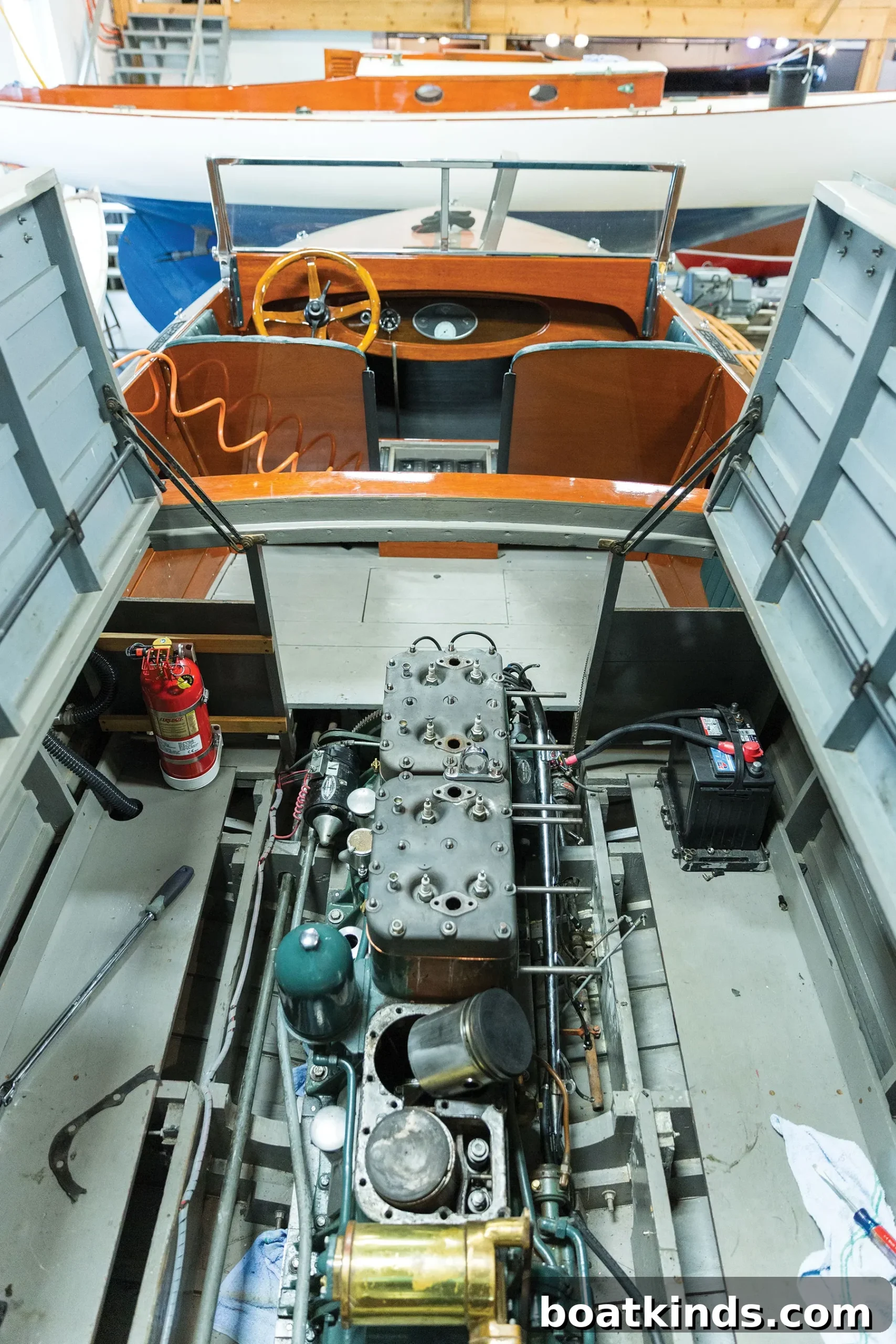
This careful blend of historic design and contemporary technology captures Tumblehome’s mission: to preserve the authentic experience of classic lake boats while adapting them for a sustainable future. “At Tumblehome, you know it’s going to be done right, you’re going to have fun in the process, and you know you will end up with a boat that’s going to outlast the owner for sure,” Kelly says. “My kids and probably my grandkids are going to be in the boats that Reuben restored.”
This article was originally published in the January 2022 issue.