
Four members of the Kill Devil Hills Life Saving Station pause for a portrait in their white caps and jackets, surfboats poised and ready. Life at this isolated outpost on the storm‑swept North Carolina coast was harsh: long stretches of solitude, unpredictable weather and the constant awareness that danger could appear with little warning. Station No. 13’s men spent many days watching the horizon, prepared to respond to a ship in distress at a moment’s notice, but often left with nothing to do but wait and keep one another company.
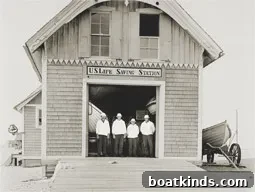
Isolation, however, made the small daily dramas of the station more meaningful. The monotony of routine and idle hours made any new development on the dunes especially noteworthy. So it was when two brothers from Ohio arrived and set up a pair of simple wooden sheds in the sand to pursue an ambitious and unusual hobby: testing experimental flying machines. Wilbur and Orville Wright’s methodical work drew the attention of the lifesavers, and a practical friendship formed between the inventive bicycle makers and the surfmen of Station No. 13.
The station’s keeper, Jesse Ward, permitted off‑duty crew members to lend a hand to the brothers, and the surfmen welcomed the diversion. In exchange for help carrying frames and wings across the shifting sands, the surfmen supplied the Wrights with food, delivered mail and performed odd jobs that eased the inventors’ daily burdens. The brothers, methodical and practical, even adopted a simple signaling system: a red flag outside their shed indicated they needed assistance to move a machine to the nearby dunes for testing.
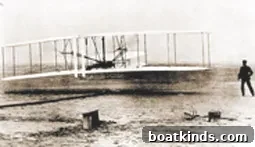
On fair days, the surfmen would gather to watch the gliding experiments. “In pretty weather, we would be out there while they were gliding, watching them,” recalled one surfman, capturing the quiet curiosity and growing admiration the lifesavers felt for the inventors’ relentless experimentation. The relationship between the lifesavers and the Wright brothers was built on mutual respect and shared practicalism: both groups were accustomed to confronting wind, weather and the risks of working on a remote shoreline.
The bond between the two groups reached its most famous moment on Dec. 17, 1903, when three surfmen came down to help the brothers move their motorized machine to the launch site. Orville Wright handed J.T. Daniels, one of the surfmen, a camera; Daniels then captured what time and historians would call “the photo of the 20th century.” That single photograph remains the only recorded image of the first sustained, controlled flight of a powered, heavier‑than‑air machine, and it stands as a testament to the quiet but essential role the lifesavers played that day.
For the men of Station No. 13, involvement with the Wright brothers broke the long stretches of idle duty with a rare sense of participation in something historic. Their help was practical—carrying parts, assisting with launches, preparing the sands—but it was also social, providing companionship and an audience for the brothers’ efforts. In return, the lifesavers witnessed an achievement that would reshape the modern world. The photograph taken by J.T. Daniels links their remote station on the North Carolina coast to a milestone in human ingenuity and remains a powerful reminder of how ordinary people, quietly doing their jobs, can become part of extraordinary events.
July 2013 issue