
Northwest Sails and Canvas — Sailmaking Craft in Port Hadlock
Step into the busy Westrem Building at the Northwest School of Wooden Boatbuilding in Port Hadlock, Washington, and you’ll find students planing planks, sawing frames, shaping pieces on routers and vacuum-bagging composite parts. Climb the stairs to the second floor at the rear and the atmosphere shifts: the space is bright, calm and meticulously tidy. This is the loft of Northwest Sails and Canvas.
The region supports several small, respected sailmakers—Port Townsend Sails, which its founder Carol Hasse turned over to the Port Townsend Shipwright’s Co-Op, and Force 10 Sails, run by the Chimenti family, among them. Each serves a particular clientele. Northwest Sails and Canvas, however, accommodates a notably wide range of customers, offering everything from traditional rigging to contemporary sail solutions.
“I worked in very large lofts around the world, and that wasn’t what I wanted,” said Sean Rankins, owner and chief sailmaker. “I enjoy making a broad spectrum of sails—traditional canvas or cotton with hand-sewn hemp bolt ropes and grommets, modern technical fabrics, and many combinations in between. Not doing the same work over and over keeps it interesting.”
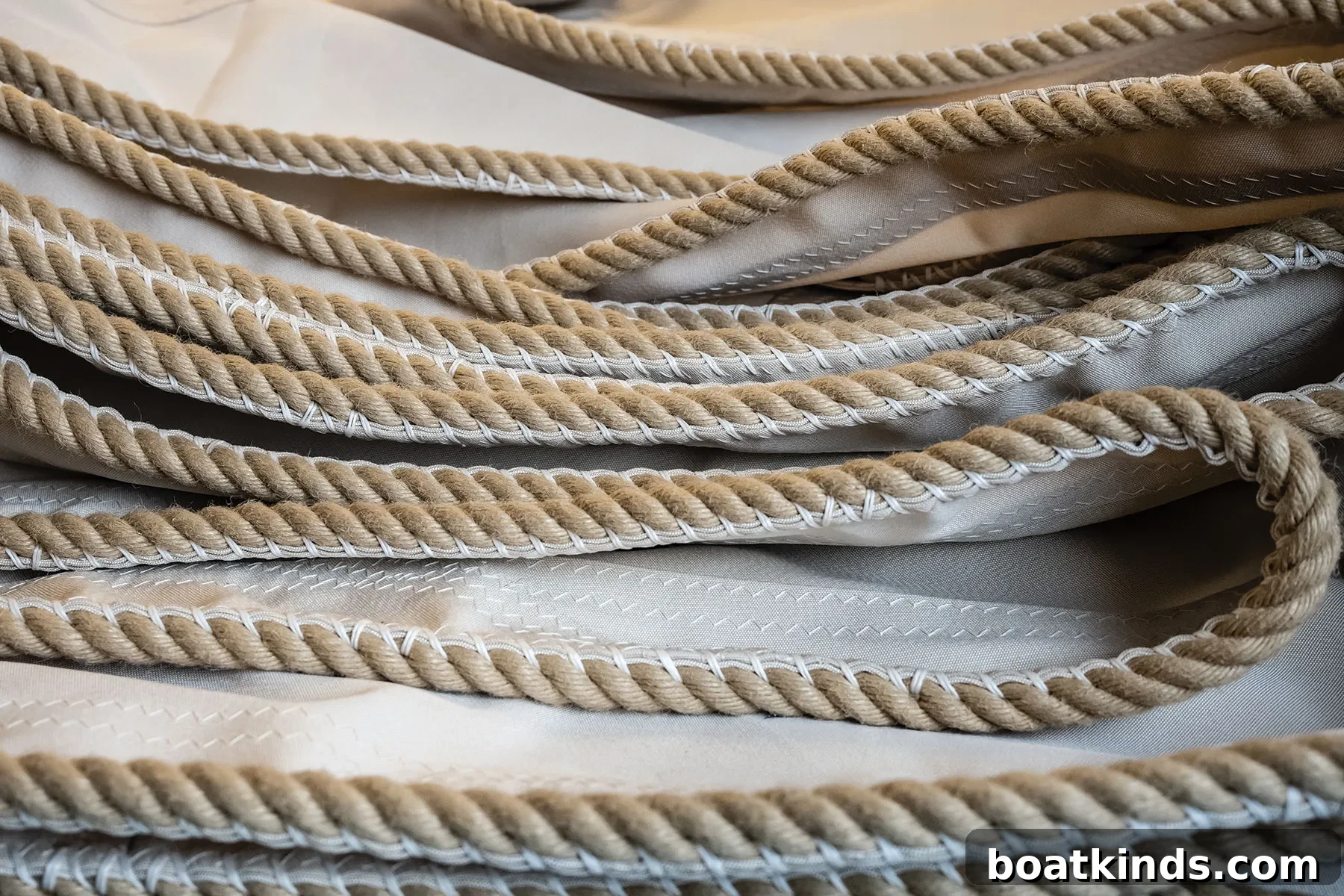
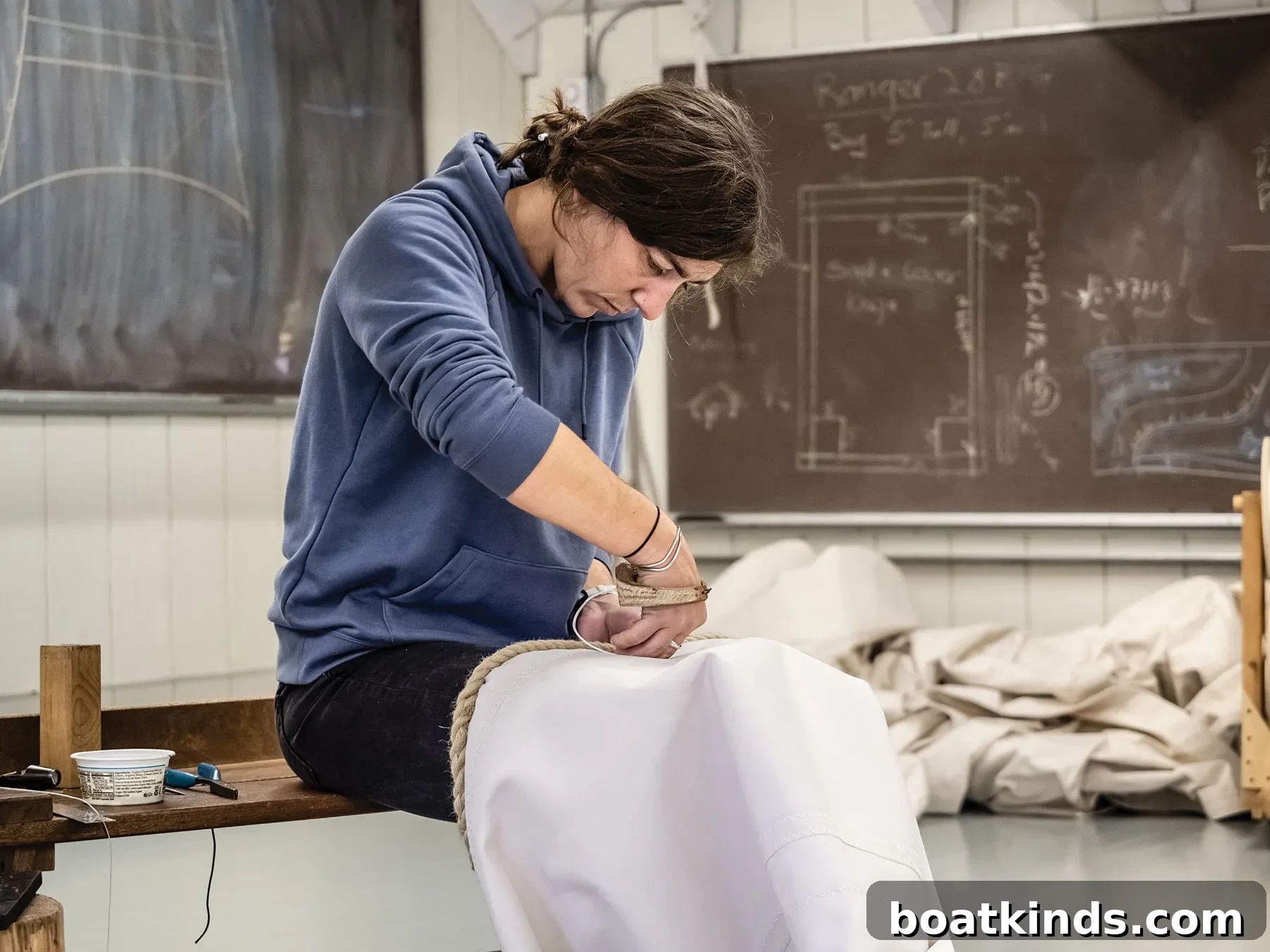
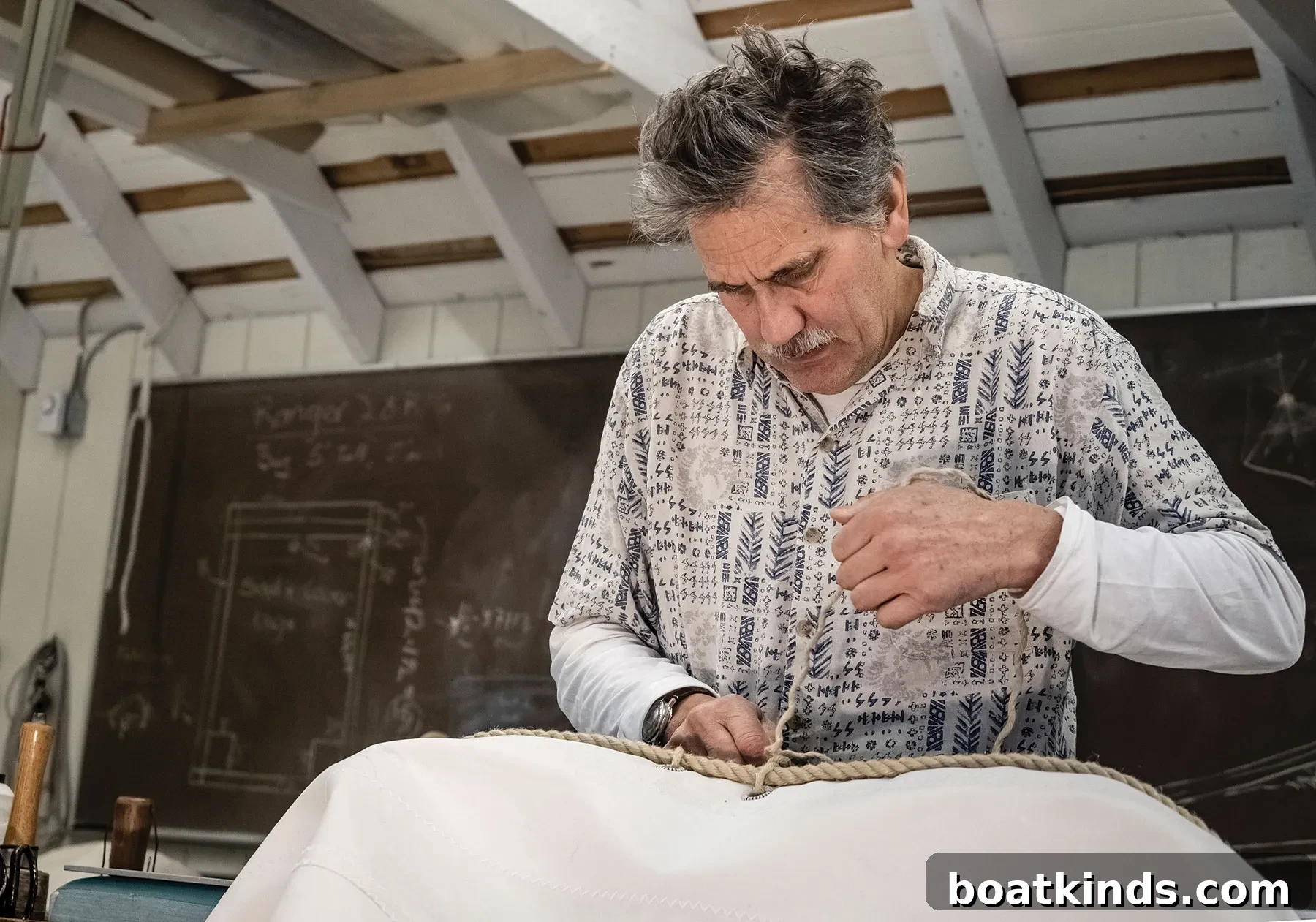
During a recent visit I observed the loft’s historic work: the square sails for the brig Lady Washington. The project required crafting soft cringles in the bolt ropes to serve as reef points and tightening dozens of grommets made from seine twine on a wooden fid before sewing them into precisely marked locations. In that quiet loft the dominant sounds were the rustle of heavy sailcloth, the measured strokes of hand tools—needles, palms, serving mallets and hole punches—and the soft voices of sailmakers applying age-old techniques.
Lady Washington, owned and operated by the Grays Harbor Historical Seaport in Aberdeen, Washington, is a 1989 replica of the first American vessel to make landfall on the West Coast in 1788. It later became the first American ship to visit Honolulu, Hong Kong and Japan, and its rig requires sails that honor historical appearance while remaining durable on the water.
“Traditional sailmaking is labor-intensive, and only a handful of lofts still practice it,” explained Jamie Trost, port captain of the Historical Seaport. “There’s a lot of skill involved, and understanding how modern synthetic materials are engineered to look old can be challenging. We deliberately chose a heavier cloth to add three to five years to the sails’ life.” Trost noted that new sails should last roughly 10 years or about 70,000 nautical miles under typical use.
The material chosen for Lady Washington is Oceanus, a warp-oriented polyester fabric that mimics the soft hand, color and texture of traditional cotton while offering greater longevity. Oceanus comes in a range of weights and was developed by North Sails with input from traditional sailmakers like Nat Wilson of East Boothbay, Maine, making it popular for historic and classic vessels.
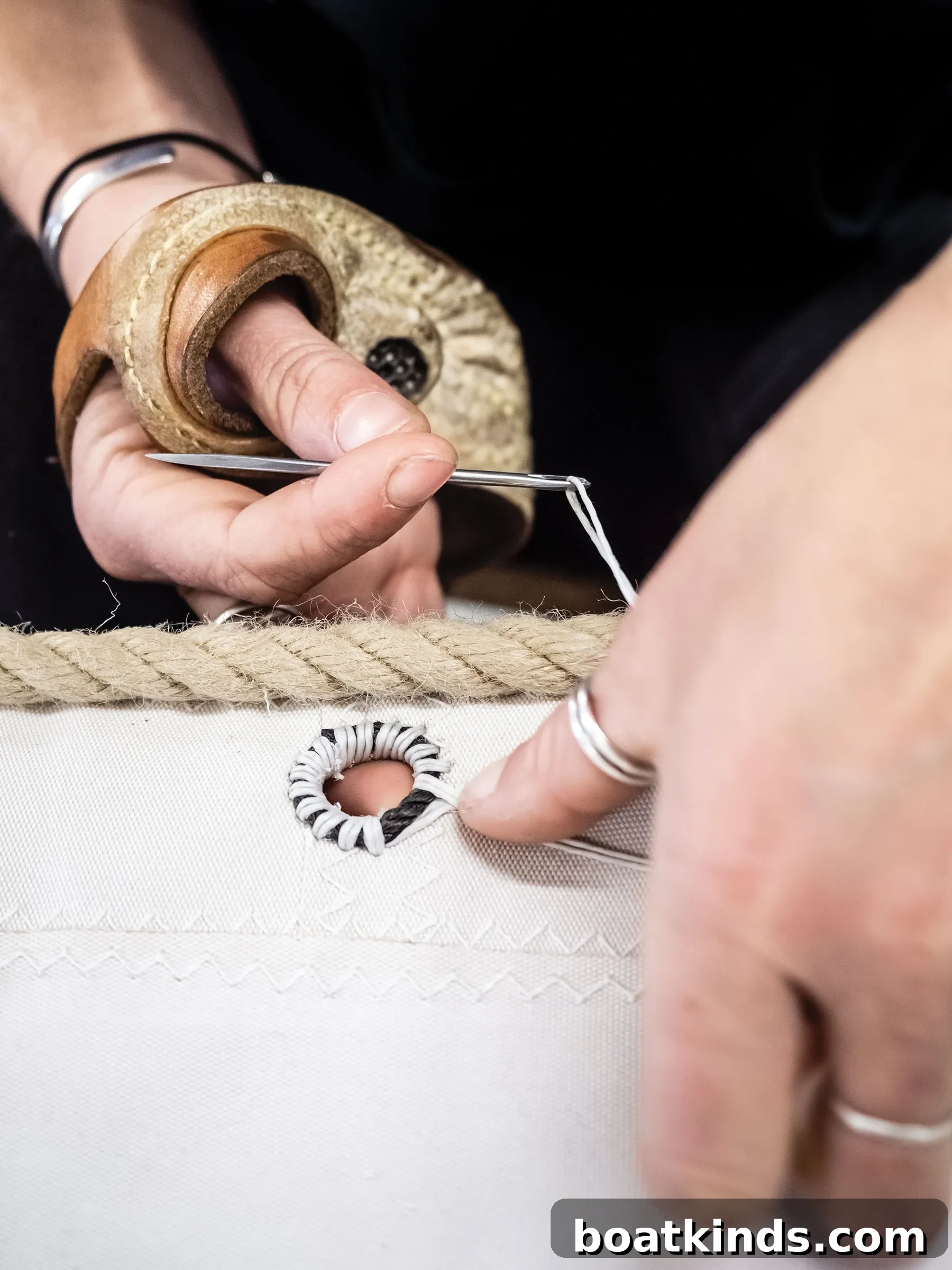
Routine maintenance for heavily used square-rigger sails often includes restitching after a few years, because twine deteriorates sooner than the cloth itself. “It’s not the sailing that wears them out most, but sunlight,” Trost observed, underscoring the importance of careful repair and preservation for traditional sails.
Every estimate Rankins sends includes an invitation for clients to come into the loft and help make their sails. Trost and several crewmembers happily accepted that offer. Teaching and sharing skills is part of the loft’s ethos: Rankins runs workshops and teaches sailmaking and rigging to students at the boat school as well as to clients. One student, Emma Gunn, impressed Rankins and was offered an apprenticeship that turned into a part-time position—an arrangement that benefits both apprentice and loft.
“I like sailing,” Gunn said with a smile. Raised in Port Townsend, she learned to sail early, moving from small dinghies to roles as a sailing instructor, deckhand and delivery crew. Now studying for her USCG 100-ton master’s license, she drops into the loft whenever she’s available. Gunn values the practical skills she gains: “There’s no AAA out on the ocean, so I try to fix things myself. It’s not just thrift; it keeps sails out of landfills by extending their useful life.”
Longtime crew member Holly Kays joined Rankins in 2003 and remains a steady presence. “Sean wanted the loft to stay small and fun, and he was flexible with my schedule,” Kays said. She came to sailmaking out of a love for boats and the desire to make useful things. When she isn’t working on large sails—such as a Norlam mainsail for a 96-foot Sparkman & Stephens motorsailer—she runs the Schooner Martha Foundation with her husband, shipwright Robert D’Arcy. The nonprofit offers sail training vacations for families and youth aboard the 1907 B.B. Crowninshield-designed schooner Martha. “Teaching and mentoring remain central to my work,” Kays said. “I show apprentices what works for me and let them develop their own solutions.”
Inger Rankins, Sean’s Norwegian wife of nearly 30 years, manages the canvas side of the business. “I like big boat covers; they’re very satisfying,” she said. Like Sean, she enjoys variety. After training at a local canvas shop that focused on sailboats, she branched out to make powerboat covers and interior and exterior cushions. “It’s fun to do different things instead of repeating the same tasks,” she explained.
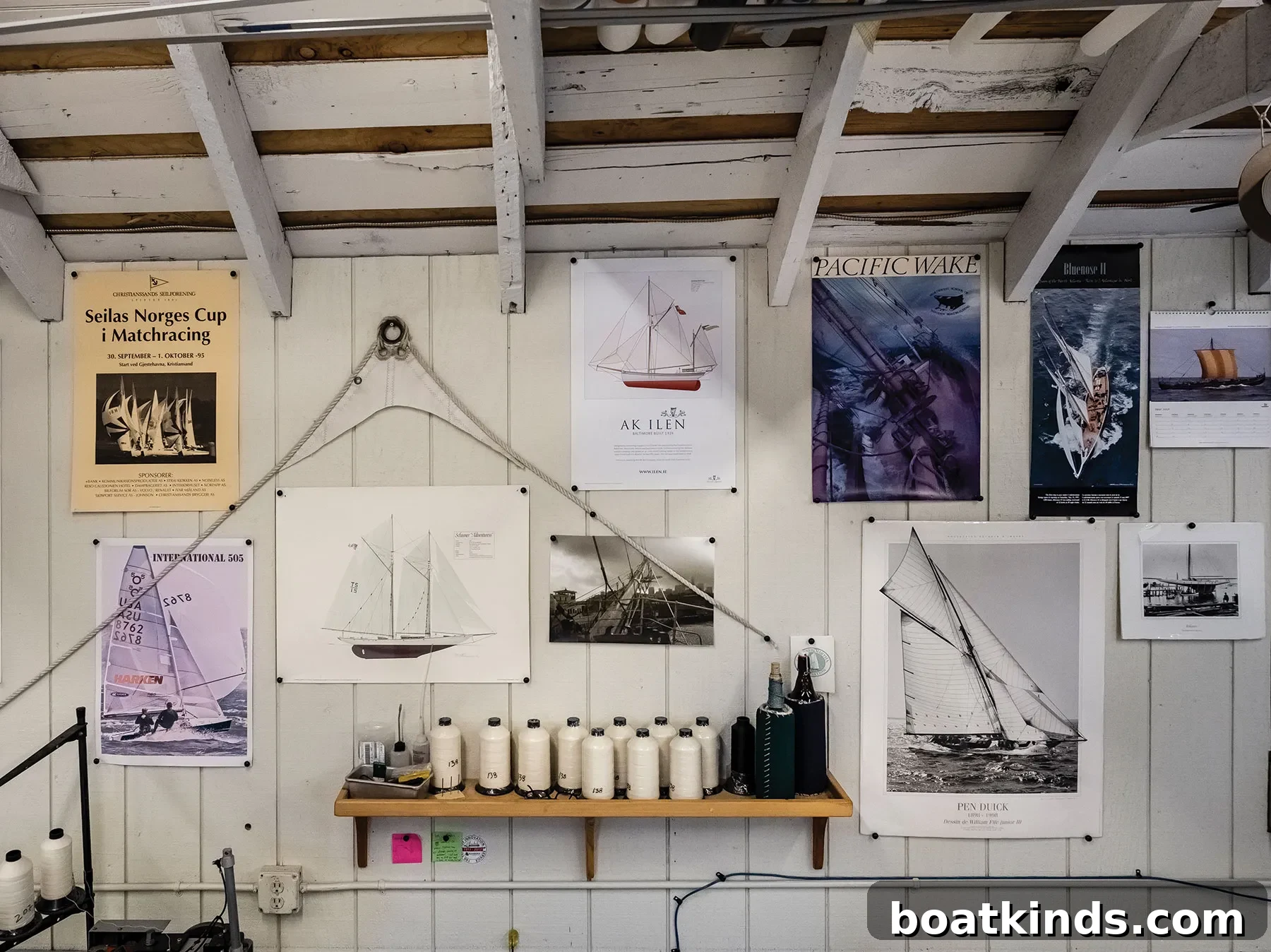
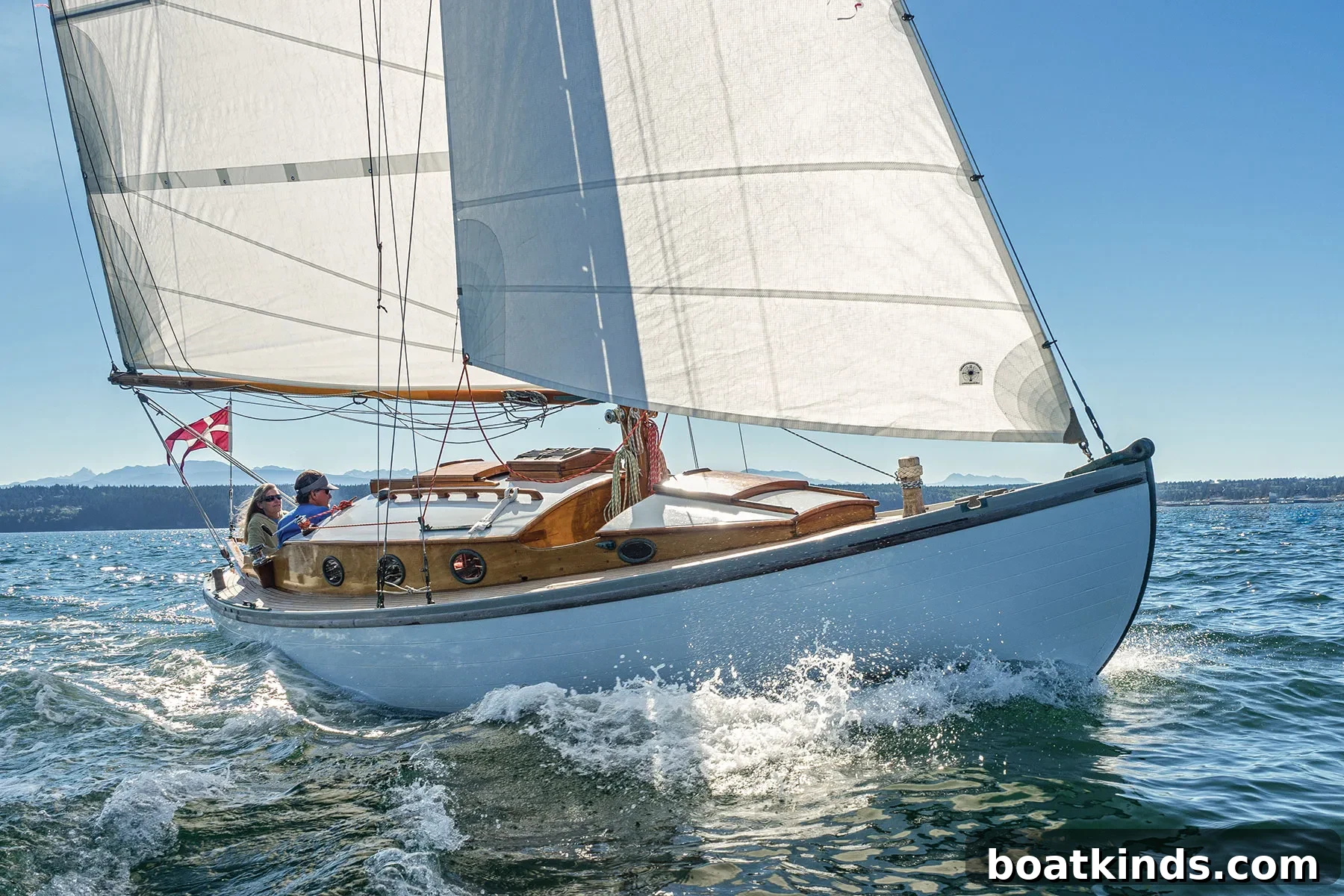
Sean and Inger first met on a ferry crossing the Meltemi-swept Aegean Sea; years later they reunited at Munich’s central train station when Sean recognized Inger’s colorful wool pullover that she had been knitting on that ferry trip. Both had spent years traveling—Inger often with her sister and Sean working as a sailmaker at major regattas—and they maintained contact through letters and planned meetings before finally settling in Port Townsend in 1989. They sail for pleasure in a 1937 spidsgatter named Cito and a small Norwegian double-ender called Havhesten (sea horse), which they imported from Norway.
As the day’s work wound down and hand tools were stowed, I asked Rankins about the loft’s broad niche—teaching students, serving artists and cruisers, and supporting nonprofits that keep traditional vessels sailing. “I worked at big events where boats came with lots of money and lots of people, and I also met cruisers and solo sailors with no backup,” he said. Those under-supported competitors, like the late Mike Plant—whose self-built Open 50 Airco Distributor Rankins remembers from the 1986/87 BOC Challenge—left a strong impression. “Mike had nobody; he was just trying to get on. I’ve always been drawn to people like that, and that’s what brought me to Port Townsend—people getting boats ready to chase their dreams.”
After 45 years in the trade, Rankins’ dedication to craft, teaching and service remains clear to anyone who climbs the stairs to the quiet refuge of Northwest Sails and Canvas.
Photography by Dieter Loibner
This article was originally published in the May 2021 issue.