
In an old speedboat book I came across a chapter about marinizing aircraft engines for marine use. It may sound surprising, but after World War I the practice of converting surplus V-12 Liberty aircraft engines for boats became widespread. Those engines were light and powerful for their time—roughly 400 to 500 hp depending on the conversion—and perfectly suited to the Roaring Twenties appetite for speed. The lessons learned from adapting aircraft powerplants helped shape later marine engines, from the Packards that powered World War II PT boats to the compact, durable diesels we rely on today.
Marinizing land-based engines began almost as soon as engines existed—some accounts date it to the mid-1880s. The core principles remain consistent: redesign the cooling system to replace a radiator with a heat exchanger or keel cooling; water-jacket the exhaust manifold to reduce fire risk; adapt the fuel arrangement to be safe in enclosed engine compartments, especially for gasoline engines; and rework the drivetrain to incorporate reduction and reverse gears. Although those steps sound straightforward, comprehensive marinization involves many more detailed modifications.
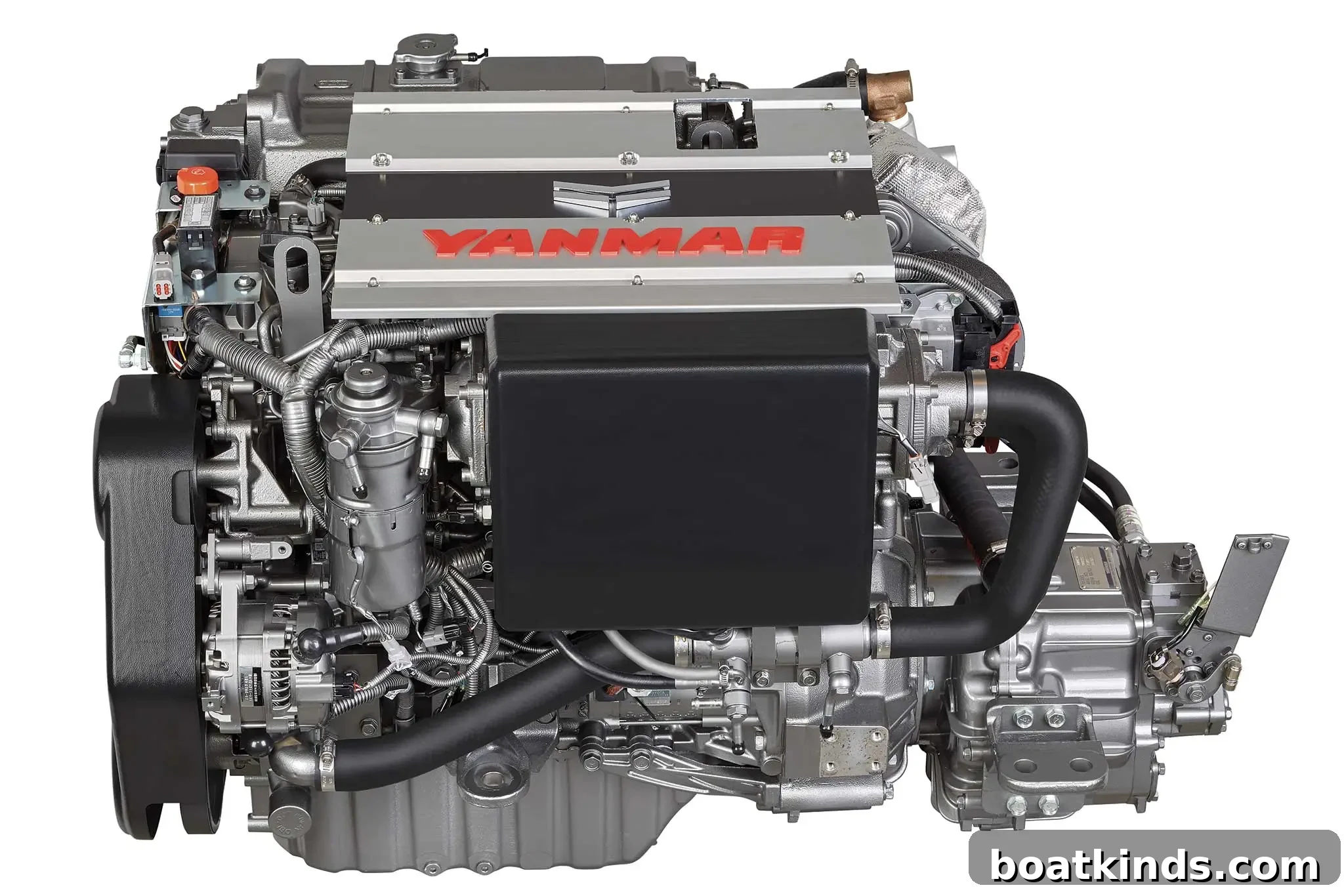
To illustrate the process, I spoke with Bas Eerden, global sales manager for Yanmar Marine. His outline of what Yanmar does to create its 4LV diesel series—based around the Toyota 2.8-liter common-rail turbo diesel—ran to 18 distinct items. Eerden emphasized that while Yanmar manufactures many engines, the same base unit can be used across industries; only a fraction end up in marine service. When a marine-ready block is required and not available internally, Yanmar Marine will source proven blocks from trusted partners such as Toyota. Toyota’s 1GD-FTV diesel has a long service history in trucks and SUVs; when marinized to Yanmar standards it becomes the 4LV family, offered in models from about 150 to 250 hp.
One of the first and most important changes is ECU remapping. Modern common-rail diesels rely on an engine control unit to manage injection timing, pressure, duration and frequency. Rather than a single injection per stroke, multiple small injections are used to optimize efficiency, reduce emissions and shape combustion. Road vehicles typically operate at lower loads for many hours, while boats often run at higher loads for extended periods but with fewer total hours annually. Yanmar Marine modifies the ECU mapping to match those marine load profiles.
Because marine engines typically see fewer total operating hours, they can be tuned for higher peak output. For instance, the 4LV is rated up to 250 hp versus the Toyota Hi-Lux truck version at about 201 hp. To achieve this, Yanmar replaces the stock injectors with higher-flow units and fits a different turbocharger—one that can be intercooled using water rather than air and that is matched to marine load characteristics.
Several hardware changes support reliable marine operation. The low-pressure fuel pump is relocated from inside a vehicle fuel tank to the engine itself. Intake breathing is improved with a redesigned air filter. Cooling and lubrication systems are upgraded with custom oil and diesel coolers. Diesel systems return unburned fuel to the tank for cooling and lubrication; when tank levels are low, that hot returned fuel can heat the remaining diesel, reducing performance and lubrication properties. A diesel cooler prevents fuel overheating and protects injectors and pumps from premature wear.
Yanmar also engineers a new oil pan that’s stronger and reshaped to prevent oil pickup starvation when a boat pitches, heels or rolls. Unlike trucks, which normally operate on level ground, boats experience significant angles that can expose standard pans to oil starvation. Robust engine mounts are cast and shaped to fit marine engine beds and better withstand hull movement.
Corrosion resistance is another vital consideration. Yanmar diesels are recognizable by their silver-grey finish, but the paint serves a technical purpose: protecting components from corrosion in harsh, salty environments. All marinized parts are chosen for corrosion resistance, and the completed engine receives a specialized, highly protective coating. In practice, marine engines seldom wear out from mechanical fatigue as quickly as they corrode; a durable finish helps ensure the engine reaches a full service life.
Yanmar’s marinization packages also include practical options. A sturdy aluminum top cover provides a protective surface for crew accessing tight engine rooms. An optional second alternator offers extra charging capacity for modern high-capacity lithium battery banks and can be supplied in 12, 24 or 48 volts. Higher voltage systems allow smaller gauge cabling between high-draw devices—bow thrusters, windlasses and similar equipment—making installations simpler and potentially less costly. Final touches include safety guards to keep clothing or hair clear of belts while the engine runs.
From early aircraft conversions to today’s carefully engineered marinizations, the evolution of seagoing propulsion systems has been significant. Modern gas and diesel engines, when properly marinized, give boats reliable, long-lasting power to carry owners across the waves for many years.
This article was originally published in the August 2026 issue.