
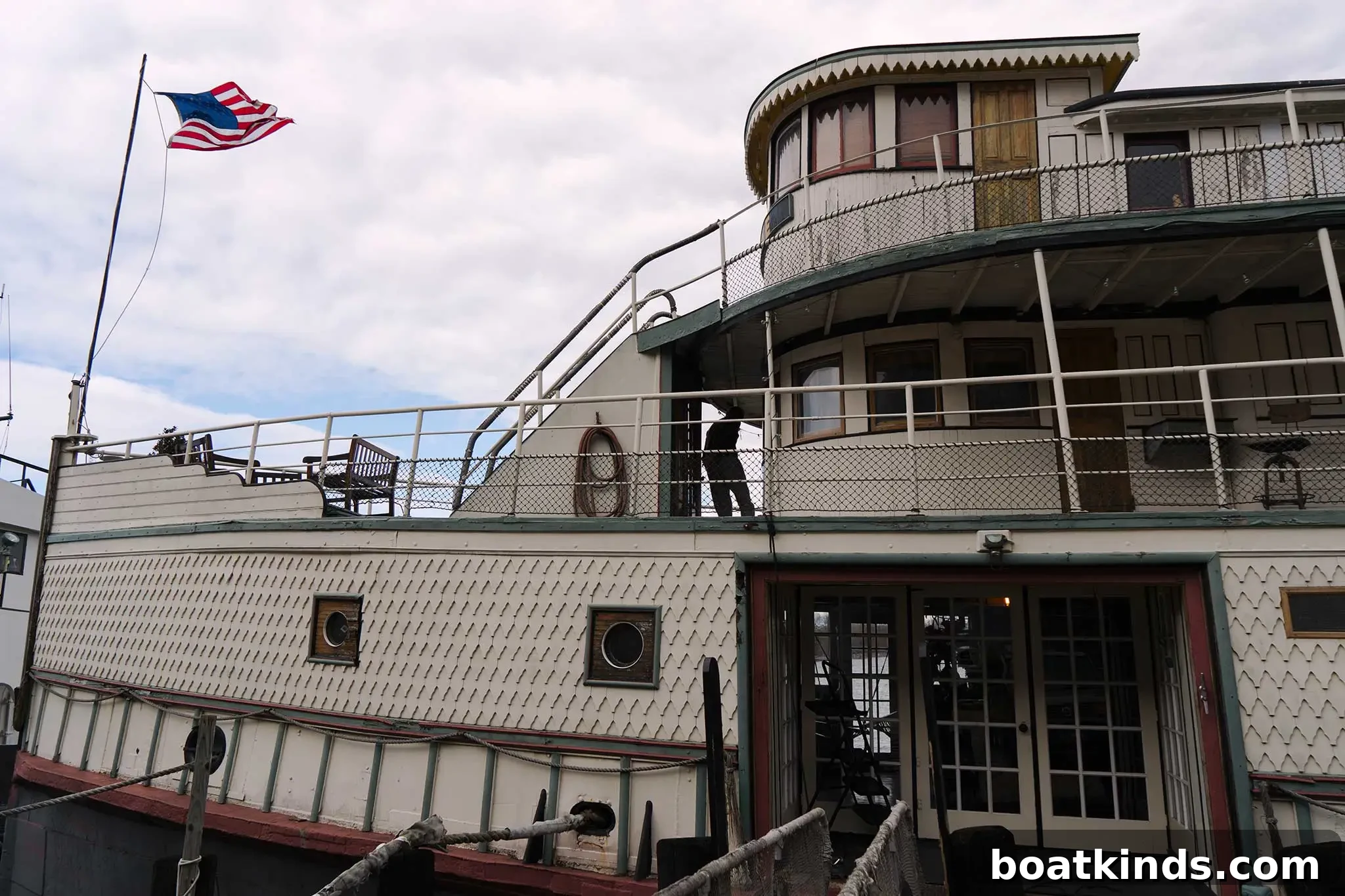
By the time you step aboard the 136-and-a-half-foot ferry Yankee, it becomes apparent that this is not simply a vessel for transport. It is a keeper of time—10,000 square feet and 289 net tons of steel, wood, memory, and improvisation—its decks smoothed by generations of footsteps: immigrants arriving at Ellis Island, soldiers bound for war, families commuting to Block Island on Friday afternoons. Today those steps belong to artists, children, visitors, and friends who learn to move more slowly, because the boat asks them to.
“It seemed like this boat was kind of everywhere for every historical event, but it needs a new place. It needs a new chapter of its life,” Heather MacKenzie-Chaplet said one arthritic November morning as Yankee sat tied up in the upper reaches of Arthur Kill, the channel that separates Staten Island from New Jersey. Heather and her husband, Nils Chaplet, were visiting Heather’s mother, Victoria MacKenzie-Childs, and Victoria’s husband, Richard, and helping tend the centenarian ferry.
Built in Philadelphia in 1907, the ferry began life as a steam-powered, side-loading passenger vessel designed for leisure. Launched as Machigonne, a name drawn from a Native term referring to the bend of the coastline, she was intended to ferry affluent summer visitors from Portland, Maine, into Casco Bay. In photographs from that era she reads more like a floating hotel than a working ferry: arched ceilings, polished woodwork, broad promenades where sea air and conversation mingled—intermittently interrupted by coal smoke, the fuel of the age.
War altered that elegant beginning. During World War I the Navy requisitioned her to patrol Boston Harbor for U-boats. A gun was mounted on her deck and, later, a spent cannonball would be found aboard—an almost mythic relic. After the war she returned to civilian service, only to be pressed into duty again during World War II. Her wooden turtle deck was replaced with steel to carry troops and equipment; staircases once of polished wood were replaced by metal. Opulence yielded to necessity.
Between wars and across decades, Yankee seemed to surface wherever American life demanded a witness. She ferried European arrivals who bypassed Ellis Island’s processing halls, carried early visitors to the Statue of Liberty in the 1930s, and once welcomed William Randolph Hearst back from Europe. Later renamed Yankee, she became a beloved shuttle between the mainland and Block Island, the “daddy boat” that brought fathers home on Friday evenings; islanders learned to gauge time by her coming and going. When a fog-shrouded collision with an oil tanker severely damaged her—weeks before she was to serve as an America’s Cup mascot—sentiment and insurance money restored her, prolonging her life.
But by the 1980s she was retired and sent to a Providence scrapyard. Her fate changed when an antiques dealer, Jimmy Gallagher, towed her back to New York and docked her in Tribeca. The neighborhood was then an idiosyncratic place where artists lived aboard and improvised repairs kept old engines ticking. The ferry became a stage for parties and creative experiments—hot tubs fashioned from rooftop water tanks, occasional steam-ups by members of the Steamship Historical Society. Though no longer serving its original route, the boat remained vibrantly alive.
Victoria and Richard MacKenzie-Childs discovered her there. The artist-and-craftsman couple—whose work combined theatrical domesticity and exuberant pattern—had recently endured a painful chapter: their company, MacKenzie-Childs, Ltd., declared bankruptcy in 2001, and control of their brand had been wrested away in the ensuing legal and financial turmoil. They were seeking space, possibility, and a place that could hold both loss and imagination.
Their encounter with Yankee was almost accidental. Victoria, then in her mid-50s, happened upon the ferry while rollerblading along the piers, boarded, met Gallagher, and asked if it was for sale. She bought it. Neither she nor Richard were sailors by trade; they were homemakers and makers. The ferry offered a new kind of domestic canvas.
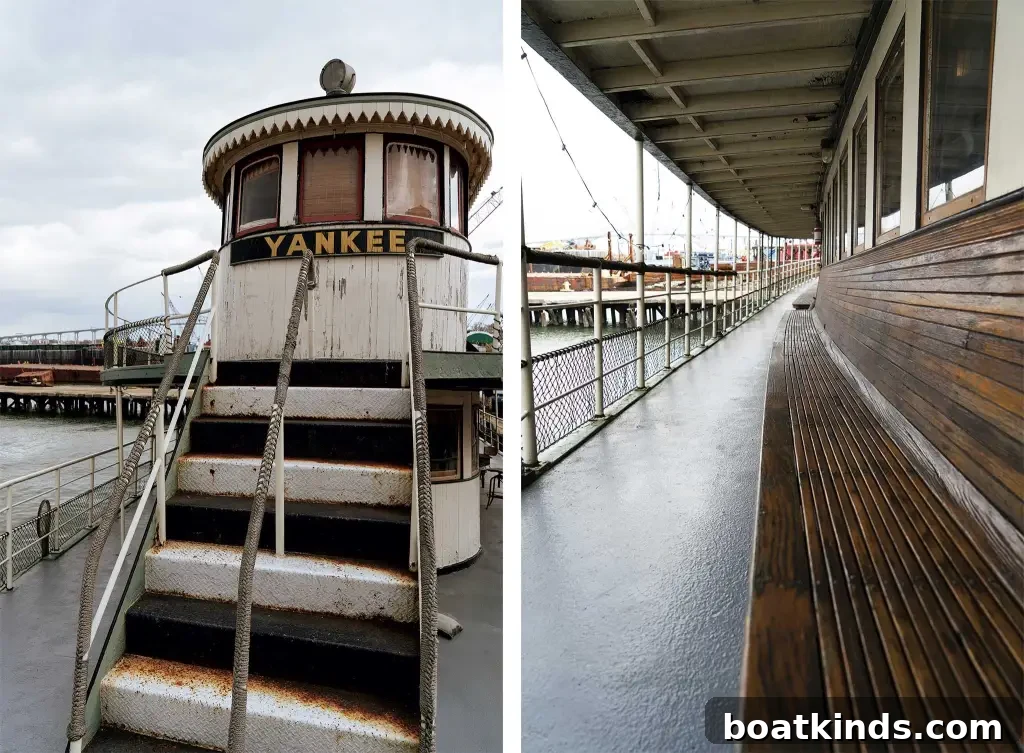
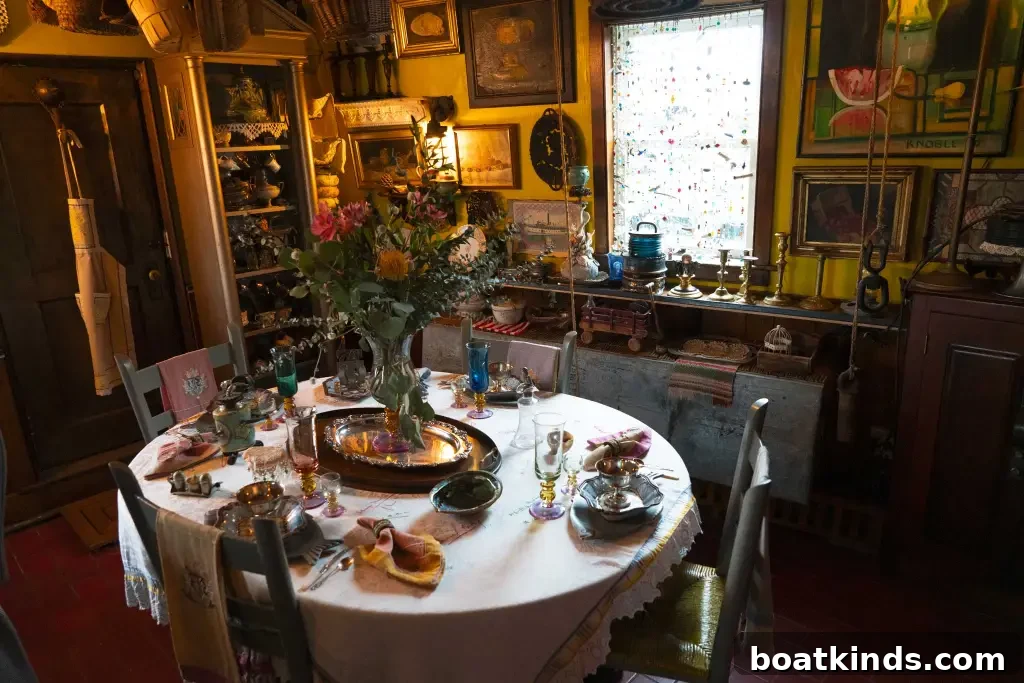
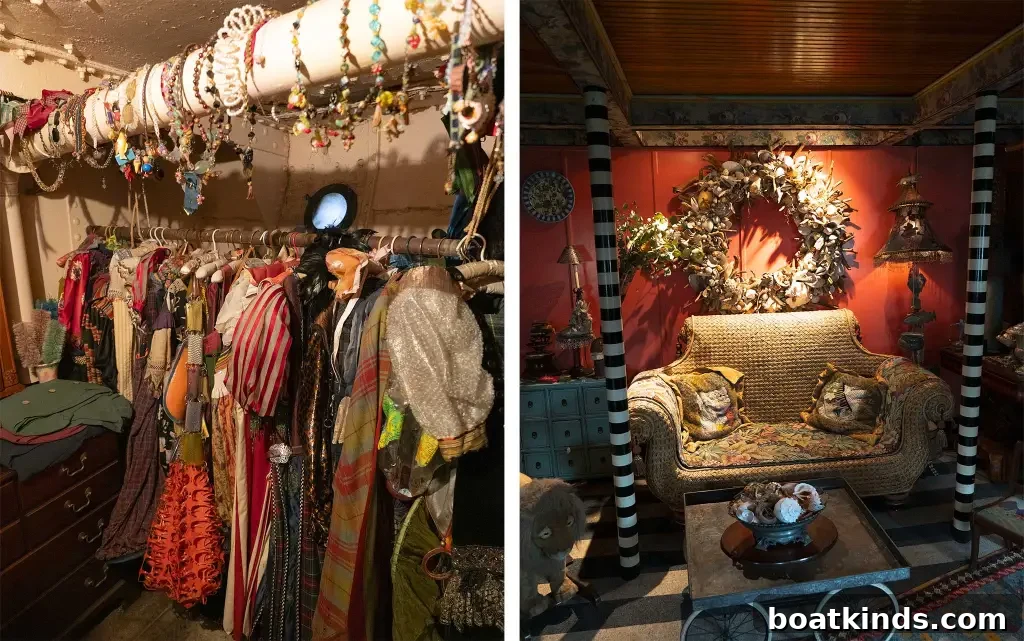
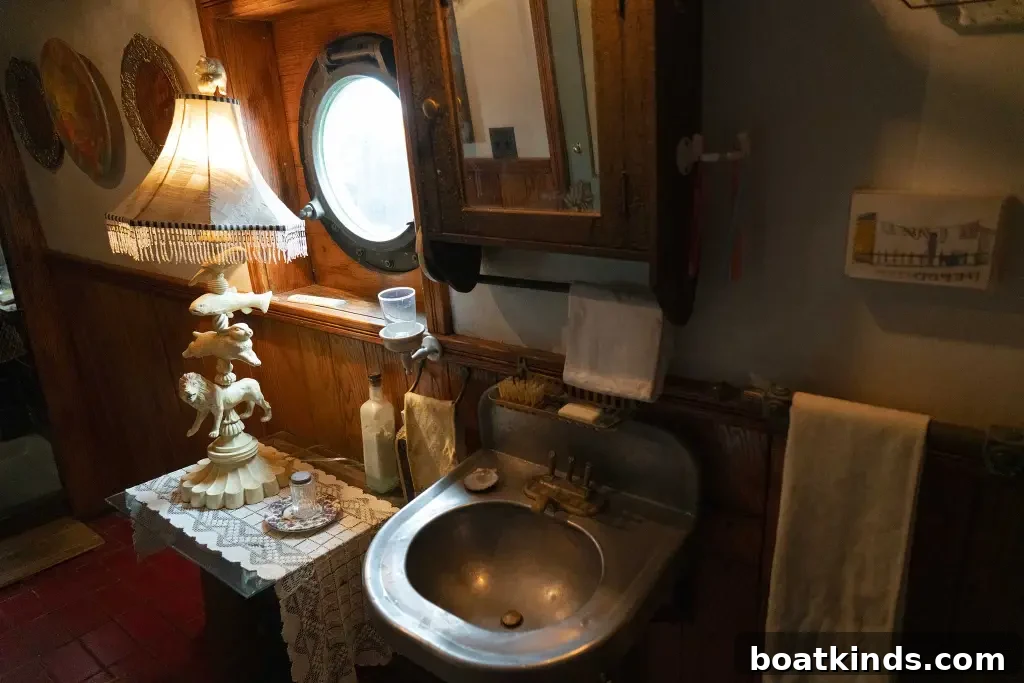
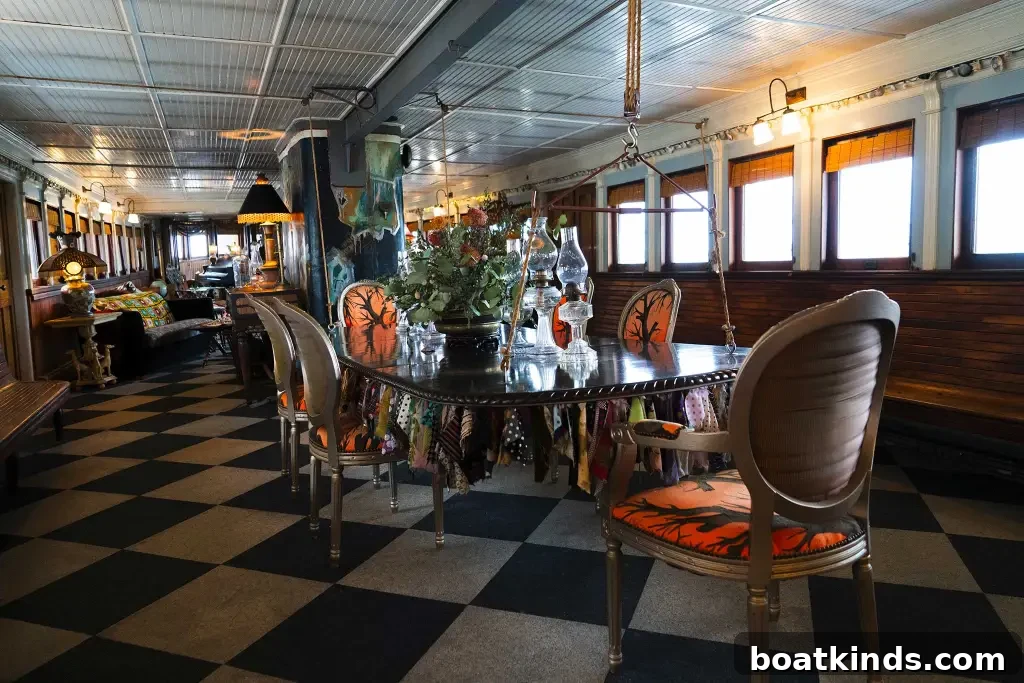
They moved aboard in 2004 and slowly transformed the working ferry into a floating home and artwork. Engines were preserved and occasionally run, but the focus shifted to interiors and rituals: hot-dog stands gave way to beds, a galley became a full kitchen, and passenger benches—still bolted to the deck—framed dinners and performances. A baby grand piano occupied the bridge deck’s dining hall and, improbably, remained in tune; a pump organ played hymns. Chickens once lived behind the kitchen to provide eggs until raccoons intervened. Volunteers from around the world traded labor for room and board, becoming part of the boat’s revolving community.
Victoria’s approach was theatrical and meticulous. Dinners became performances—food clipped to clotheslines, salad bowls hung overhead so guests ate with their necks craned, and epiphany parties that mixed humor and precision. Richard collaged the vessel’s surfaces with found objects, turning the ferry into a layered chronicle of time and creativity. Their established aesthetic—known from ceramics and furniture—expanded into architecture, choreography, and daily life aboard a historic ferry.
As New York shifted, so did the ferry. She moved from Tribeca to Hoboken, then back across to Red Hook in Brooklyn, and most recently to Staten Island. Each relocation was driven by changing development, zoning, and economics, and each move took a toll. Living aboard an aging steel ship is demanding: leaking windows, escaping heat, complex and costly heating systems, and relentless maintenance. Over years, even the most ardent vision can face practical limits.
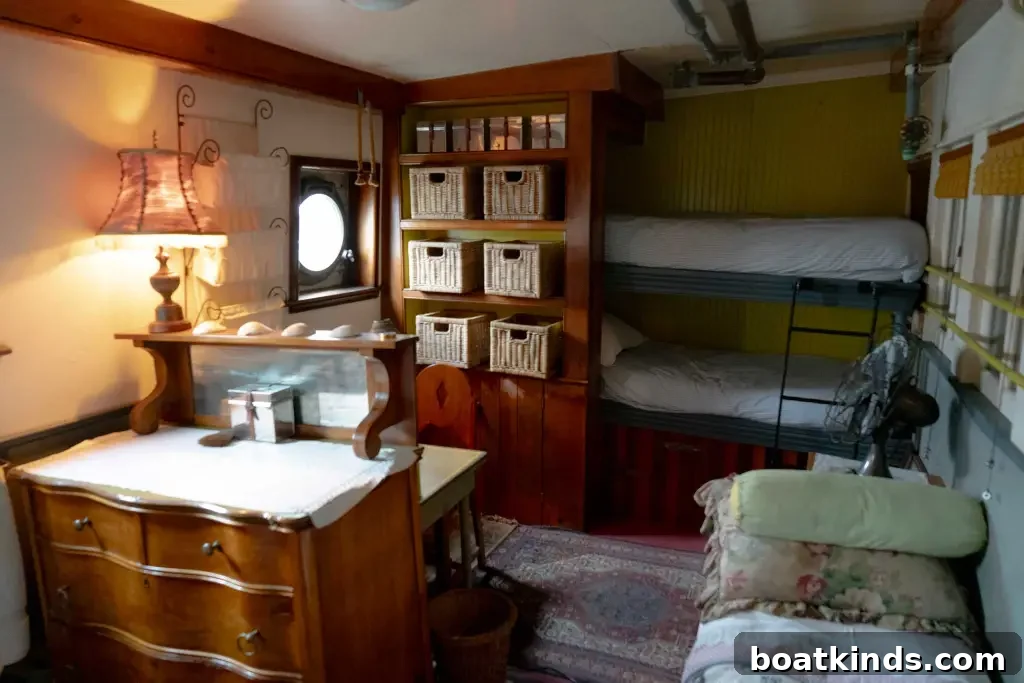
Still, for two decades Victoria and Richard held the project together. Children and grandchildren slept in bunks beside century-old walls. Friends filled the upper deck for concerts. The ferry witnessed joy and tragedy alike—moored near the towers on September 11, her silhouette appears in photographs of that day. She has sheltered a wide range of lives, including, at the time of a recent visit, a Ukrainian refugee.
Now, as Victoria and Richard age and the ferry again faces uncertainty, it stands at another crossroads. “She needs a new life,” Heather MacKenzie-Chaplet says—someone who understands that stewardship is participation, not possession. Yankee has never been static; even when tied to a pier she carries people, stories, and transitions. For Victoria and Richard, she became a home when home was taken away. That, perhaps more than any historical role, is her most enduring contribution.
This article was originally published in the October 2026 issue.