
Marvin Creamer: The Mariner Who Circumnavigated the Globe Without Instruments
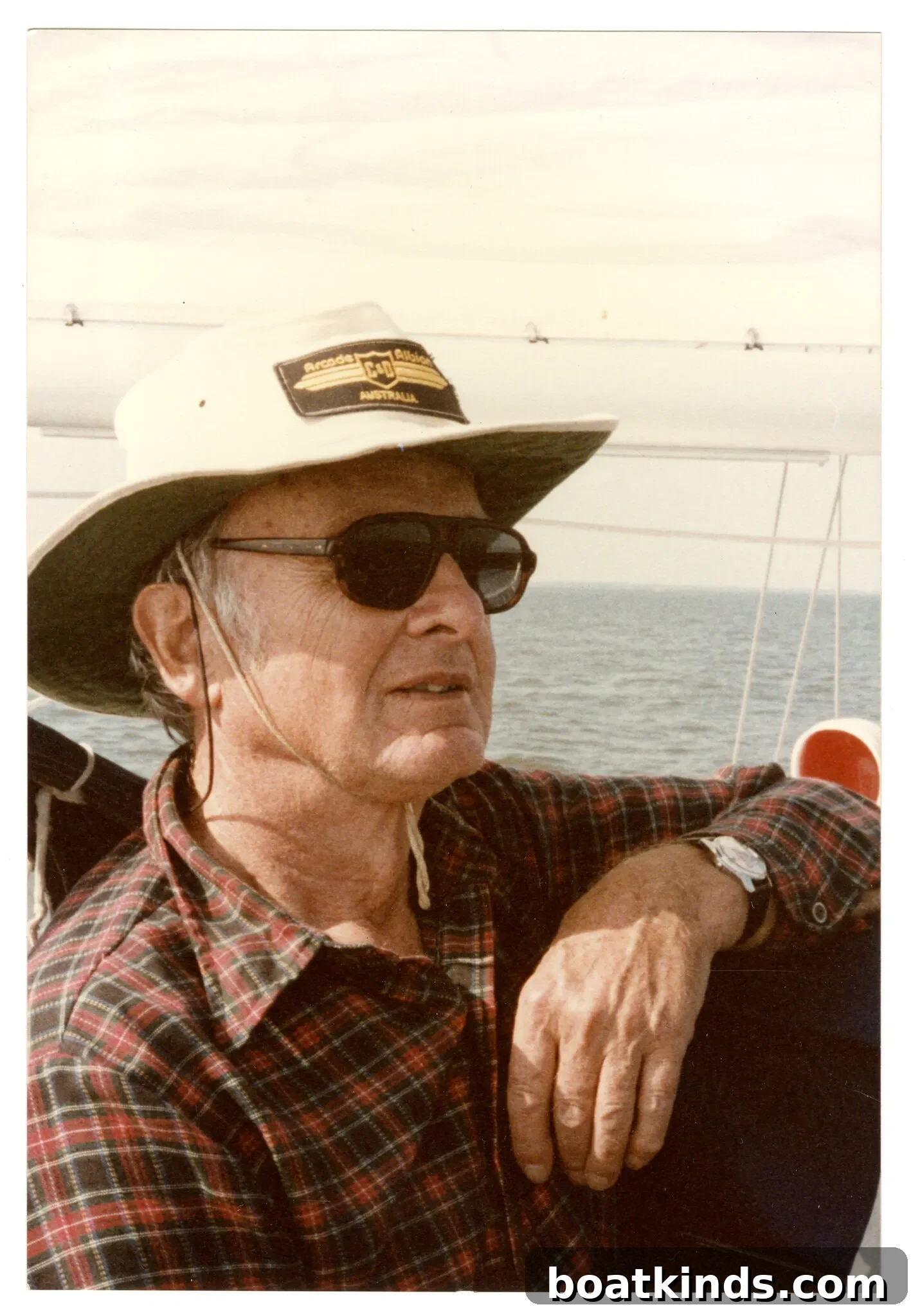
In 1984, Marvin Creamer completed a remarkable maritime feat: a full circumnavigation of the globe without the use of conventional navigational instruments. He sailed without a compass, sextant, clock, radio or even a wristwatch, relying instead on direct observation of the natural world. By day he read the sun, wind and waves; by night he used the moon and stars. This voyage made him the first recorded person to sail around the world without modern navigational devices, a demonstration of traditional seamanship and celestial navigation practiced in its purest form.
How He Navigated
Creamer’s method was rooted in age-old techniques. He studied the patterns of wind and swell, the behavior of clouds and the position of the sun to establish general courses and latitude. At night he identified constellations and used the moon’s phase and position to maintain his bearings. He paid attention to subtle environmental cues—sea color, bird activity, and the sound of surf near land—to refine his sense of location. These skills, honed through experience and careful observation, allowed him and his crew to traverse vast ocean distances without electronic aids.
Challenges of the Voyage
The journey was far from easy. Creamer and his crew encountered severe weather, long calm stretches with little wind, and the constant hazards of open-ocean travel. They navigated through dense fog where visibility was low and large tankers presented collision risks. Encounters with whales and other marine life added unpredictable moments at sea. One of the most notorious obstacles for any circumnavigator—Cape Horn—tested their seamanship with its notorious winds and waves. They also experienced a tense run-in with the British military during the voyage, a reminder that even a journey guided by natural signs can intersect with geopolitical realities at sea.
A Humble Perspective
Creamer described the voyage with a blend of understatement and humor, calling much of the experience “a jolly romp.” He joked that his undertaking represented “one small step back for mankind,” a wry comment on his deliberate rejection of modern navigation tools in favor of traditional methods. That humility and wry wit reflected his broader approach: a confident but modest affirmation of human skill and curiosity in the age of electronic navigation.
Legacy and Significance
Marvin Creamer’s circumnavigation highlighted both the continuity and contrast between ancient and modern seafaring. At a time when satellite navigation and onboard electronics had become the norm, his voyage served as a vivid reminder that sailors once crossed oceans using only the sky and their senses. His achievement has been celebrated by sailors, historians of navigation, and those interested in human ingenuity. The voyage underscored the value of observational skills, seamanship, and an intimate understanding of the marine environment—qualities that remain relevant to safe and skilled navigation.
Final Years
Creamer died this week at the age of 104. His passing marks the end of a long life that included one of the most unusual and disciplined demonstrations of traditional navigation in modern times. He leaves behind a legacy that invites reflection on the relationship between technology and skill, and on the enduring human capacity to read the natural world.
Why This Matters Today
In an era dominated by satellites, GPS and automated systems, Creamer’s voyage is a compelling case study in resilience and knowledge. It encourages sailors and non-sailors alike to appreciate foundational skills, to cultivate observation, and to respect the sea’s power and unpredictability. Beyond the nautical community, his achievement resonates as a human story of perseverance, curiosity and a willingness to test the limits of conventional practice.
Marvin Creamer’s life and his 1984 circumnavigation stand as a reminder that navigation, at its core, is about paying attention—to the sky, the sea, and the world’s subtle signals—and using that attention to guide a safe and purposeful course.