
Boaters who limit their visit to Christmas Cove miss a peaceful, scenic 14-mile cruise upriver to the twin villages of Damariscotta and Newcastle on Maine’s Damariscotta River. The river winds past summer homes set into rolling, wooded banks, a dozen quiet coves and a riverfront forest preserve with hiking trails. These sheltered anchorages and the brilliant fall color make the trip especially rewarding.
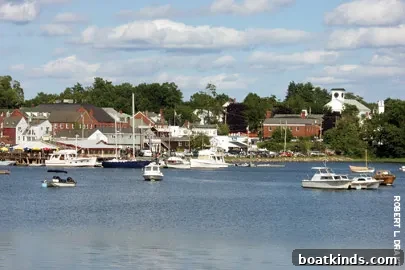
The Damariscotta is ecologically important: its headwaters serve as the northern breeding grounds for horseshoe crabs, and every spring spawning alewives run the river. The name Damariscotta comes from a Native American phrase for “river of many little fishes.” Beyond the shipyards and marinas of East Boothbay and South Bristol, the river’s only commercial activity consists of oyster farms—rows of buoyed floating “cars” mark the growing beds and are common sights to watch for while cruising.
On the river’s west bank, about a half-mile below the Damariscotta/Newcastle bridge, Riverside Boat Co. has operated since 1946. This old-fashioned wooden boatyard still uses a railway and vintage equipment, and its property is strewn with lumber and fixtures for building and repairing wooden yachts. Owner and Damariscotta harbormaster Paul Bryant, an experienced cruiser who sails a 30-foot sloop of his own design, allows visiting boats to use the yard’s empty moorings without charge—he understands the value of finding a free mooring when cruising.
Above the boatyard the river widens and the villages come into view: lawns slope gently to the water, maples flash their colors, and white church steeples punctuate the skyline. The twin villages sit on opposite banks at the head of navigation, connected by a fixed Route 1B bridge. If conditions and tides cooperate, a dinghy trip above the bridge leads to Great Salt Bay, where ancient oyster-shell middens—heaps reaching roughly 12 feet high and dating back centuries—offer a glimpse of the Abenaki and other Indigenous people who once harvested the river’s shellfish. Local knowledge and careful timing are recommended, since currents here can be strong and a reversing falls may develop.
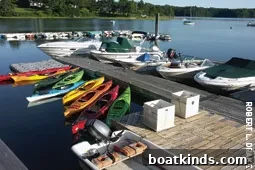
Most visitors, however, prefer to explore shops, pubs and restaurants in the downtown districts. Schooner Landing Restaurant and Marina, located right on the waterfront, provides convenient dockage beside the town boat ramp and park, and it’s an easy dinghy from Riverside Boat Co. into town.
Damariscotta, with a population of about 1,800, traces settlement to 1640 but grew as a trading center after peace was established between European settlers and local Native communities in 1747. Nineteenth-century cargo schooners and later steamboats called here, leaving a legacy of classic residential architecture and a brick business district now listed on the National Register of Historic Places.
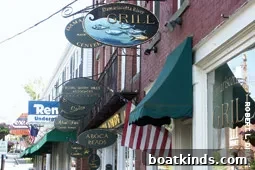
From the town dinghy dock or Schooner Landing most attractions are within easy walking distance. The Chamber of Commerce on Main Street provides maps, brochures and event calendars. Downtown businesses include day spas, specialty shops, antique stores and art galleries alongside Reny’s stores, which offer discounted brand-name and diverse merchandise. Waltz’s Pharmacy sells newspapers and serves as a neighborhood hub with an old-fashioned soda fountain. The Maine Coast Bookshop Café is a popular spot for coffee and new releases, while Skidompha Library runs a used-book shop and hosts cultural programming.
Main Street also contains practical amenities: a liquor store, a fresh seafood market, a bank, post office and a service station that sells fuel, propane and ice. Larger supermarkets and a natural foods co-op are located about 1.5 miles north on U.S. Route 1B.
The villages’ dozen or so restaurants reflect varied tastes and celebrate local seafood—especially Damariscotta River oysters, which are noted for their quality. Breakfasts at The Breakfast Place and Bakery are a local favorite. Salt Bay Café and several casual takeout spots serve pizzas and sandwiches, while Schooner Landing’s lively “Sunday Pier Parties” draw many day visitors and often require boats to raft together. Dining options such as King Eider’s Pub and Restaurant, Damariscotta River Grill and Newcastle Publick House offer everything from casual pub fare to themed dinners, wine tastings and live music.
Evenings in the villages are lively: the Lincoln County Theater stages live drama and musical performances, and the library screens classic films on a regular basis. One of the liveliest annual events is Pumpkinfest each October, a three-day celebration of parades, feasts, contests and creative displays. Local artists carve, paint and decorate large pumpkins—many weighing over 300 pounds—and these are displayed and illuminated along Main Street. Some pumpkins are even hollowed and fashioned into buoyant boats for paddled or powered races in the harbor.
A short walk across the bridge to Newcastle’s Glidden Street rewards visitors with a postcard view of well-preserved 19th-century homes shaded by tall maples, which blaze in reds, oranges and golds during autumn. After taking in the classic New England streetscape, head back to town for chowder, mulled cider or a refreshing local brew.
Making your way
The river offers a pleasant, deep-water cruise with numerous coves suitable for quiet anchorage. Navigation requires attention to channel markers and respect for currents, particularly through The Narrows off Fort Point. At the fixed Route 1B bridge—the head of navigation—Damariscotta and Newcastle face each other across the water.
Riverside Boat Co. permits visiting boaters to pick up a vacant mooring between Green Can No. 23 and Red Nun No. 24 at no charge and provides full wooden-boat repair services. From there a short dinghy ride brings you to the town dinghy dock. Harbormaster Paul Bryant can also point you to moorings closer to downtown. Note that Damariscotta and Newcastle have an ordinance prohibiting anchoring upstream of Green Can No. 23.
Schooner Landing Restaurant and Marina ((207) 563-7447) offers free short-term dockage for diners and overnight dockage at approximately $2 to $4 per foot per night, with depths near 7 feet. Tidal flow tends to move east to west through the marina, and stronger currents can sweep beneath the bridge—pay attention to the tide when docking. Water, electricity and restrooms are available during business hours; basic repairs can be arranged. Rafting alongside the riverside face dock is common.
Public trash receptacles are located at the town boat ramp and dinghy dock; Waltz’s Pharmacy has public restrooms. Fuel, propane and ice are sold at Colby and Gale service station on Main Street.
NOAA chart No. 13293 (The Damariscotta, Sheepscot and Kennebec Rivers, South Bristol Harbor and Christmas Cove) covers the area and is recommended for safe navigation.
This article originally appeared in the November 2010 issue.