Flooded (Wet Cell) vs AGM Batteries: What Boaters Need to Know
When choosing batteries for a boat, understanding the differences between flooded (wet cell) batteries and absorbed glass mat (AGM) batteries is vital. Both are lead-acid chemistries and use sulfuric acid as the electrolyte, but their construction, performance characteristics, installation requirements, and maintenance needs differ significantly. This article explains how each type works, their typical marine uses, and practical safety and charging considerations for reliable service on board.
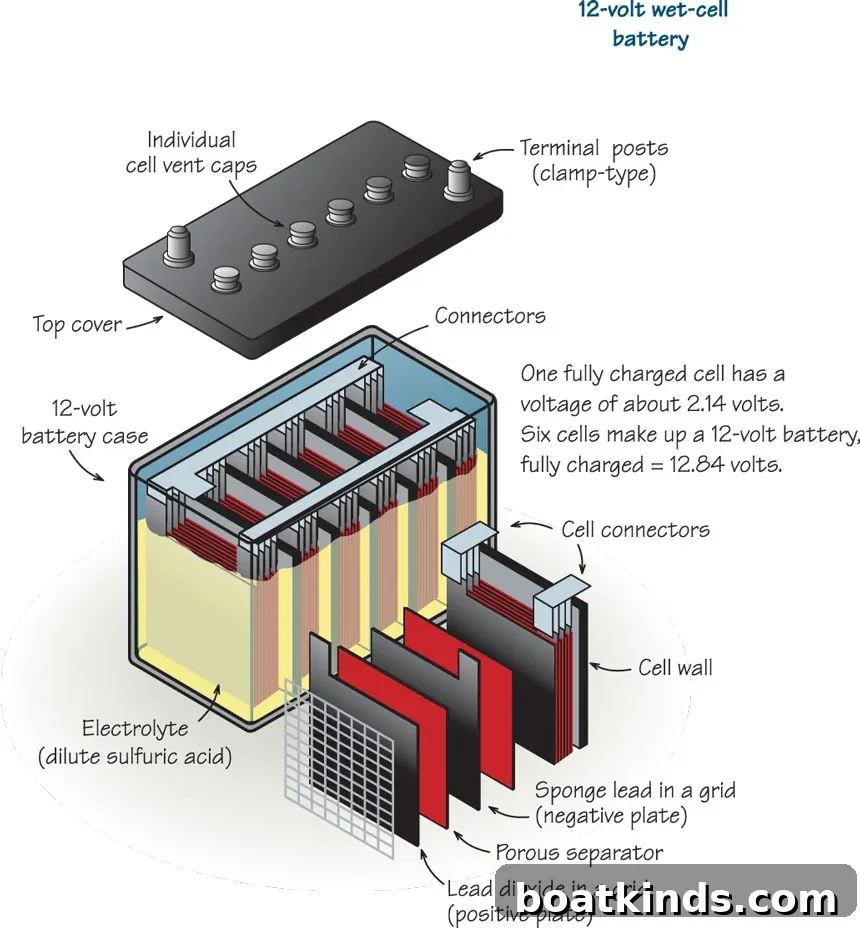
Flooded, or wet cell, batteries are the most common large lead-acid batteries. In these units the electrolyte—diluted sulfuric acid—completely covers the lead plates inside the battery case. The plates themselves are lead alloys cast into grids and arranged as alternating positive and negative plates. Manufacturers can increase a battery’s cranking power by making plates thinner and adding more plates, which raises the available surface area and allows the electrochemical reaction that delivers high current to occur quickly. That is why many engine-starting batteries use thin-plate construction: they deliver the brief, high-current bursts needed to crank an engine.
By contrast, deep-cycle flooded batteries use thicker, more robust plates designed to withstand repeated deep discharges. While thinner-plate starting batteries provide excellent short-term power, they are less tolerant of repeated deep cycling and can be damaged by frequent deep discharges. For this reason, many boaters use separate battery banks: one or more thin-plate batteries dedicated to engine starting, and a separate deep-cycle bank—often called the house bank—for running lights, pumps, electronics, and other loads.
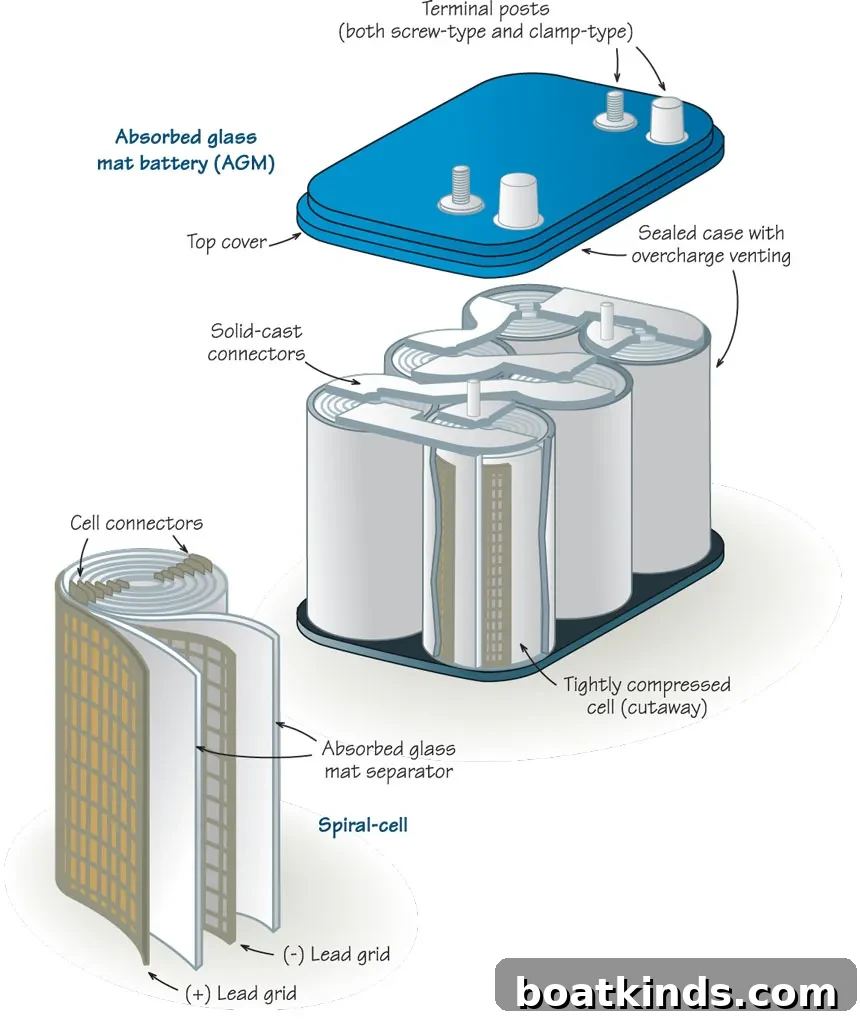
AGM (absorbed glass mat) batteries differ in construction and behavior. Instead of free liquid electrolyte, AGM cells contain glass fiber mats that hold a small amount of sulfuric acid in close contact with thin plates. Because the electrolyte is absorbed into the mat, AGM batteries are effectively sealed and do not contain a pool of liquid that can spill. They can be manufactured in different internal arrangements—some use spiral-wound cells—yet many AGMs are sized to resemble conventional flooded batteries for easier replacement.
Key benefits of AGM batteries include higher charge acceptance (they can recharge faster), lower internal resistance, better vibration resistance, and the ability to be mounted off‑upright without electrolyte spillage. These qualities make AGMs attractive for modern boats where fast recharging from an alternator, generator, or shore power charger is useful and where space or mounting options are limited. AGMs also generally require less routine maintenance than flooded batteries because you cannot add water to them and they are sealed.
Despite being sealed, AGM batteries can produce hydrogen gas if they are overcharged or otherwise distressed. In rare but serious cases they can vent gas through pressure-relief valves, and once a sealed battery vents significantly it often becomes irreversibly damaged because you cannot replenish the lost electrolyte. For this reason, AGM installations still require the same basic safety practices as flooded batteries: ensure adequate ventilation in enclosed spaces, protect batteries from heat and physical damage, secure batteries to prevent movement, and provide a properly sized battery box where needed.

Charging strategy and compatibility are important considerations. Flooded and AGM batteries have different charging profiles and voltage tolerances; using a charger or alternator regulator designed for the specific battery type improves service life and prevents overcharging. For mixed banks—such as a starting battery and a separate house bank—use a charging system that can manage each bank appropriately, or employ isolators and multi-stage charging to match voltages and acceptance rates. Regular battery testing, proper terminal cleaning, and ensuring secure wiring and fusing will help prevent failures and unsafe conditions.
Practical selection guidance: choose thin-plate flooded batteries or specialized starting batteries for reliable engine cranking; choose thicker-plate flooded or AGM batteries for deep-cycle house loads depending on budget, space, and charging capability. Flooded batteries are often less expensive and easier to service (you can add distilled water), while AGM batteries cost more but offer lower maintenance, faster recharge, and flexible mounting options. Consider expected duty cycle, space constraints, and the boat’s charging system when selecting batteries.
Safety reminder: regardless of chemistry, batteries contain stored energy and potentially explosive gases. Install batteries in a secure, ventilated location, use appropriate fusing and terminal protection, avoid sparks during maintenance, and follow manufacturer recommendations for charging and handling to ensure safe, long-lasting performance.
Roger Hellyar-Brook runs a marine consulting business, repairing and upgrading boats of all types. He has more than 40 years of experience in the marine industry and is the former manager of the systems program at The Landing School in Arundel, Maine.
Paul Mirto is a digital illustrator, longtime boater and former Coast Guardsman. mirtoart.com
This article originally appeared in the July 2018 issue.