
Digital Switching for Used Boats: Retrofit Options and Practical Benefits
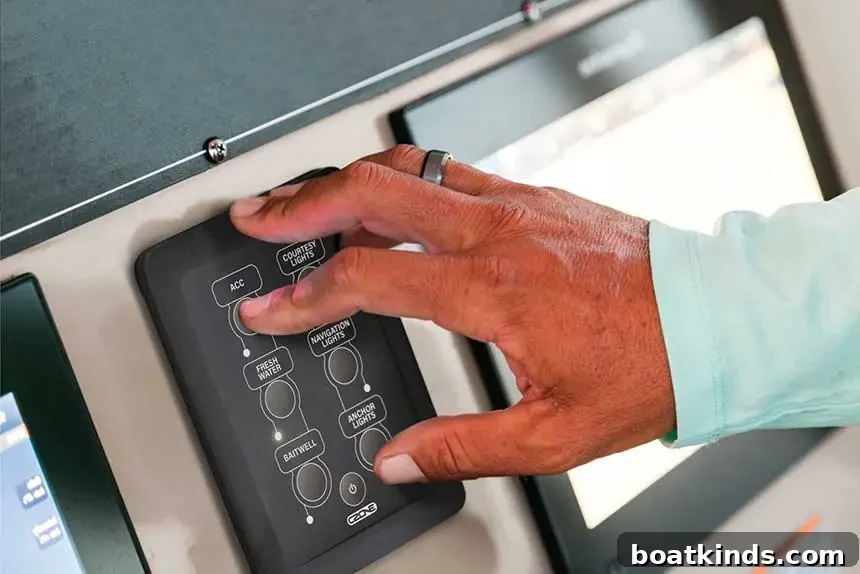
Until recently, digital switching systems were primarily found on new, high-end boats. Today, however, several manufacturers offer retrofit-friendly digital switching products that make it realistic to install modern power distribution on older vessels. These systems reduce wiring and weight, add automation, and provide weatherproof, solid-state reliability that traditional mechanical switching can’t match.
What is digital switching and why it matters
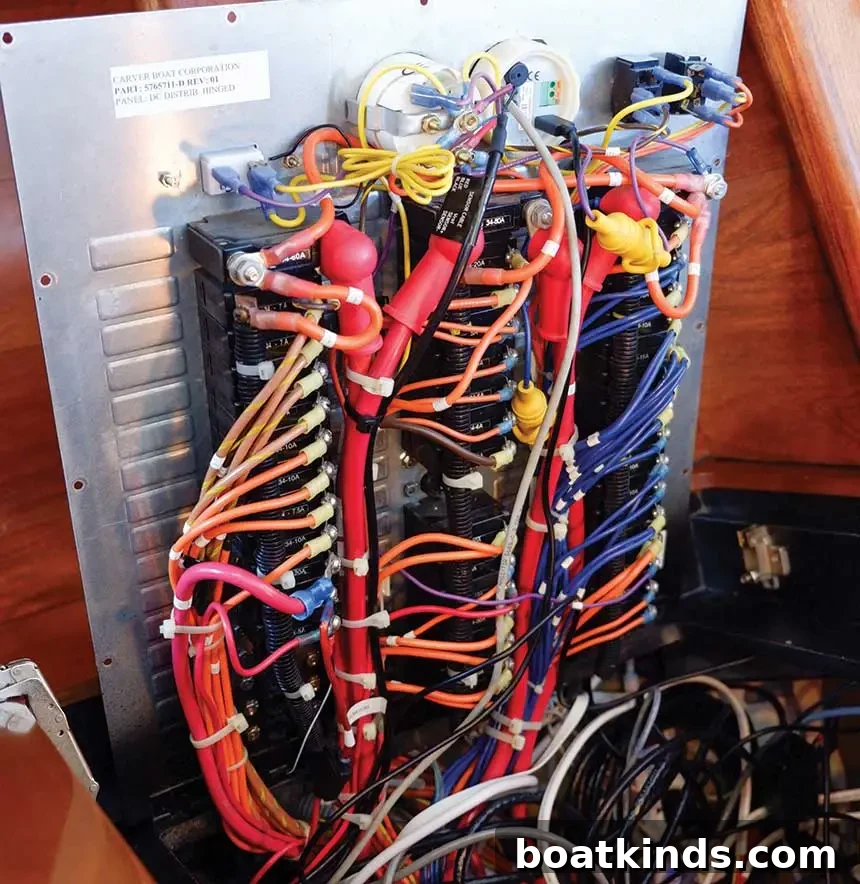
At its core, digital switching replaces the conventional centralized electrical panel full of mechanical breakers and switches with distributed electronic modules that control loads digitally and communicate over a network such as NMEA 2000. Instead of running individual wires from the battery bank to a central panel and back out to every device, digital switching commonly brings a single power feed to a module and then distributes power to loads locally. The result is far less wiring, less weight, fewer potential corrosion points, and greater flexibility when adding circuits or controls.
Reduced wiring, simplified installations
On a typical boat, a circuit may travel many feet of wiring to reach a central panel and then return to its load—so a device located only a few feet from the batteries can end up with dozens of feet of wire in the loop. Digital switching eliminates most of these long runs. For example, multi-location lighting is easy to implement: instead of running traveler wires between wall switches, extra switches or a multifunction display can be connected to the vessel’s NMEA 2000 backbone, simplifying installation and trimming the wire harness considerably.
Reliability, environmental sealing, and fewer failure points
Mechanical switches have moving parts and many exposed connections that can corrode over time. Digital switching modules typically use solid-state relays and are designed to be well sealed for the marine environment. With fewer connections between batteries, breakers, switches and loads, there are fewer places for trouble to start. Many digital modules also integrate circuit protection and monitoring, further improving reliability compared with traditional systems.
New capabilities enabled by networking
Digital switching opens up automated and intelligent behaviors that are hard or impossible with conventional wiring. Systems can monitor tank levels, battery state, and current draw, and then take actions based on that information—for instance, automatically shutting off a freshwater pump if the tank level falls too low or turning a circuit off after a preset delay. More advanced systems allow per-circuit trip thresholds and detailed current monitoring, enabling tailored protection for each load.
Affordability and retrofit options
When digital switching first appeared in the marine market it was costly and often limited to new-build installations by certified technicians. As demand has grown, prices have come down and manufacturers now offer products that are easier to configure and affordable for retrofit projects. Entry-level digital panels are available for as little as about $250 for six circuits. That price is comparable to the cost of basic mechanical switching—especially when you factor in features such as dimming and monitoring that are often built into digital modules.
Two practical retrofit examples: Maretron and CZone
Two established players in the marine digital-switching market—Maretron and CZone—offer retrofit-capable units that are within reach of a competent DIYer or a professional installer. Maretron’s CLMD12 is a 12-circuit digital switching module with programmable trip thresholds, current monitoring and dimming options. Circuit ratings vary: two of the 12 channels handle up to 12 amps, six are rated at 10 amps and four at 5 amps. Using Maretron’s configuration software (G2Analyzer), each circuit’s trip level can be set lower to protect smaller loads. Maretron anticipated a suggested list price of $495 for the CLMD12, which works out to roughly $41 per circuit.
CZone’s Contact 6 Plus is a six-circuit digital switching unit priced around $250 and compatible with the company’s broader digital switching and monitoring ecosystem. Each circuit can handle up to 15 amps at 12 or 24 volts DC. The Contact 6 Plus relies on ATC-style blade fuses for protection rather than software-configured trip thresholds, and it does not provide onboard current monitoring. That means you’ll need to keep spare fuses accessible and consider the module’s mounting location for ease of replacement.
Configuration and controls
When integrating CZone devices with other NMEA 2000 equipment, CZone’s Configuration Tool is used to build and upload the system configuration to the networked components. The tool can save configurations to an SD card, which can then be loaded via an MFD—avoiding the need to purchase additional hardware for setup. CZone also offers keypad controls in six- and 12-button models (roughly $220 for a six-button keypad), available in portrait or landscape orientations. In stand-alone mode with a smart harness, the contact panels’ buttons can be programmed as on/off toggles or as dimmers using button sequences; labels are adhesive and a sheet with many common labels is included.
My experience and recommendation
I’ve installed both Maretron and CZone systems on my own boat and completed each installation in only a couple of hours. There is a learning curve—particularly around configuration and networked behaviors—but the benefits of lighter wiring, improved reliability, and new automation features make digital switching a compelling choice for many retrofit projects. If you’re adding circuits or renovating an electrical system, choosing a modern digital switching solution is worth serious consideration.
This article originally appeared in the May 2020 issue.