
Maine Boating Boom Raises COVID-19 Concerns as Boats Raft Together
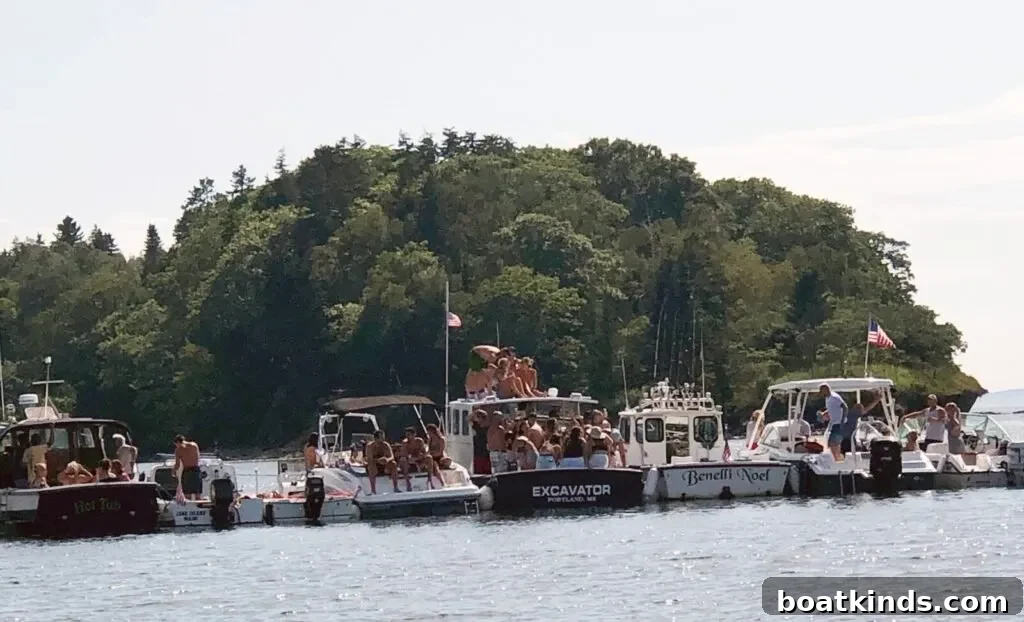
Marinas, yacht brokers, boatyards and boatbuilders across Maine are welcoming a sharp increase in boat sales and on-water traffic. The uptick in boating activity has provided much-needed business for the state’s maritime industry. At the same time, growing reports of large groups of vessels tied together — commonly called rafting up — have raised public health concerns about the potential for increased COVID-19 transmission among recreational boaters.
Rafting Incidents Spark Alarm
Multiple eyewitness accounts have described clusters of boats lashed together with people packed aboard and gathered onshore. In one notable incident in Casco Bay, a Massachusetts doctor reported seeing a line of eight boats tied together, several carrying more passengers than capacity would safely permit. The scene alarmed the witness, who worried the close quarters and social mixing could accelerate virus spread.
Further Downeast, near Acadia National Park, another boater observed a similar situation: eight boats moored close to a private island while roughly 40 people congregated on a nearby beach without visible physical distancing. The couple who spotted that gathering said attempts to encourage safer behavior were met with hostility.
Enforcement and Safety Challenges
Enforcing social distancing rules on open water presents unique challenges for state authorities. Maine Marine Patrol officials report limited manpower across a long coastline spanning from Yarmouth to Kittery, often leaving only a small number of officers available to respond to multiple incidents. Harbor masters and local patrols have reported difficulty convincing boaters to disperse; one Portland official said requests to spread out are sometimes answered with profanity rather than compliance.
Complicating enforcement is the fact that federal agencies such as the U.S. Coast Guard do not have authority to enforce state-level COVID-19 restrictions. That jurisdictional gap places more responsibility on state and local marine patrol teams, which can be stretched thin during peak recreational periods.
Public Health Context
Maine implemented stringent public health measures early in the pandemic and continues to track low per-capita coronavirus rates compared with many other states. That relative success, officials say, may contribute to a false sense of safety among some residents and visitors who assume the risk of transmission is minimal. Public health experts caution that close social interaction — whether on land or aboard clustered boats — still presents opportunities for virus spread, particularly when groups are large and physical distancing is not observed.
Community Reaction and Industry Impact
The boating community’s response to the surge in activity is mixed. Business owners in the maritime sector have expressed relief at renewed demand, but they also face the dilemma of balancing economic recovery with community health. Many harbor officials and local leaders emphasize voluntary compliance with public health guidance, urging boaters to keep groups small, maintain distance on beaches and docks, and avoid forming long rafts that encourage prolonged close contact.
What Officials Are Saying
Local authorities are urging boaters to use common-sense precautions while enjoying Maine’s waterways. These include limiting group sizes, keeping boats and parties spaced apart, wearing masks when close contact is unavoidable, and respecting guidance from harbor masters and marine patrol officers. Officials stress that safe recreation helps preserve both public health and the local economy by reducing the likelihood of outbreaks that could force renewed restrictions.
As the boating season continues, observers say vigilance will be essential. The combination of increased recreational boating and relaxed attitudes in some quarters means that the choices of individual boaters — whether to disperse and distance or to raft up and crowd beaches — could influence the region’s broader public health trajectory.
Local authorities continue to monitor conditions and encourage responsible behavior on the water to protect both residents and visitors while allowing Maine’s maritime businesses to operate safely.