
The Caribbean and the Bahamas turned into a region of mounting frustration as the Covid-19 pandemic spread and island governments closed their borders to protect limited health-care systems. One by one, islands imposed shutdowns: Trinidad closed its borders on March 16, the British Virgin Islands shut airports and seaports on March 23, and the Bahamas restricted access on March 27. Hank George, president of the Salty Dawg Sailing Association, learned about the first closures through members of the nonprofit—founded 11 years earlier by cruisers who wanted to sail their own boats to the Caribbean—many of whom had been planning to return to the U.S. with the group’s annual rally in May when additional crew would fly in to help.
“We knew we weren’t going to be able to do that rally,” George says. “As it unfolded, we realized there would be many stranded sailors, including inexperienced crew on under-equipped boats who had never completed an ocean passage. We needed to help.”
The association organized a series of departures from St. Thomas—the Homeward Bound Flotilla—designed to get sailors back to the U.S. mainland and Canada. Initially 250 boats signed up, and a volunteer team of 23 prepared to provide shoreside support. Boats departed each Sunday from April 12 through May 20; in the end, Salty Dawg assisted 184 vessels. “Some people were used to sailing only a day at a time between islands,” George says. “Now they were facing an ocean passage with one or two people on board.” It was arguably the largest evacuation of recreational boaters in modern times. Below are some of their stories.
Aboard the Beneteau 381
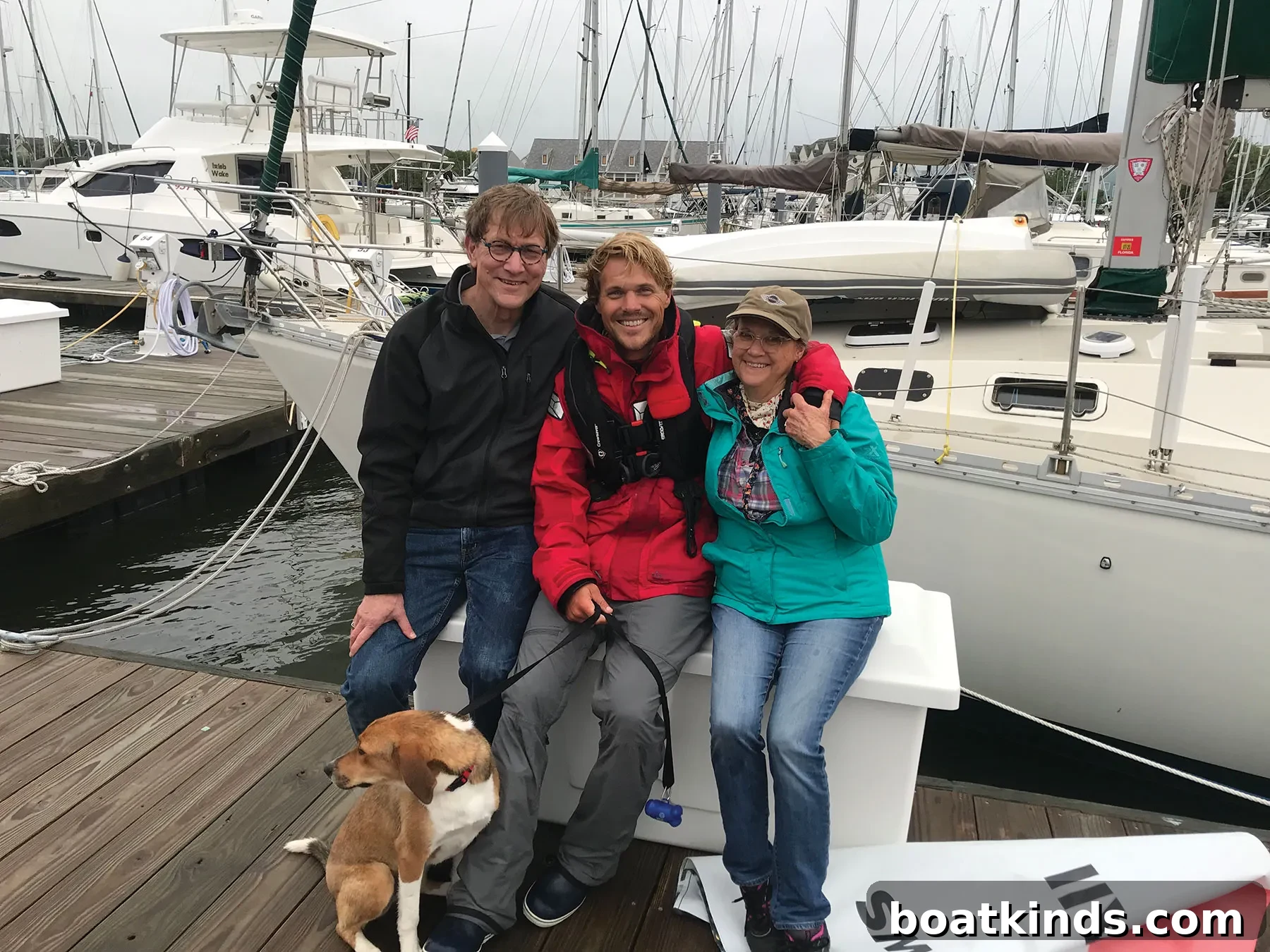
Will Viss, a 38-year-old attorney, had promised his employer he would return to Philadelphia by early June. He had spent three years preparing for a long cruise after buying a 1999 Beneteau 381 and teaching himself offshore skills on Chesapeake Bay, including trips to Bermuda. After a year in the Caribbean, he found himself in St. John in April when travel restrictions spread.
Viss wanted to get his boat back to its homeport in Havre de Grace, Maryland. He was comfortable with ocean passages—he had crossed the Gulf Stream and once sailed roughly 10 days from Bermuda to Sint Maarten—and had been singlehanding in the islands since September. At first he resisted joining Salty Dawg’s flotilla, thinking rallies were costly and intended for larger boats. When the association waived fees, he registered to receive detailed weather updates and tracking information to monitor other boats’ departures and progress.
Preferring to travel alone, Viss slipped out of St. Thomas early one Saturday while the organized departures left on Sundays. The forecast promised light winds and a calm 10- to 12-day passage. Four days into his solo crossing, Tropical Storm Arthur formed near Cuba—forcing a rapid reassessment.
Aboard the Marlow Explorer 77 Ben’s Barge
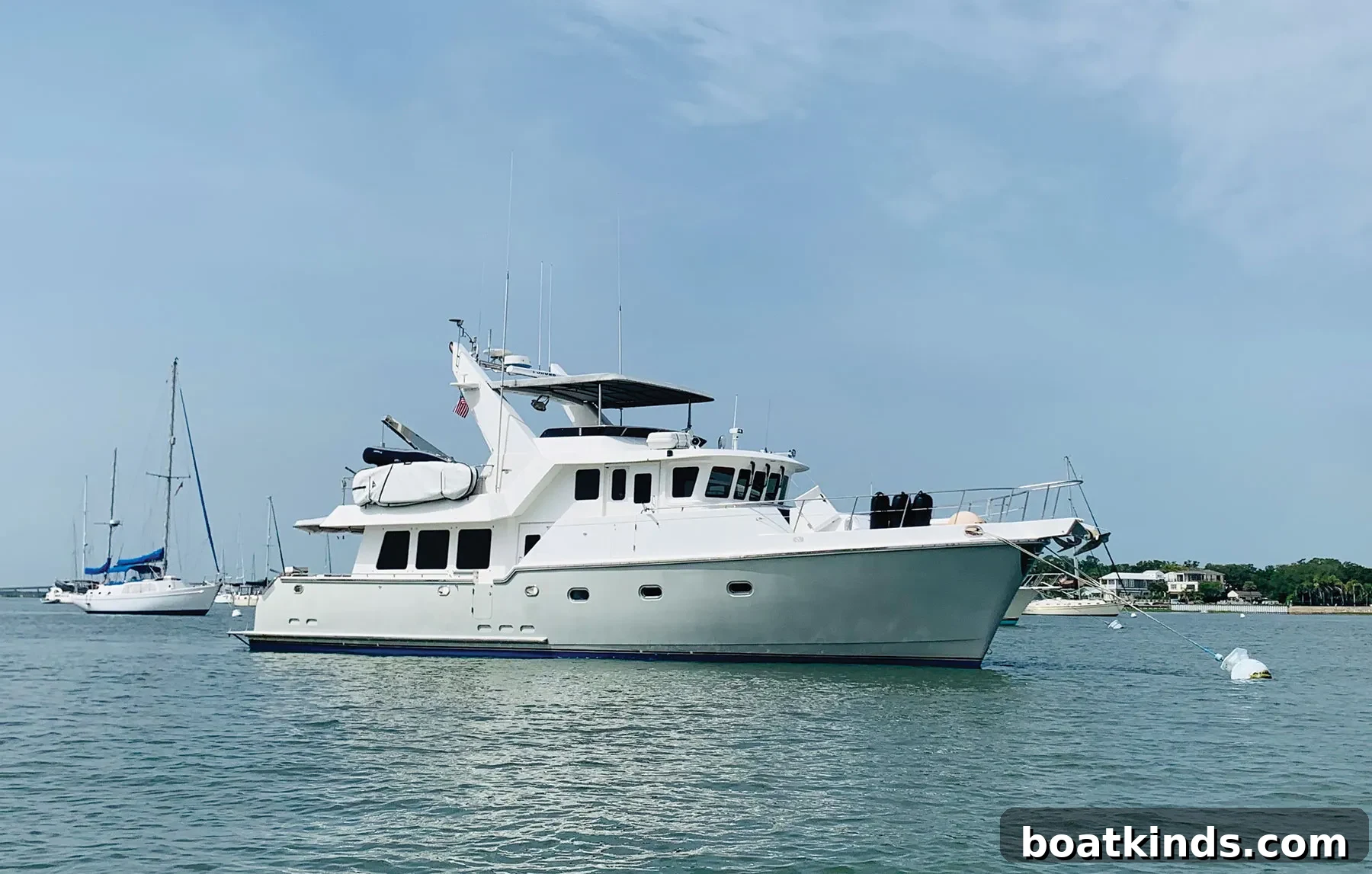
Ed Pollner and Becca Dinda live aboard their Marlow Explorer 77, Ben’s Barge. Since Pollner left his job as an oil trader, the couple have cruised about 25,000 miles. They had taken the Marlow down the Eastern Seaboard and as far south as they could go.
When the pandemic hit, they were in the Virgin Islands and short on crew to help return north. Although Ben’s Barge carries about 3,000 gallons of fuel—enough for roughly 2,000 miles at 8 knots—the voyage was daunting with just the two of them and Bahamian waters closed. They also preferred to remain close to major medical centers if needed.
Pollner contacted Hank George to ask whether a diesel-powered vessel like theirs could join the Homeward Bound Flotilla. Ben’s Barge left St. Thomas on April 21 in a small group bound north, but without written permission to enter Bahamian waters. The Bahamian government had become strict—recently denying a cruise ship entry after positive Covid-19 tests—and Pollner was anxious to avoid being boarded or detained, remembering a previous frightening inspection where armed young officers boarded his boat.
When they neared the Bahamian border, Pollner nervously texted Salty Dawg: “Guys, we have to go this way. You have to help us.”
Aboard the Island Packet 31 Little Martha
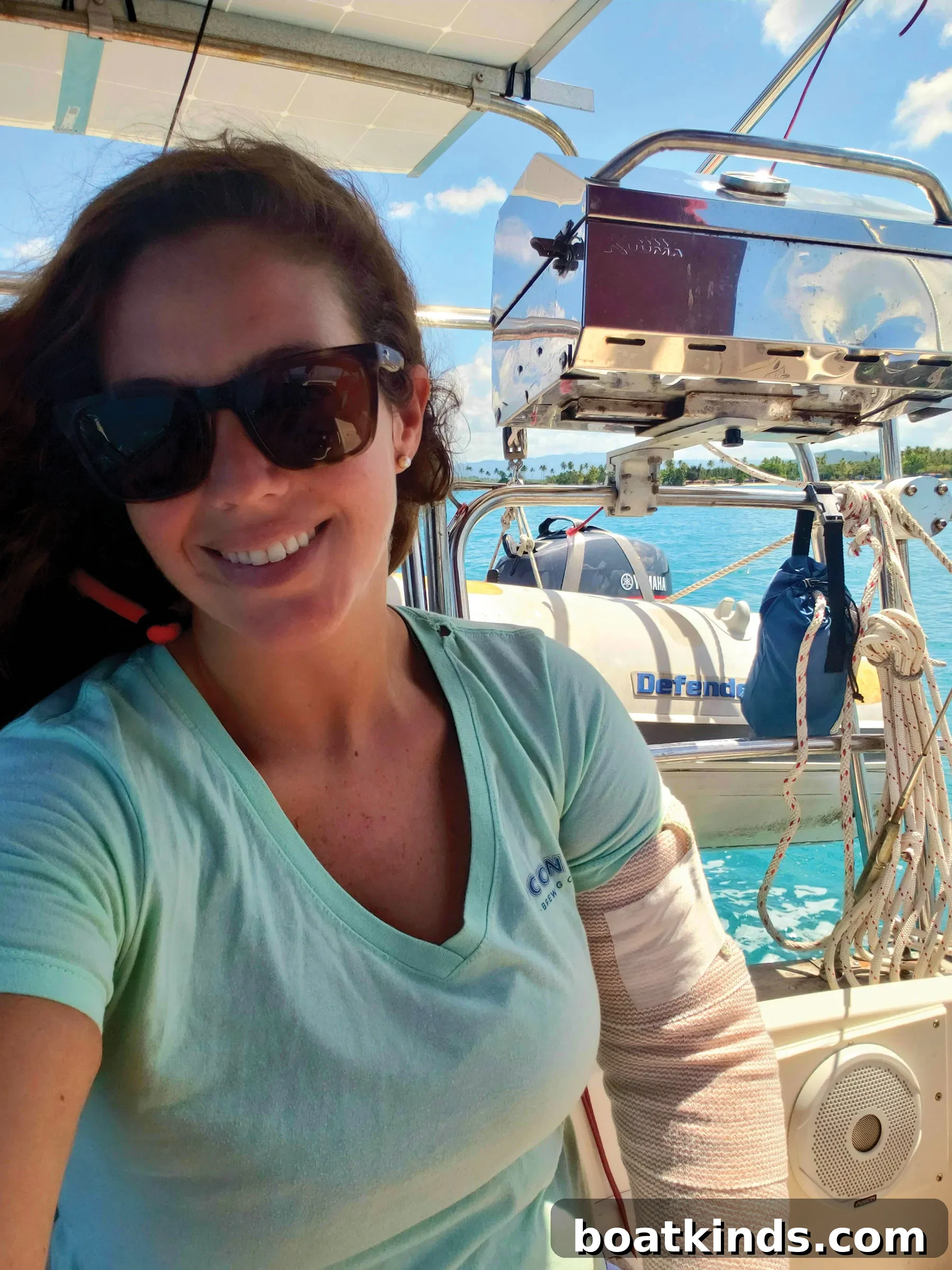
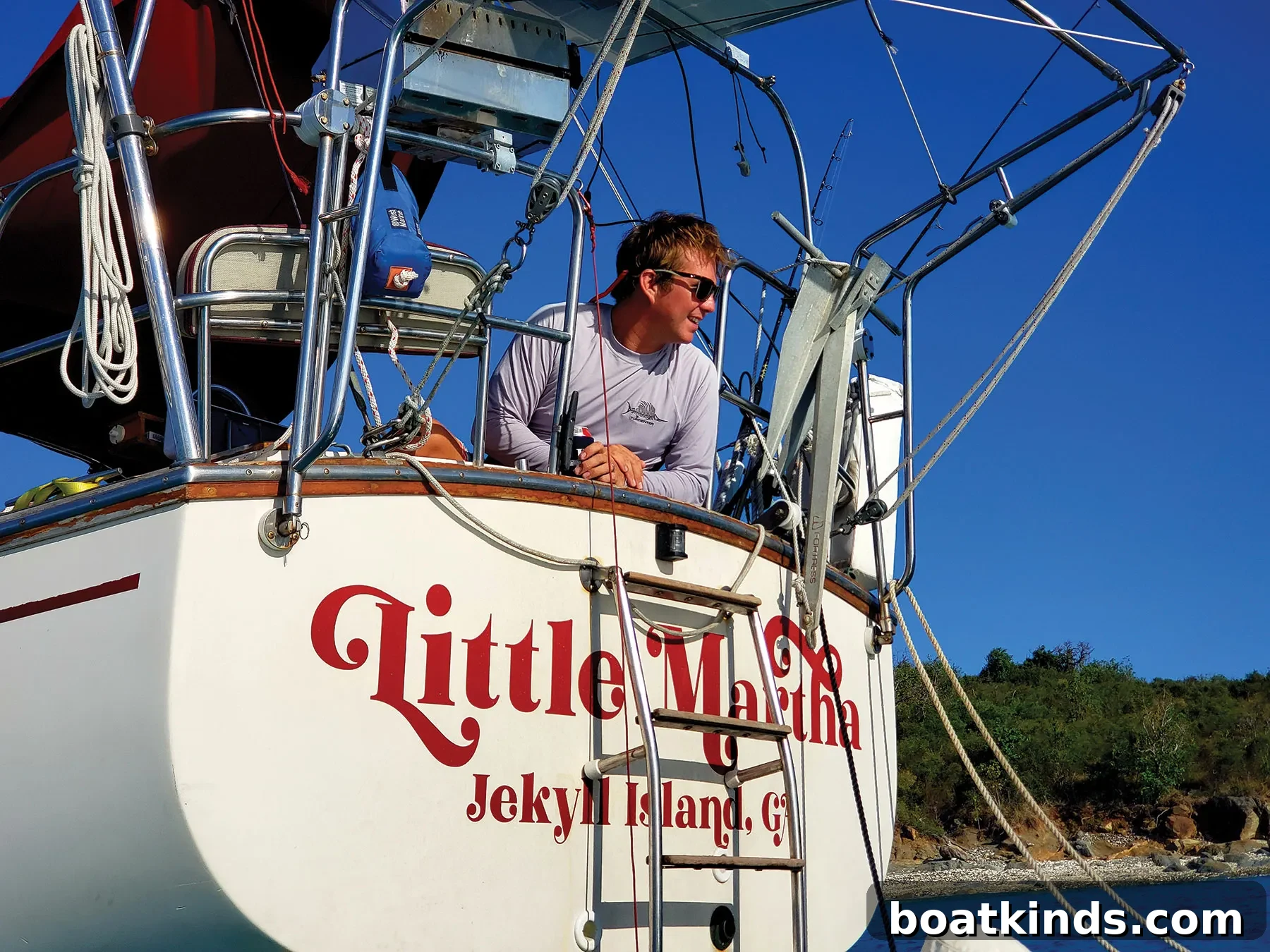
Tommy and Emilie Cook decided the previous year to sail to the Caribbean after buying an Island Packet 31 and spending months readying her. With only a few hours’ sailing experience in St. Andrew Sound, they left Jekyll Island, Georgia, on November 15 to explore the Bahamas and, if they liked it, continue farther. By February they had progressed to the Dominican Republic when Covid-19 began to disrupt cruising plans. After receiving permission to stay in a national park longer than usual due to restrictions, they sailed to Puerto Rico, but when crews from other boats—especially Canadian couples—were denied entry elsewhere, their group split up.
In Puerto Rico, Emilie fell and broke her left elbow while rushing to leave the marina just before lockdown. After surgery and three days home from the hospital, the Cooks realized their situation in Puerto Rico was untenable: no air conditioning, limited access ashore, and restrictions on movement. The Bahamas had also closed its waters, so they headed east to the U.S. Virgin Islands and anchored in Charlotte Amalie, relieved to have a breeze and get supplies.
Aboard Altair
When Viss undertakes long singlehanded passages, his father typically sends weather updates by satellite phone; during this crossing he shared that contact with Salty Dawg and was surprised when he started receiving frequent messages from volunteers he had never met. They tracked his position and warned him about a developing storm to his southwest that could head toward Cape Hatteras. The volunteers urged him to increase speed and outrun the system.
With only partial sail, Altair normally averages about 6 knots, but Salty Dawg asked Viss to maintain speeds above 7 knots to stay ahead of the storm—meaning he had to put up more sail and keep the rig under sustained load. He reduced sleep and felt the strain physically as the boat heeled. By day five he was about 500 miles off Bermuda with winds building to 30–35 knots and seas rising. Before dawn the next day he heard alarming clinks at the mast and discovered a shroud had snapped and was swinging loose.
Aboard Ben’s Barge
From her home on the mid-Atlantic coast, retired chemist Mindy Piuk coordinated Salty Dawg’s shoreside efforts. Although her Caliber 40 was in Europe and she was temporarily boatless, Piuk organized tracking, emergency response, entry coordination with governments, and constant email support. “Our team had to talk to the Bahamian government about every single boat that was operating nearby,” she says, noting that rules changed week to week.
Ben’s Barge reached the Bahamian approach only to find Clarencetown on Long Island enforcing written permission to enter, even though the Bahamian government had listed certain marinas for refueling. Pollner and Dinda had been resting in two-hour shifts for four days and needed both sleep and fuel to continue safely. When Clarencetown’s operator refused to admit them without specific paperwork, the couple chose to press on to Staniel Cay, where they could take on enough fuel at anchor to reach the U.S. They later hauled out in Stuart, Florida, and left the boat while visiting family up the coast.
Aboard Little Martha
The Cooks found St. Thomas far preferable to Puerto Rico: they resupplied, rested in a good breeze, and prepared for the long passage home. After joining the Homeward Bound Flotilla and obtaining an Iridium Go and AIS receiver within 24 hours, they continued learning navigation, stocking spare parts, and preparing their boat. Emilie removed her elbow splint before they sailed; she steered while Tommy tended sails.
The first five days were a pleasant downwind run, but then Tropical Storm Arthur formed. The flotilla planned to use the Old Bahama Channel along Cuba’s north shore, and anchor off Great Inagua to wait out the worst. Salty Dawg coordinated with Bahamian authorities to permit safe transit. When they reached Great Inagua they found four other boats anchored and felt a measure of relief—until the weather models shifted.
Aboard Altair
Sailing with a broken starboard shroud was risky. Altair’s 50-foot mast was under severe strain with the wind on the starboard side, and Viss was also battling poor fuel and heavy seas that threatened the transmission when the propeller could not keep pace with the boat’s speed down wave faces. A shoreside volunteer suggested running a spinnaker halyard down to the port side and winching it tight to brace the mast. That improvised support allowed Viss to carry more sail and increase speed.
Arthur battered the Beneteau, but Viss persevered. When he finally neared shore he could see charts indicating land though not a line of lights. The Salty Dawg team had alerted the Coast Guard, and a cutter was stationed outside the bay—confirmation he had made it home.
Aboard Ben’s Barge
Pollner and Dinda timed their departure early enough to avoid Arthur’s worst and found favorable weather for much of the trip. After refueling at Staniel Cay and making a stop in Florida, they eventually continued north, passing through regions with different attitudes about the pandemic. By late June in Montauk, New York, Pollner felt the greatest sense of relief since the crisis began. “It’s night and day between the South and the Northeast,” he says. “People are taking it much more seriously up here.”
Aboard Little Martha
The Cooks’ passage off Great Inagua became dangerous when Arthur intensified unexpectedly. Their second night out a squall struck Little Martha, overpowering the small boat with winds up to 45 knots, lightning, and torrential rain. They were turned in the waves and fighting to control the vessel. Early the next morning, another flotilla boat with radar and single-sideband radio contacted them and shone its spotlight to help Little Martha reorient. The support from Salty Dawg volunteers—constant messages, weather updates, and reassurance that someone had “eyes on” them—helped the couple slow, ride out the passage, and make it through 12 stressful days at sea.
They ultimately docked at Fort Pierce, Florida, and were struck by the scene of beaches and open marinas—an almost surreal return to normalcy. “Salty Dawg’s experienced sailors gave us invaluable advice,” Tommy says. “It was probably the single greatest learning experience of my life.”
This article was originally published in the September 2020 issue.