
Calvin Beal Jr. still remembers the incident clearly enough to understand why Osmond Beal was furious. It happened around 1980, by Calvin’s estimate—he’s 79 now and admits the memory is a little hazy—but the essential facts remain vivid. Colby Young and his twin brothers, Arvin and Arvid, began visiting the boatbuilders on Beals Island with an offer: they wanted to create molds of the island’s celebrated wooden lobster boats and reproduce them in fiberglass at their Young Brothers yard.
On Beals Island, a small community of about 700 people, the Beal name was everywhere. Willis, Osmond, Wayne, Clinton and Calvin were part of a large extended family of boatbuilders whose craft and aesthetics shaped the local fleet. Generations of islanders grew up helping fathers, uncles and cousins in the shops, learning how to plank, fasten and shape a lobster boat. By the late 20th century, Beals Island boats were renowned for their seaworthiness and distinctive lines, and the culture of sharing tools and materials united the builders.
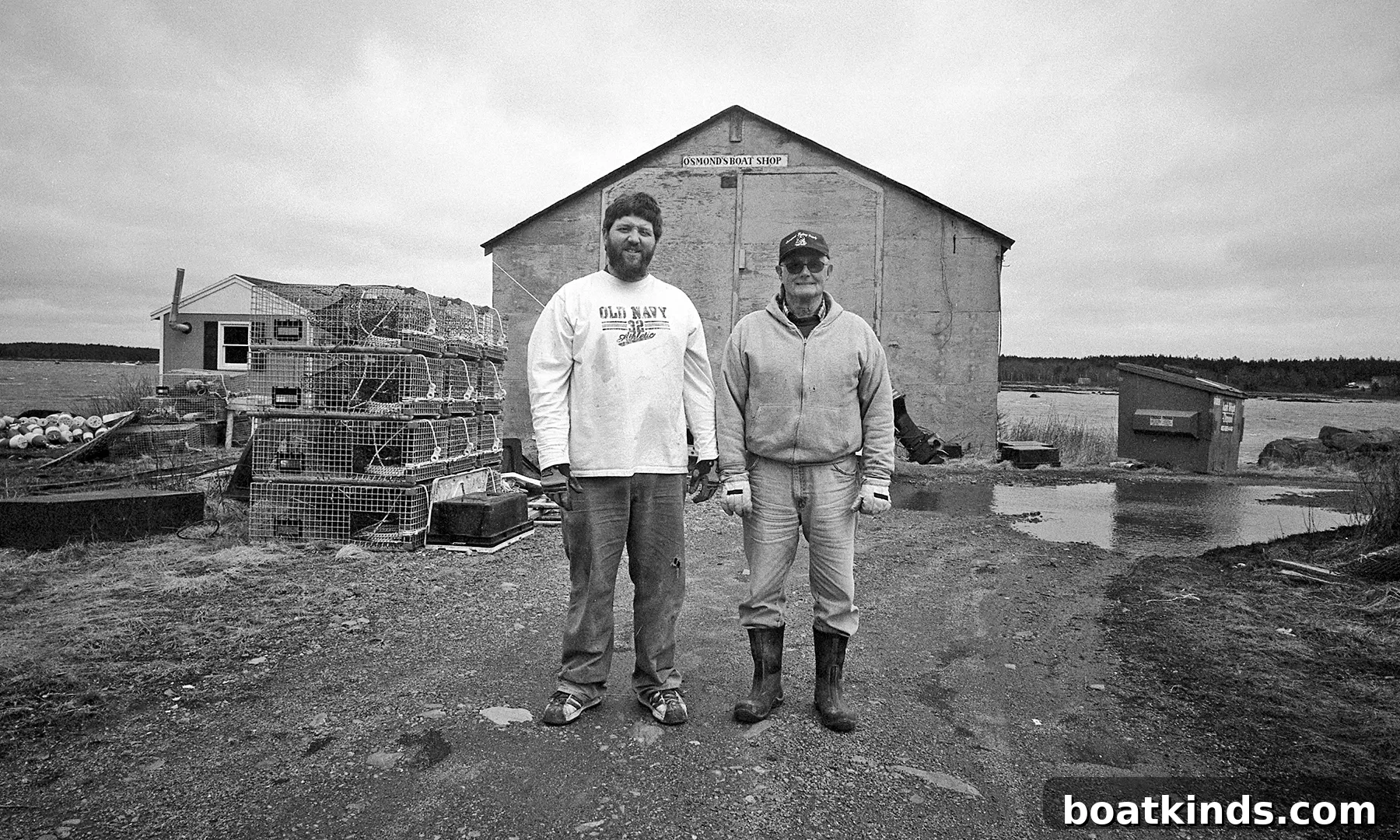
“If someone ran short of lumber or needed to borrow a tool or fasteners, they could just go to another shop,” Calvin recalls. “If somebody had something, they’d let you borrow it and you’d pay them back later. The builders were all very accommodating.”
The Young brothers’ proposal alarmed many of the island craftsmen. Osmond Beal was asked first and declined; he was building several wooden boats a year and feared losing customers to cheaper, lower-maintenance fiberglass copies. When Osmond said no, the Youngs didn’t give up. They walked the wharf, found what they considered the nicest hull in the cove—an Osmond 38—and negotiated with the lobsterman who owned it, offering a new fiberglass boat in exchange for permission to use the wooden hull to make a mold. Legally it was allowed; no patents protected those traditional designs. The result: fiberglass versions of the Beals Island boats began appearing in the water.
Roughly a year after Young Brothers produced that first mold, Ernest Libby, Calvin’s brother-in-law, agreed to collaborate with Young Brothers on a line of fiberglass boats modeled after Beals Island designs—ranging from about 33 to 45 feet. Fishermen started to take notice. Wooden boats demand time and attention—drying out and varnishing could take weeks—whereas fiberglass hulls required far less upkeep, letting crews stay on the water more days of the season. For many, that convenience outweighed tradition.
That shift marked a pivotal moment in the decline of traditional wooden-boat building on Beals Island. The island’s builders had developed a recognizable style of lobster boat that generations of lobstermen preferred and that continues to influence boat design today.
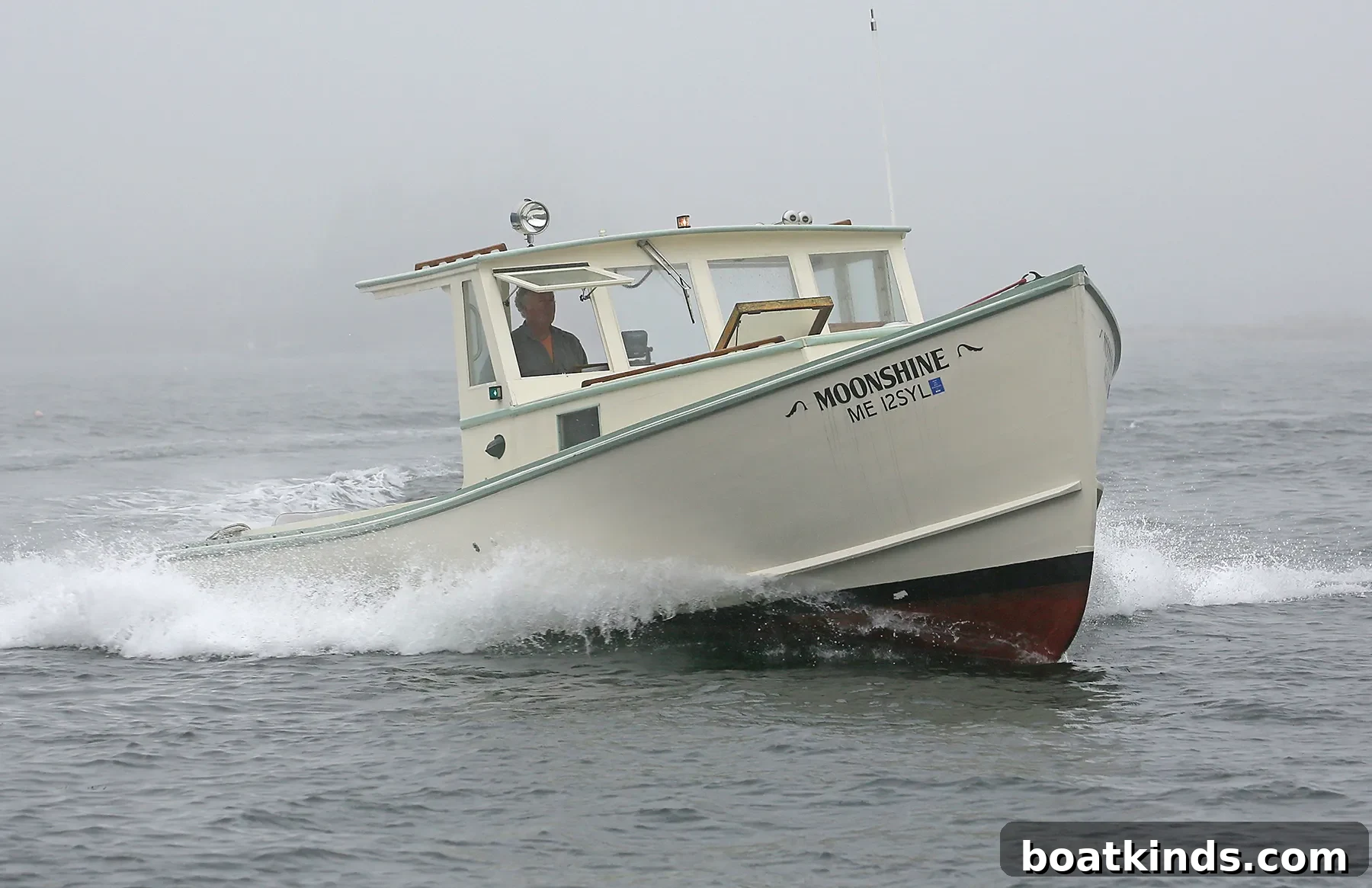
Beals Island boats are known for their skeg-built hulls: a solid keel with timbers notched into it. That contrasts with “built-down” construction used elsewhere in Maine, where timbers are bent up and fastened to the bottom of the keel. Skeg-built hulls are prized for speed, steadiness and resilience—even if the boat runs ashore. “They were building boats for themselves to catch lobster and fish, and they ended up building the best boats, then they figured out how to sell them,” says Daniel Sheldon Lee, author of The Maine Lobster Boat: History of an Iconic Fishing Vessel. Today those boats are found far beyond Downeast—on lakes, in the Midwest and even on the Pacific.
The Beals Island Style
Each builder on Beals Island left a subtle signature in his boats—different windshield panes, slightly altered sheer lines—but the skeg-built hull was the unifying trait. From afar the fleet shares a family resemblance: a high bow, low stern, graceful run and a degree of flare at the bow. Close observers, and certainly the builders themselves, can tell who made which boat by details of construction and finish.
Willis Beal, for example, described his method of reinforcing the sharp risers—the cross pieces that sit between the timbers at the bottom of the hull. By raising those risers to floor level and fastening them to solid wood, Willis believed the boats resisted opening seams at the bilge and performed better over time. That kind of practical refinement, learned through years on the water, is characteristic of the island’s approach.
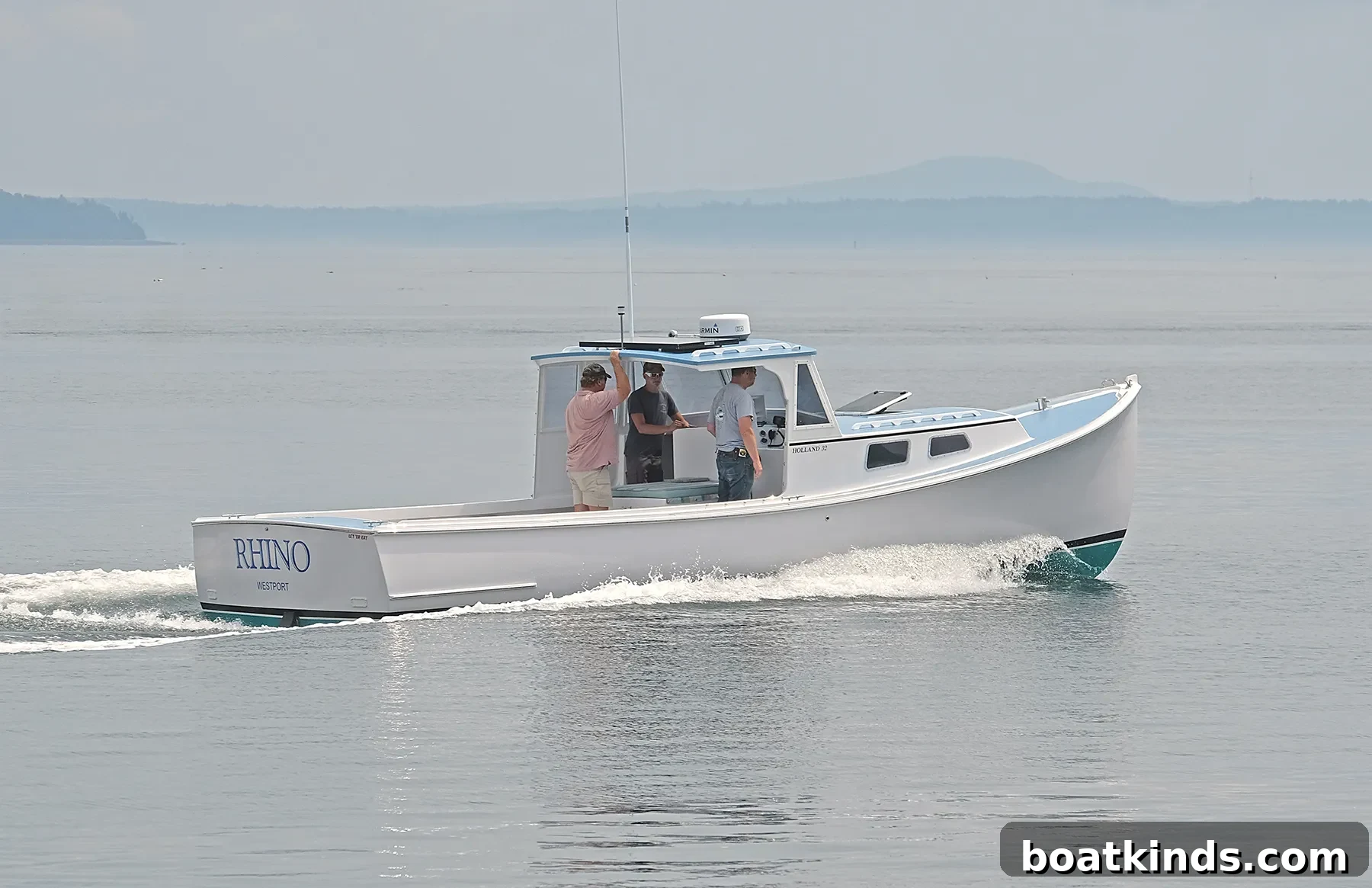
Wooden boatbuilding on Beals Island is now dwindling. Many experts consider the Holland 32 one of the last living descendants of the tradition. Glenn Holland, who grew up in Stonington, recalls being drawn to the flowing lines of Beals Island boats even as a child. In the 1970s, Holland began finishing hulls and then collaborated with Royal Lowell—son of Will Frost, the Nova Scotia–born builder who migrated to Beals Island around 1912 and shaped much of the island’s modern style—to develop the Holland 32.
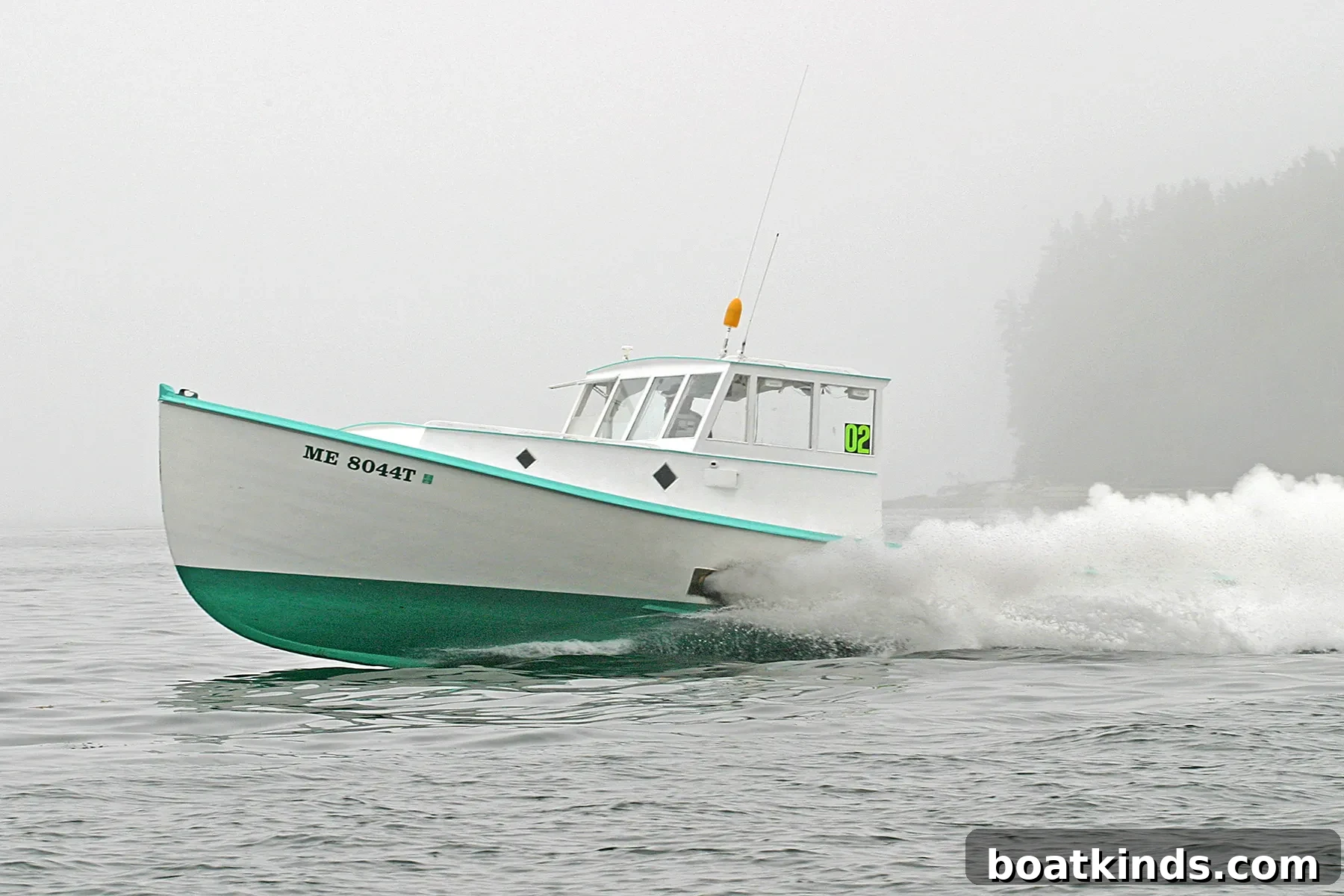
The Holland 32 remains in demand today, often priced between $200,000 and $300,000. Holland reports that many buyers now purchase these classic lines as pleasure boats rather than working lobstermen. Speed is another draw: the Holland 32 hulls have performed impressively in local races. Hull No. 11, the Red Baron, famously reached 57.8 mph in competition—an achievement Holland credits to a high-powered race motor and excellent hull design.
Fiberglass builders also continue to carry the Beals Island aesthetic forward. H&H Marine builds Osmond’s designs in composite, and SW Boatworks, founded by Stewart Workman, acquired molds for Calvin Beal Jr. models in 2008 and Young Brothers designs in 2009. Workman says the Calvin Beal lines remain popular: he bought molds for 34-, 36-, 38- and 44-foot models and later developed a 42-foot version in response to customer requests for extra trap capacity. That 42 caught on quickly and was produced in significant numbers.
Workman’s shop even completed a highly outfitted 42-footer recently, a vessel he describes as the most expensive he’s built—about $2 million, fitted with varnished cherry interior and a high-end Awlgrip hull finish. Calvin himself is impressed by the level of finish achievable in modern fiberglass boats: “It’s just as smooth as painted glass. You can’t feel a thing. It’s unreal,” he says, noting that contemporary production can match the polish of premium yacht builders.
Wanted: The Next Generation
At the peak of the wooden-boat era, Beals Island hosted 16 or 17 shops; now only a handful remain, says Jon Johansen, president of the nonprofit Maine Built Boats, which supports the state’s boatbuilding industry. He laments that fewer young people are entering trades that once fed coastal communities. “They were pushed away from trades for the last 40 years,” he says.
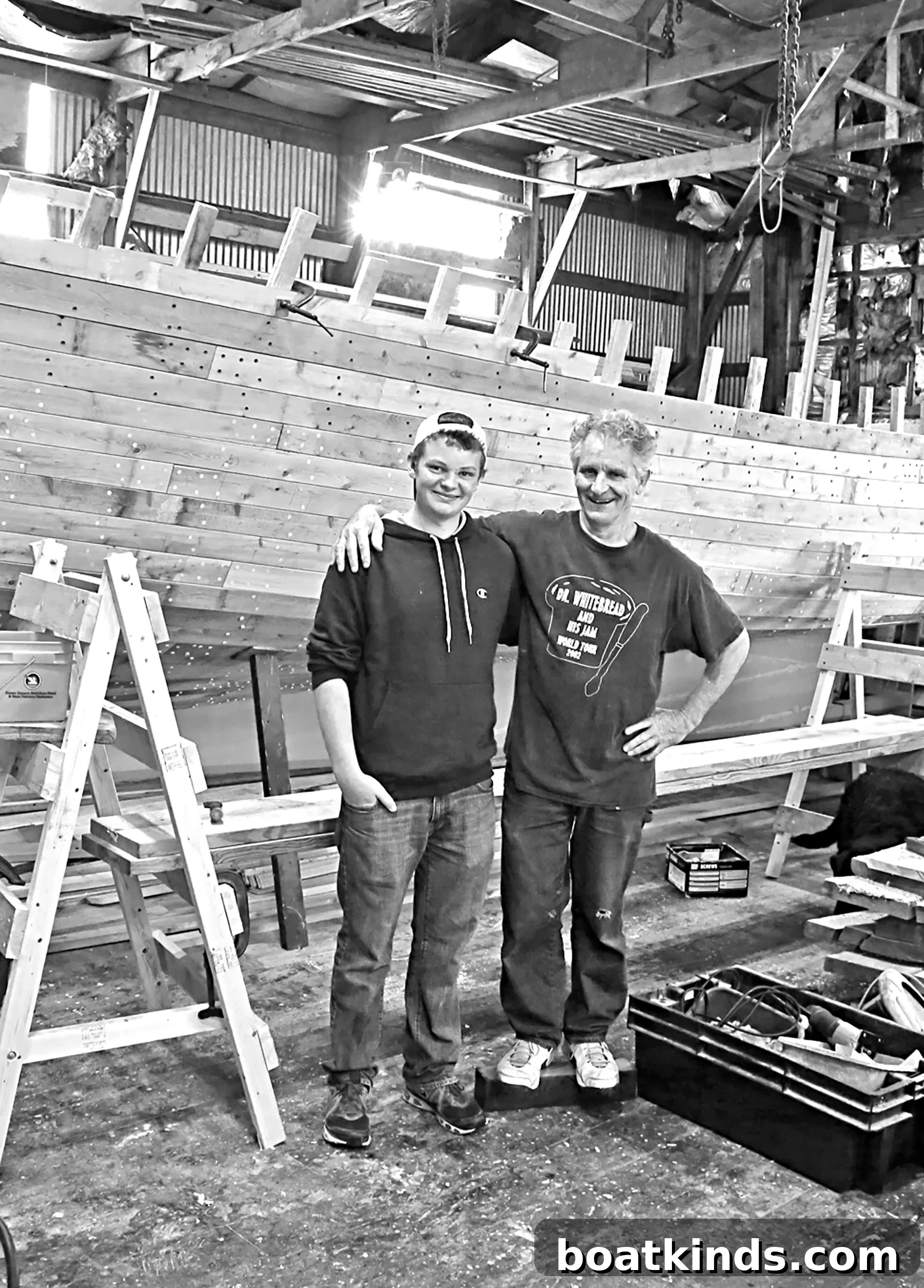
There are signs of continuity: Holland’s 24-year-old grandson now runs his shop after growing up in the environment, sweeping floors and learning the craft. Stewart Workman, who is approaching 60 and has listed his molds for sale, is also looking for a younger team to carry on the Calvin Beal and Young Brothers lines. “It’s time for someone a little younger with new ideas to carry the torch,” he says, acknowledging that the legacy these molds represent is worth preserving.
Whatever shape the next generation’s boats take, the influence of Beals Island builders is secure. Wooden hulls by the Beals, the Libbys, Fred Lenfesty and others defined the look and performance of Maine lobster boats, setting standards that persist in both wooden and fiberglass craft. “Twenty or 30 years of hard work will end a lot of wooden boats,” Calvin observes. “A fiberglass boat will outlive a man.”
The Maine Lobster Boat
Daniel Sheldon Lee’s September 2022 book, The Maine Lobster Boat, has reignited interest in Downeast boatbuilding history. Lee, an architect by profession, said his curiosity began on ferry rides to Boston as he watched lobster boats ply the water. He spent a year interviewing builders and recording the history, including stories tracing back to Will Frost, who moved from Nova Scotia to Beals Island around 1912 and influenced an entire generation of builders.
Lee notes that credit for developments is often disputed, but he aimed to document as much as possible and to give voice to living craftsmen such as Doug Dodge, who represents one of the purest continuations of Beals Island tradition. Dodge recently launched a retro wooden lobster boat called Uncle Harold, named for Harold Gower, a mentor figure in his life. Dodge is also a descendant of Will Frost and works in the same shop site that Frost used a century ago—a tangible line of continuity in a craft shaped by family, place and purpose. —K.K.
This article was originally published in the August 2023 issue.