
Fortier Boats: The Fortier 33 and a Family Legacy of Handcrafted Powerboats
Rod Fortier, owner of Fortier Boats in Somerset, Massachusetts, is a pragmatic, hard-working boatbuilder who prefers to let his work speak for itself. He rarely grants interviews and declines to be photographed. Those tendencies echo his late father, Roger Fortier, the company’s founder, who died in 2011. But Rod is eager to talk about the boats—especially the Fortier 33—and the qualities that have kept owners coming back for decades.
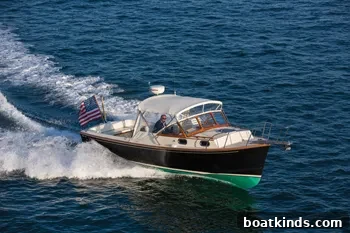
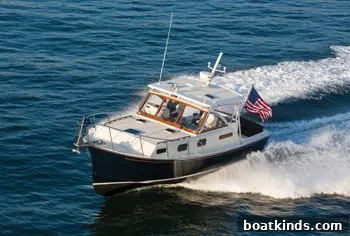
What distinguishes Fortier powerboats, Rod says, is their timeless design and seakindly performance. The Fortier 33 embodies the yard’s approach: rugged, handsome lines, practical details, and a hull that handles short, choppy seas with reduced pitch and pound. When Rod points to two photos of the model—one taken 20 years ago and another shot more recently—the differences are minimal. “The older 33s had big, long portholes, and the newer ones have oval portholes,” he notes. “Other than the portholes, nothing has changed.”
Fortier Boats was founded in the 1970s and builds semicustom fiberglass vessels based on Eldredge-McInnis designs, a naval architecture firm that operated in Boston until 1976. Over the years the yard has produced more than 500 boats, primarily pleasure cruisers and sportfishermen. Production is intentionally measured—about three or four boats a year—so each vessel receives hands-on attention. Fortier buyers often return: younger owners stepping up to a larger model, and older owners downsizing while keeping the same practical, traditional aesthetic. Their boats cruise both coasts and frequent the Caribbean.
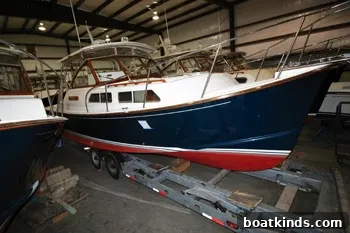
Many craftsmen at the yard have long tenures. Lead foreman Mike Lachance has worked at Fortier Boats for more than 30 years, having joined straight out of high school. Others have been with the yard for 15 years or more, and some have left and come back. On any given day you’ll find skilled tradespeople shaping teak trim, fitting hatches, and laying fiberglass by hand. Today Lachance is finishing a swim platform to the soundtrack of classic rock, while another Fortier 33 nears completion for the autumn boat shows. A 1994 model, Minnow, is in for annual service and cosmetic work—its woodwork stripped and revarnished so the teak looks like new.
Rod grew up in the business. His father was a contractor who built homes in the Pilgrim Hills area of Somerset, and both of Rod’s parents were active boaters and long-time members of the New Bedford Yacht Club. Rod learned to sail and spend summers on the water there. In high school in the mid-1970s, he and his father decided to build a boat, choosing Eldredge-McInnis plans for a 26-foot wooden powerboat. With help from friends in the fiberglass trade they produced a plug and mold and launched hull No. 1 in 1976. That original 26 is still in service and is now owned by a neighbor of the first owner.
Roger kept building houses while he and Rod turned out a boat or two each year. Fortier Boats incorporated in 1977 and sold 11 boats in its first year. By the time the yard displayed hulls at the Boston boat show in 1978, its production was already sold out. The business became woven into Somerset’s long shipbuilding history: narrow streets with Colonial-era homes, old stone wharves along the Taunton River, and a heritage of boatyards and shipbuilders dating back to the 1690s.
The Fortier site itself has a storied past. It once belonged to B.B. Crowninshield, who founded Crowninshield Shipbuilding in 1917 and built tugs and competitive yachts. Today the property is shared by Gladding-Hearn Shipbuilding—known for steel and aluminum commercial vessels—and Fortier Boats. The Fortiers rebuilt on the property after storms destroyed earlier structures and purchased the site in the mid-1980s, cementing the family’s presence in the town where Rod’s grandfather was a homebuilder.
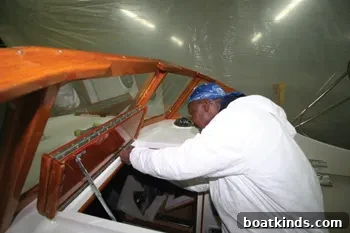
The boats themselves are built with classic, durable methods and materials. Hand-laid fiberglass, Core-Cell foam core, structural stringers from bulkhead to transom, and a molded-in keel and spray rails result in stiff, stable hulls with a soft, dry ride. Custom teak is used throughout for trim, windshields, and rub rails, with wood soles below for a traditional feel. Fortier offers four primary sizes—26, 30, 33, and 40 feet—each designed to be seaworthy and comfortable for day trips or overnight cruising. Owners can choose options such as modern electronics and Volvo Penta IPS propulsion, which can push a equipped boat to speeds up to 32 knots with joystick handling.
Fortier Boats keeps pricing competitive by operating with low overhead—there is no large sales or office staff—and by concentrating production on a small number of carefully finished boats each year. Across the street from the shop, the storage and service facility fills with Fortier 33s and 30s awaiting maintenance or seasonal use. The lineup of hulls parked at the yard looks purposeful and ready for a day on the water, whether cruising coastal waters or chasing fish offshore.
Rod Fortier prefers to get back to the workshop rather than dwell on nostalgia. His priorities are clear: build the boats, work directly with customers, and deliver what owners want. For those seeking a handcrafted, seaworthy powerboat with traditional aesthetics and practical performance, the Fortier 33 and its sister models remain a compelling choice.
Contact: Fortier Boats, (508) 673-5253. fortierboats.com
This article originally appeared in the April 2017 issue.