
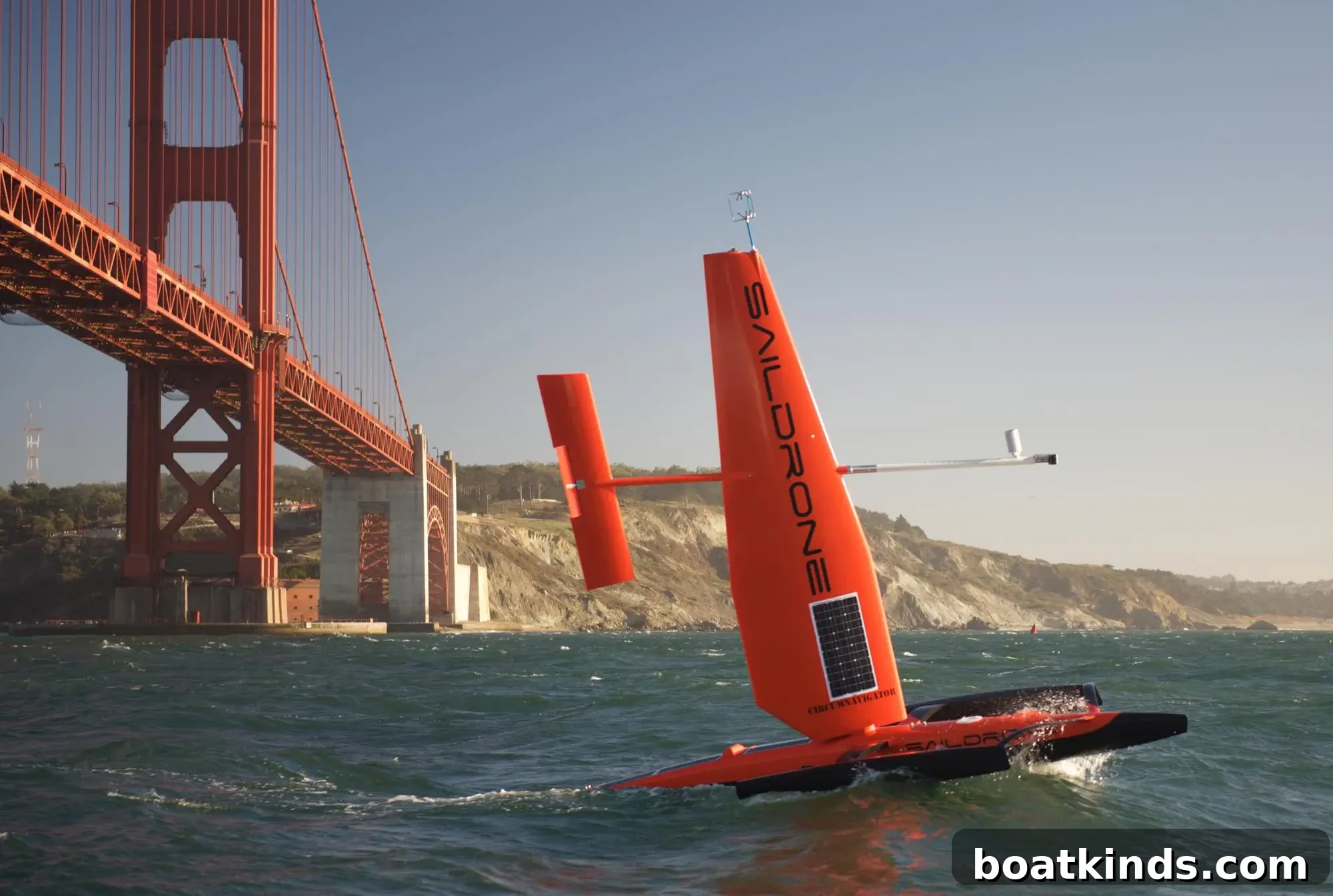
NOAA Tests Saildrones to Supplement Ocean Fish Surveys
Estimating how many fish inhabit the ocean and determining sustainable catch limits is a complex and often contentious task. Commercial fishing interests, conservation groups, and regulatory agencies all have a stake in the outcome. In the United States, the National Oceanic and Atmospheric Administration (NOAA) is responsible for collecting the scientific data that underpins fish stock assessments and annual fishing quotas. Gathering that data reliably and affordably is a major operational challenge.
Historically, NOAA has relied on crewed research vessels to conduct population surveys, trawl and acoustic sampling, and other fieldwork. While manned ships are versatile and can follow precise transects, operating them is expensive—roughly $25,000 per day—and they are constrained by weather, maintenance schedules, and crew availability. Those limitations can reduce the amount of time at sea and create gaps in the observational record.
To address these constraints, NOAA has been testing autonomous, wind-powered craft known as saildrones. These unmanned surface vehicles are currently being deployed in the Pacific Ocean near San Francisco and off the Oregon coast to determine whether they can reliably collect the fish and oceanographic data NOAA needs. Saildrones are designed to remain at sea for extended periods—potentially up to a year—and can operate in shallower waters than many larger research vessels. Their endurance and lower operating costs make them an attractive option for expanding survey coverage and improving temporal resolution in monitoring programs.
Cost is one of the most significant advantages. Where a manned research vessel may cost about $25,000 per day to operate, saildrones have been performing similar survey tasks for an estimated $2,500 per day in testing. That difference could allow agencies to gather more frequent or broader datasets within the same budget, increasing the quantity and potentially the quality of information used for stock assessments and management decisions.
There are trade-offs to consider. Saildrones are subject to wind, currents, and tides, which means they cannot always navigate precise straight-line transects in the same way a crewed ship can. This limitation affects some survey methodologies that rely on consistent, repeatable tracks. NOAA scientists are evaluating how to adapt survey protocols and data analysis to accommodate less rigid transit patterns while still producing scientifically useful results. Early tests indicate that the challenge is surmountable, particularly when saildrones are combined with other platforms in an integrated monitoring strategy.
Another advantage of saildrones is their ability to access shallower or more remote areas that are difficult or risky for large vessels. They can carry sensors for acoustic fish detection, water temperature and salinity measurements, and other oceanographic instruments used in fisheries science. By expanding the spatial and temporal footprint of observations, saildrones may help fill data gaps that have previously limited stock assessments and ecosystem studies.
If these trials continue to demonstrate reliability and data quality, saildrones could become a more common presence in coastal and offshore waters. Wider deployment would not only support more robust fishery management decisions but could also enhance monitoring for habitat conditions, climate-related changes, and other marine resources. Analysts and managers will need to validate and calibrate saildrone-collected data against established survey methods to ensure continuity in long-term time series and regulatory processes.
For coastal communities, fisheries managers, and the public, the prospect of lower-cost, persistent ocean monitoring is promising. More affordable platforms can enable more frequent assessments, quicker responses to unusual events, and better-informed decisions about allowable catch levels and conservation measures. As NOAA and other organizations refine the use of autonomous vehicles like saildrones, the resulting data could improve our understanding of marine ecosystems while supporting sustainable fisheries management.
In summary, saildrones offer a cost-effective, endurance-focused complement to traditional research vessels. While they present navigational and methodological challenges, early tests in the Pacific—near San Francisco and off the Oregon coast—show they can collect valuable fish and oceanographic data. Continued validation and integration of these autonomous platforms could broaden monitoring capabilities and help NOAA more efficiently fulfill its mission of observing and managing the nation’s marine resources.