
Restoring the Master Cabin Paint on Snow Goose: Sanding, Prep, and a Lasting Finish
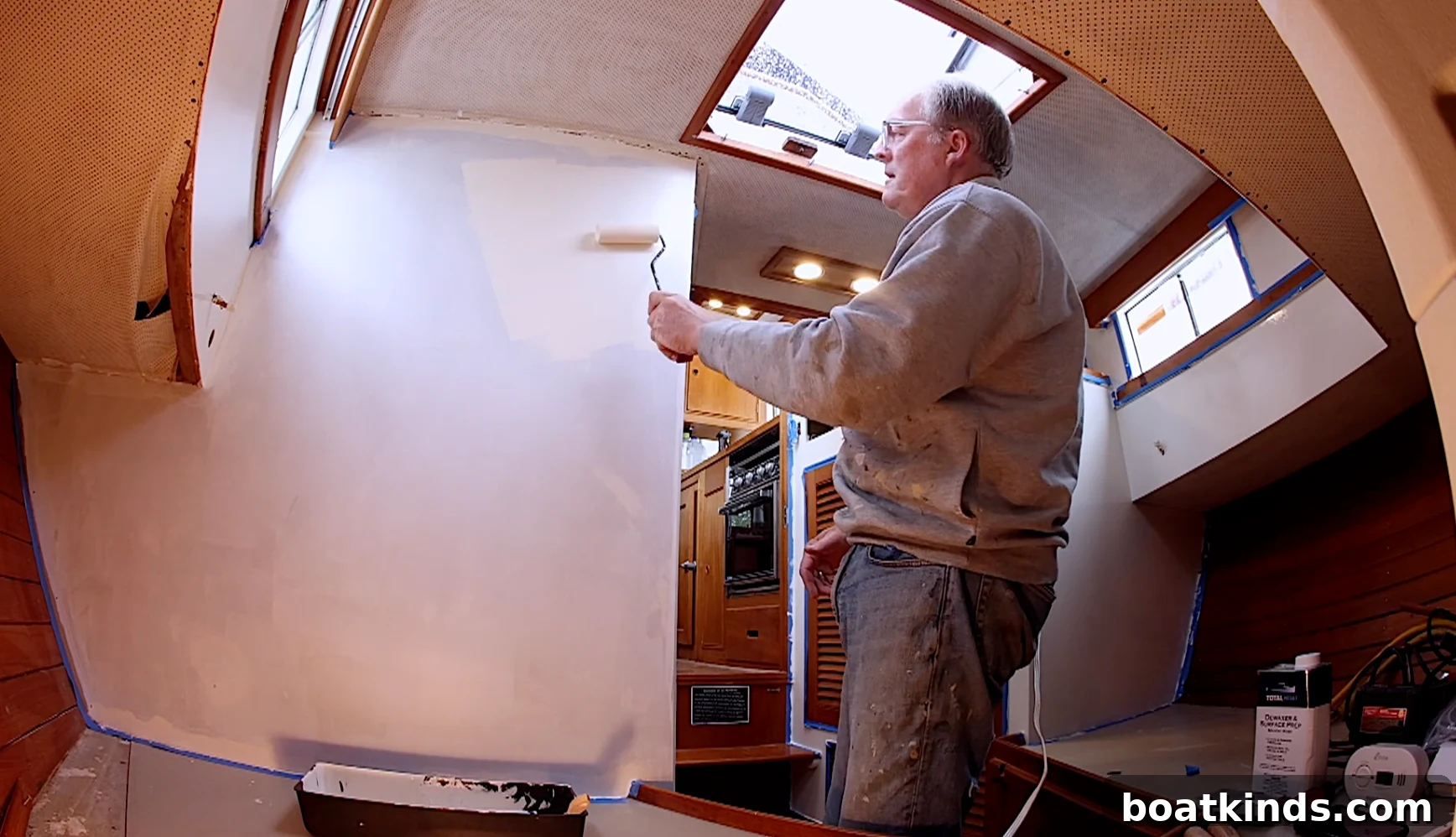
The paint in the master cabin aboard Snow Goose, Onne van der Wal’s 1986 Grand Banks 32, had begun to crack and peel and clearly needed attention. Rather than rush into repainting, Onne approached the job methodically: careful sanding, thorough cleaning, testing, and finally using a primer and a high-quality topcoat to ensure a durable, professional-looking finish.
He began with mechanical prep. Using a Festool orbital sander fitted with 180-grit sandpaper and attached to a shop vacuum, Onne worked the walls and bulkheads to remove loose paint and scuff the surface for better adhesion. The vacuum attachment pulled up most of the sanding dust as he worked, cutting down on cleanup and dust settling on other surfaces.
Even with the sander’s dust collection, Onne still dealt with stubborn dust in molding seams and tight corners. To handle those areas he used a small battery-operated vacuum to extract residual dust, then wiped every surface with TotalBoat’s Dewaxer & Surface Prep Solvent Wash. This step removed any oils, wax residues or contaminants that would interfere with paint adhesion and ensured the surfaces were fully ready for primer.
Choosing the right application tools and paint was the next priority. Onne researched options, experimented in his workshop, and consulted knowledgeable staff at the One Stop Building Supply Center in Newport—longtime hardware-store veterans who steered him to specific tools. He settled on the Whizz roller system paired with a premium sponge roller cover to produce an ultrasmooth finish. Onne had tried other rollers that left lint or texture in the paint; this combination minimized those issues.
Before committing to a full repaint, Onne ran several tests inside Snow Goose’s head, painting small areas to evaluate adhesion and appearance. One test omitted primer as an experiment, and that section did not perform well. Based on those trials and recommendations he heard, Onne chose Zinsser’s B-I-N shellac-based primer. He applied the primer and reports it “worked like a charm,” providing a reliable base that sealed old paint and improved topcoat adhesion.
For the topcoat Onne selected Interlux Brightside polyurethane. He had prior experience with this product on his other boat, Snoek, a 1972 Pearson 36, and trusted its performance. According to Onne, the Brightside topcoat produced a superb finish and dried quickly—qualities he valued for an interior repaint. The result was a smooth, durable surface that substantially refreshed the cabin’s appearance.
Key takeaways from Onne’s project for anyone repainting a boat interior:
- Sanding and dust control are essential. Use a sander with good dust collection and follow up with a handheld vacuum for corners.
- Thorough cleaning with a proper solvent or dewaxer removes contaminants that prevent adhesion.
- Test before you commit. Small test patches reveal whether primer or a different product is required.
- A quality primer like Zinsser B-I-N can make the difference between a long-lasting finish and future failure.
- Choosing the right roller and topcoat affects the final appearance—investment in good tools and paint pays off.
Onne’s careful approach—prepping, testing, and using recommended materials—left the master cabin with a professional result and a finish he’s pleased with. If you’re tackling a similar interior painting job on a Grand Banks, Pearson, or other classic boat, the combination of thorough prep, the right primer, and a proven marine polyurethane topcoat is a dependable route to a clean, lasting finish.
You can watch Onne’s DIY video below.