Savio Mizzi may be a relatively recent name among marine artists, but he has been creating art for more than four decades. His work reflects a lifelong devotion to painting and drawing, yet fishing—especially for striped bass—has always been his greatest passion and the force that shapes his days.
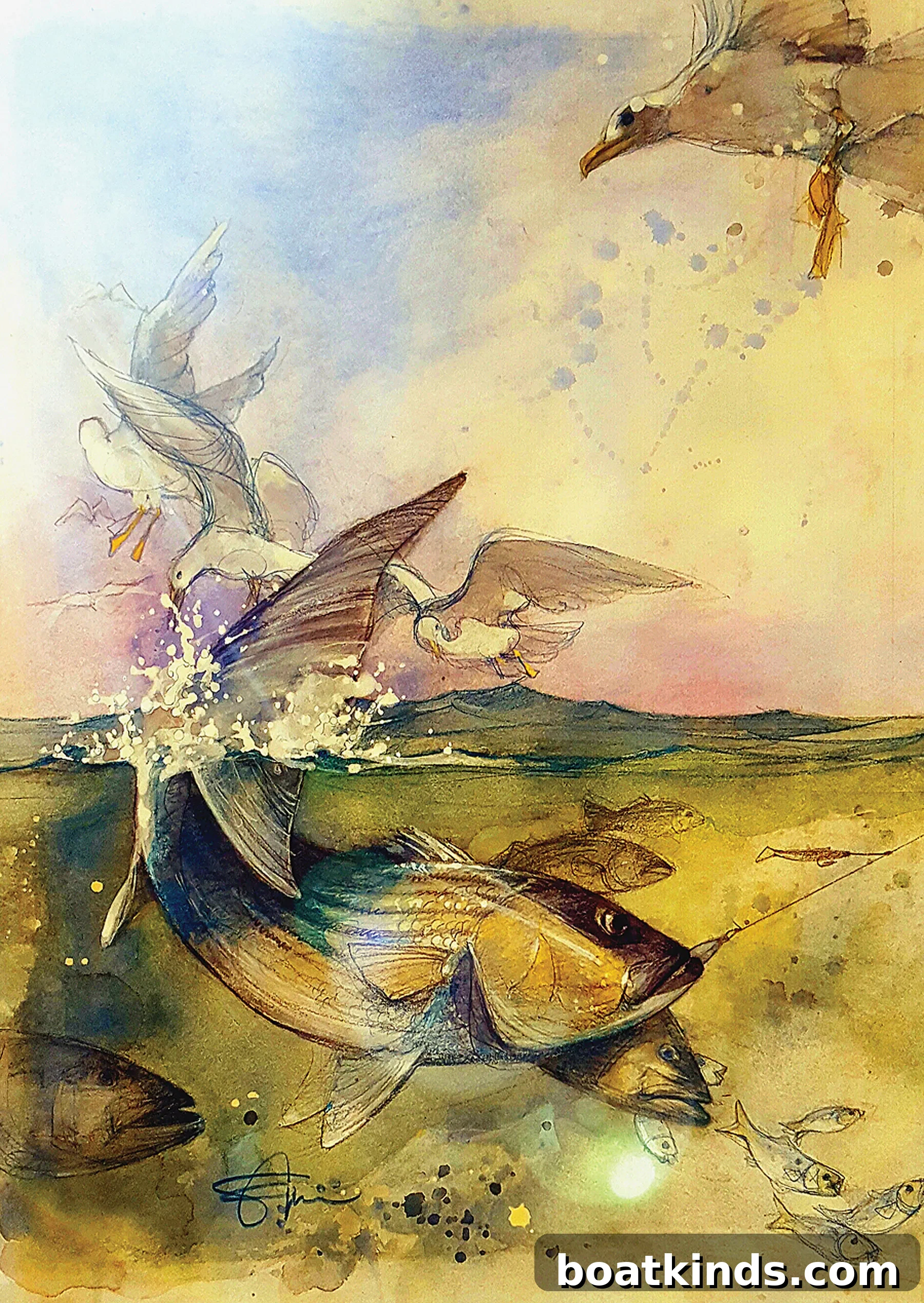
In the late 1980s, while house hunting in the Hamptons with his wife, Gigi, Mizzi spotted a group of anglers hauling fish from a beach. “That was all it took,” he recalls. They bought a house near Three Mile Harbor and he set up a studio there while continuing freelance graphic work for Manhattan ad agencies and commissions such as book covers for New York publishers. His sketchbooks—filled with countless studies and ideas—remained the foundation for both his marine and fine art paintings.
A new neighbor asked if he’d ever experienced Montauk’s fall run—twenty minutes away—and the question changed his life. In mid-September 1990 Mizzi drove to Camp Hero State Park, descended to the rocky shoreline and began casting into the dim morning. As the sun rose, he watched waves and felt something extraordinary: stripers everywhere, some within arm’s reach. He landed a striped bass and several large bluefish and fished in a trance until the tide ran out.
“I could hardly talk when I called Gigi,” he says. “I told her I felt like I’d died and gone to fish heaven.” That single morning launched more than two months of nonstop fishing. Montauk quickly dominated his schedule—tides, tackle shops and drives to the Point became daily routines.
For a time Mizzi even postponed lucrative projects. He had two book covers sketched for Western novels by a well-known author, each worth $5,000, but he couldn’t focus; all he could see were rocks, waves and stripers. He delayed the work and returned to Montauk, later joking, “If it wasn’t for fishing, I’d be a multimillionaire today.”
On an Island Far, Far Away
Savio Mizzi grew up on Gozo, one of the Maltese islands in the central Mediterranean. Gozo’s layered history—from Neolithic temples to Phoenician, Roman and Renaissance influences—shaped his early artistic sensibility. Art and architecture were woven into daily life, and his family included artists: his father and uncle were painters, and his father also worked in stage and film makeup and theater production.
The family lived in Victoria but kept a small house on Marsalforn Bay, where Mizzi learned to fish alongside his father, Toni. Their modest boat had an old inboard engine and an ancient Seagull outboard that was used when the main motor failed. Navigation meant a pocket compass, and fish storage was simply wet burlap to keep the catch from spoiling. Squid caught at night became bait, and the family often shared dolphin and tuna with friends and neighbors.
As a boy, Mizzi preferred the company of veteran fishermen on the docks—listening to stories, mending nets and learning the small-boat techniques that sustained island life. One vivid childhood memory stands out: at age 12, on the eve of returning to school, he begged his father for one last fishing trip. They left on what should have been the first day of term and returned with a boat so full of mahi and tuna that the gunwales barely stayed above the water. It remains one of his happiest memories of time on the sea.

Long and Winding Road
School was a struggle for Mizzi—he is severely dyslexic—so he turned to drawing. At 18 he emigrated to New York City in 1974 with little money and a strong desire to make art his livelihood. After a stretch of hard work and menial jobs during a difficult economic period, he enrolled at the Albert Pels School of Art in Manhattan. There a teacher helped refine his talent and guided him into commercial art opportunities.
Mizzi cold-called ad agencies and fashion firms, eventually securing contracts with names such as Nino Cerruti, Men’s Only and Burlington Industries. He worked on Madison Avenue, opened his own studio in 1983, and continued to develop his fine art voice. A one-man show at the National Museum of Fine Arts in Valletta elevated his reputation back in Malta.
When he moved to Long Island’s East End, the fishing that had been pushed aside during his busy career resurfaced with intensity. He found Montauk irresistible and began designing and building houses for clients in the Hamptons so he could manage his time around tides and fishing seasons. Self-taught as an architect and builder, he even designed and crafted his own home and furniture. Throughout these ventures, he returned regularly to sketchbooks and the easel whenever the tide or insomnia allowed.
Art and the Bucktail
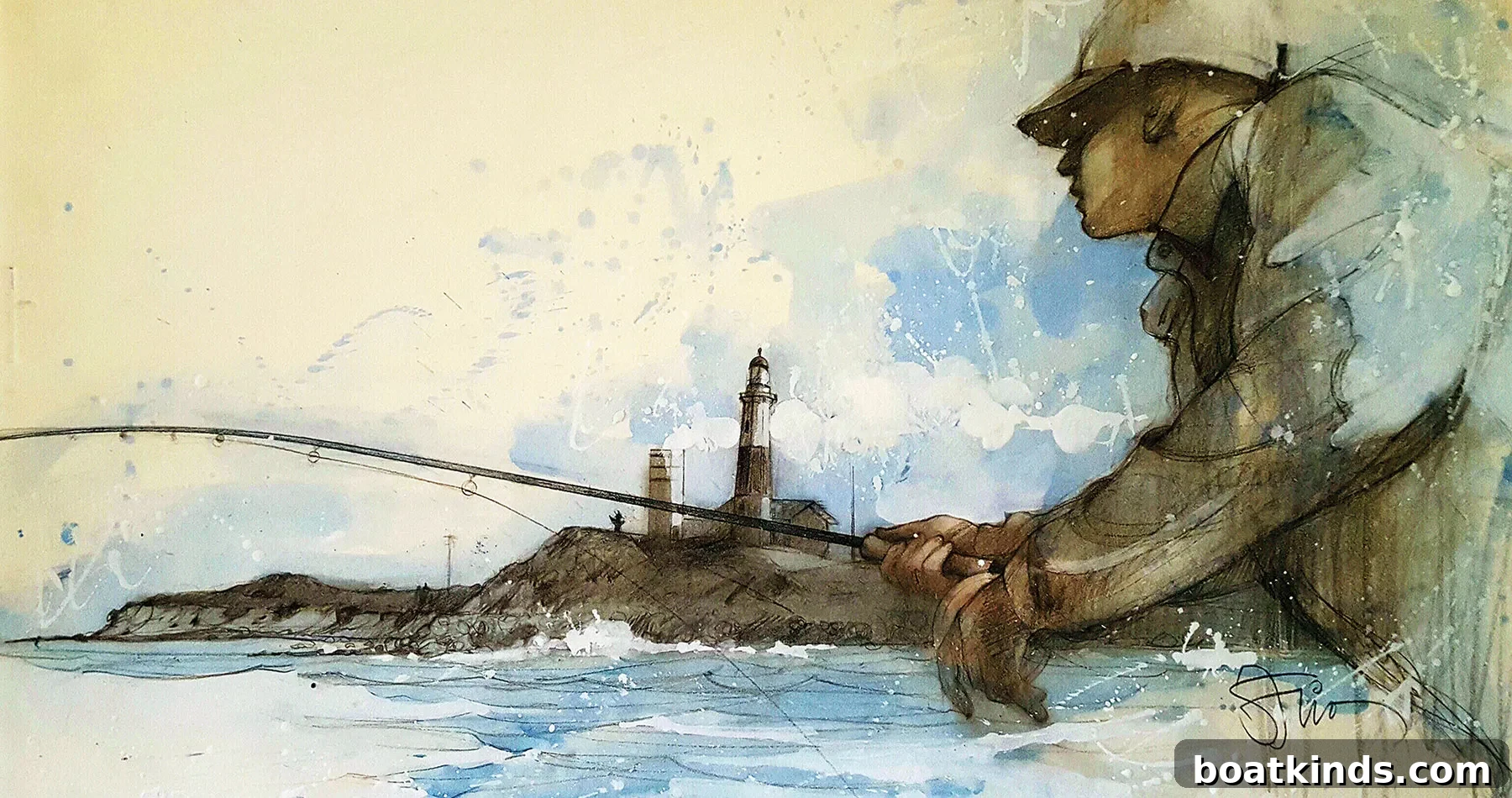
Mizzi’s Montauk approach evolved from beach fishing to trips on local headboats. He learned from other anglers and began experimenting with bucktail jigs. The arrival of super-thin braided lines like Spiderwire suited his light-tackle style, letting him feel strikes and present lures with finesse. He noticed he was out-catching anglers running heavier diamond jigs simply because lighter line and delicate presentation worked better for his method.
To him, bucktails are an art form: they require timing, subtlety and repeated motion to provoke reaction strikes. Watching Mizzi work a trigger rod and baitcasting reel is like watching a musician coax sound from an instrument—there is technique and rhythm in every snap and pause.
Fishing with him is a lesson in patience and skill. On one Montauk trip, while most boats targeted smaller schoolie bass, Mizzi stayed out front in deeper water and coaxed larger fish from rocky structure 50 feet down by snapping bucktails near the bottom. His reputation for light-tackle expertise has grown steadily. At 62 he earned his six-pack captain’s license and now guides clients and friends; other local guides sometimes recommend him when they are booked.
Although fishing dominates his life, Mizzi continues to make fine art. His sleepless nights fuel prolific sketching of local scenes and imaginative compositions that mix real sea life with surreal elements. He exhibits in the Hamptons, illustrates for fishing magazines and supports angling groups that protect gamefish. His paintings offer a fresh, emotional alternative to the flat, formulaic depictions of gamefish that have too often passed for fine art.
Savio Mizzi blends the skills of a committed angler with the sensibility of a seasoned painter. Whether on the rocks at Montauk chasing stripers or alone at his easel, his life centers on the sea and the fish he loves.
To see more of Savio Mizzi’s work, visit savioartstudio.com.
This story originally appeared in the summer 2021 issue of Anglers Journal.